Russian Drone Strike On Kryvyi Rih Kills Two, Infant Injured
Ukraine says a Russian drone hit homes in Kryvyi Rih, killing two elderly residents and injuring their infant granddaughter amid wider drone attacks.
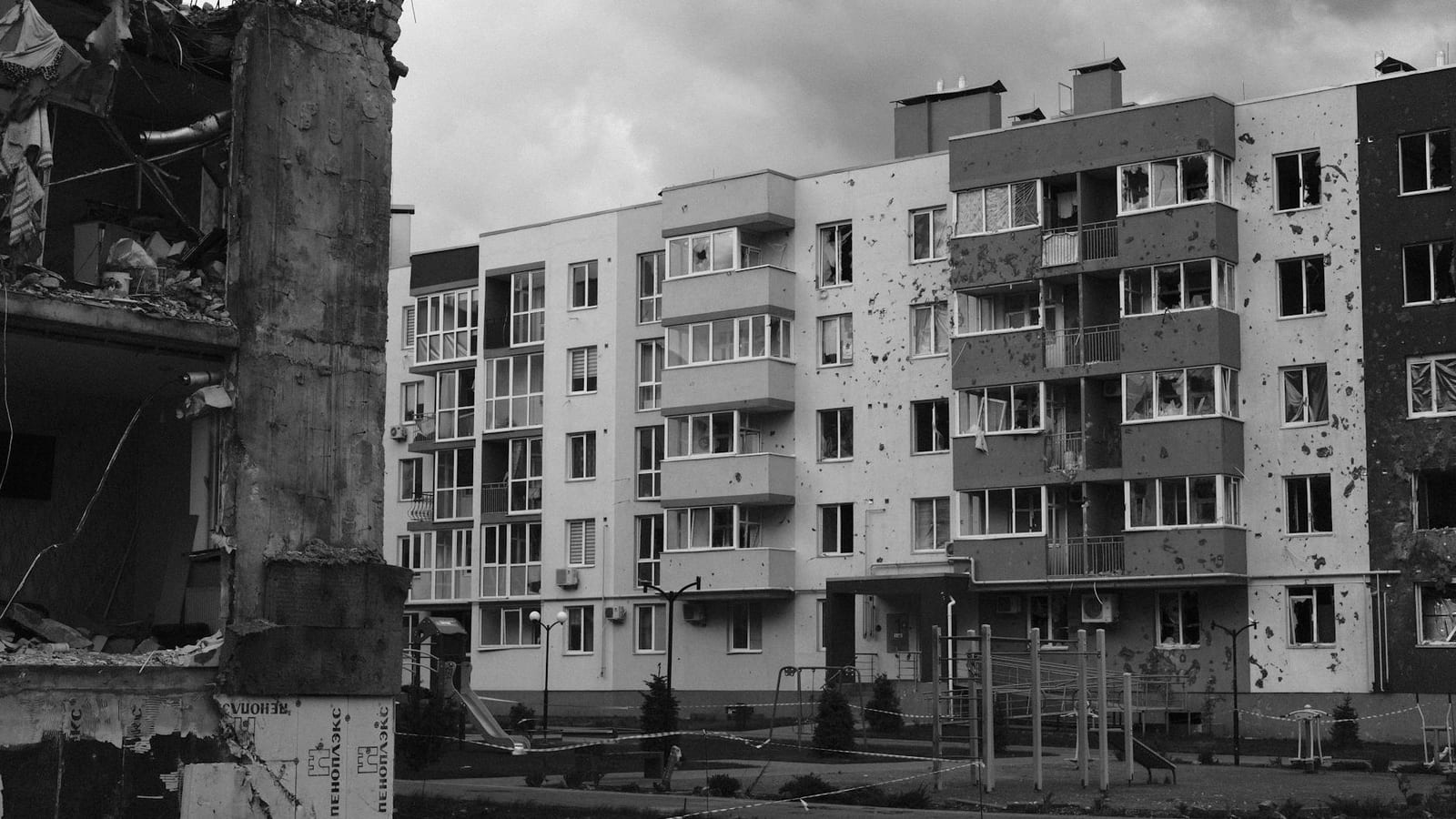
A nine-month-old child in Kryvy Rih now carries the cost of a war she did not choose.
Ukrainian President Volodymyr Zelensky said a Russian drone hit a residential building in the central Ukraine city, killing two elderly people. Their infant granddaughter survived, but with serious injuries.
That single strike says a lot about where this war stands in May 2026. The front line matters, yes. But homes, fuel stations, ports, drones and air defence now form the real map of this conflict.
Drones dominate the battlefield
Russia said its air defence systems destroyed 54 Ukrainian drones on Tuesday, May 12. Moscow said the drones flew over Belgorod, Bryansk, Kursk, Samara, Orenburg and Crimea.
Later in the evening, Russia said it destroyed 14 more drones over Belgorod and Bryansk. Both regions sit close to Ukraine and have faced repeated attacks through the war.
Ukraine also claimed its own strikes overnight. The Ukrainian military said it hit Russian targets in occupied Donetsk, Luhansk and Zaporizhzhia. These included command posts, drone control points, repair units and equipment depots.
This is no longer only a war of tanks and trenches. Cheap drones now carry expensive consequences. They can damage oil sites, disrupt military logistics and force both sides to spend heavily on air defence.
For Indian readers, this shift matters. Our own armed forces are watching these lessons closely. The Ukraine war has shown that even a smaller force can stretch a larger one with drones, targeting and speed.
Dnipropetrovsk counts its dead
Authorities in Dnipropetrovsk said Russian strikes killed at least six people and wounded seven others. Two died in Kryvy Rih, while four more died in Doubove, in the Synelnykove district.
Oleksandr Hanja, the regional military administration chief, said the Kryvy Rih strike caused a fire. Four people were injured there. Another strike in Doubove killed four people and injured three.
Zelensky called the attack cynical and without military purpose. He said Russia kept killing Ukrainians after a three-day partial truce. He urged allies to keep pressure on Moscow and strengthen Ukraine’s air defence.
That last demand is not routine politics. Air defence now decides whether families sleep through the night. It decides whether hospitals keep running and power stations remain safe.
India understands this part better than many Western capitals. In a large country, security is not only about the border. It is also about keeping cities, ports, roads and power grids alive during crisis.
Peace still needs Washington
Ukrainian Foreign Minister Andrii Sybiha said peace efforts cannot move without the United States. He said Ukraine needs American engagement, influence and pressure on Russia.
That is the blunt truth behind much of the diplomacy. Europe can provide money, weapons and political support. But Washington still carries unusual weight with Moscow, NATO and global finance.
Zelensky, though, sounded more confident about Ukraine’s position. He said Ukraine now stands stronger than it has in years. He pointed to the front, long-range sanctions and joint work with partners.
He also said Ukraine and its partners are moving towards anti-ballistic production in Europe. In simple terms, this means Europe wants more systems that can stop missiles before they hit.
This matters for India because Europe’s security choices now affect global prices and supply chains. A Europe spending more on defence will buy different goods, fund different projects and demand different political choices.
India will also read the American angle carefully. If Washington’s attention swings between Europe, West Asia and the Indo-Pacific, New Delhi must plan for a less predictable global order.
Greece drone row widens concern
A separate dispute emerged after Greece found a military drone in the Ionian Sea. Greek Defence Minister Nikos Dendias said the drone was Ukrainian. He called the matter serious for navigation safety.
Ukrainian foreign ministry spokesperson Heorhii Tykhyi rejected that certainty. He said Ukraine had no information about the drone. He also said there was no proof it belonged to Ukrainian maritime drone operators.
Greek accounts said the naval drone was found near Lefkada island. It was reportedly spotted after a fisherman alerted the coast guard. Greek authorities later found explosives on board.
This small episode carries a larger warning. The war’s hardware is no longer staying neatly inside the war zone. Drones, missiles, mines and electronic warfare can unsettle civilian shipping far away.
India should watch this closely. Our economy depends heavily on sea routes, from crude oil to fertilisers and electronics. Any conflict that makes shipping riskier can quietly raise costs for Indian consumers.
A businessman in Rajkot or Coimbatore may never follow the Ionian Sea on a map. But freight costs can still reach his balance sheet. That is how distant wars enter everyday life.
Moscow tests nuclear messaging
Russia also said it successfully tested the Sarmat intercontinental ballistic missile. Strategic missile forces commander Sergei Karakayev said the first regiment using it would enter service by year-end in Krasnoyarsk.
President Vladimir Putin said the Sarmat’s range was far higher than Western equivalents. That claim has not been independently verified.
The message, however, is clear. Moscow wants to remind the West that this war sits under a nuclear shadow. It is a signal to Europe and America, not just a military update.
Russia has spoken about Sarmat’s deployment several times since 2021. The missile’s record remains politically useful for Moscow, even when timelines shift.
For India, the nuclear signalling has a familiar ring. New Delhi has long argued that nuclear weapons demand restraint, not public theatre. The Ukraine war keeps testing that principle.
Europe has also moved money into the equation. European leaders earlier cleared a 90 billion euro loan package for Ukraine for 2026 and 2027. Zelensky said the loan would support Ukraine’s army and social obligations.
That second part matters. Wars do not only consume ammunition. They consume pensions, salaries, hospitals, schools and electricity bills. A state at war must still pay teachers and doctors.
This is where Ukraine’s struggle becomes more than a battlefield story. It is a test of whether a modern state can keep functioning while drones fall and cities burn.
The war is now in its grinding phase, where no single headline explains the whole picture. Ukraine says it is striking deeper and organising better defence with partners. Russia says it is stopping drones and expanding its strategic arsenal. Civilians, meanwhile, keep paying first.
For India, the lesson is not abstract. The future of war looks cheaper, faster and harder to contain. The future of diplomacy looks more dependent on hard power than polite statements. Ordinary people will feel both, through fuel bills, food prices, defence budgets and the uneasy knowledge that distance no longer protects anyone completely.