Vasai-Virar Building Frenzy Claims a Life, Exposes Safety Gaps
Vasai-Virar Building Frenzy Claims a Life, Exposes Safety Gaps. Read the latest Business Leader report on the people, policy and markets affected by this.
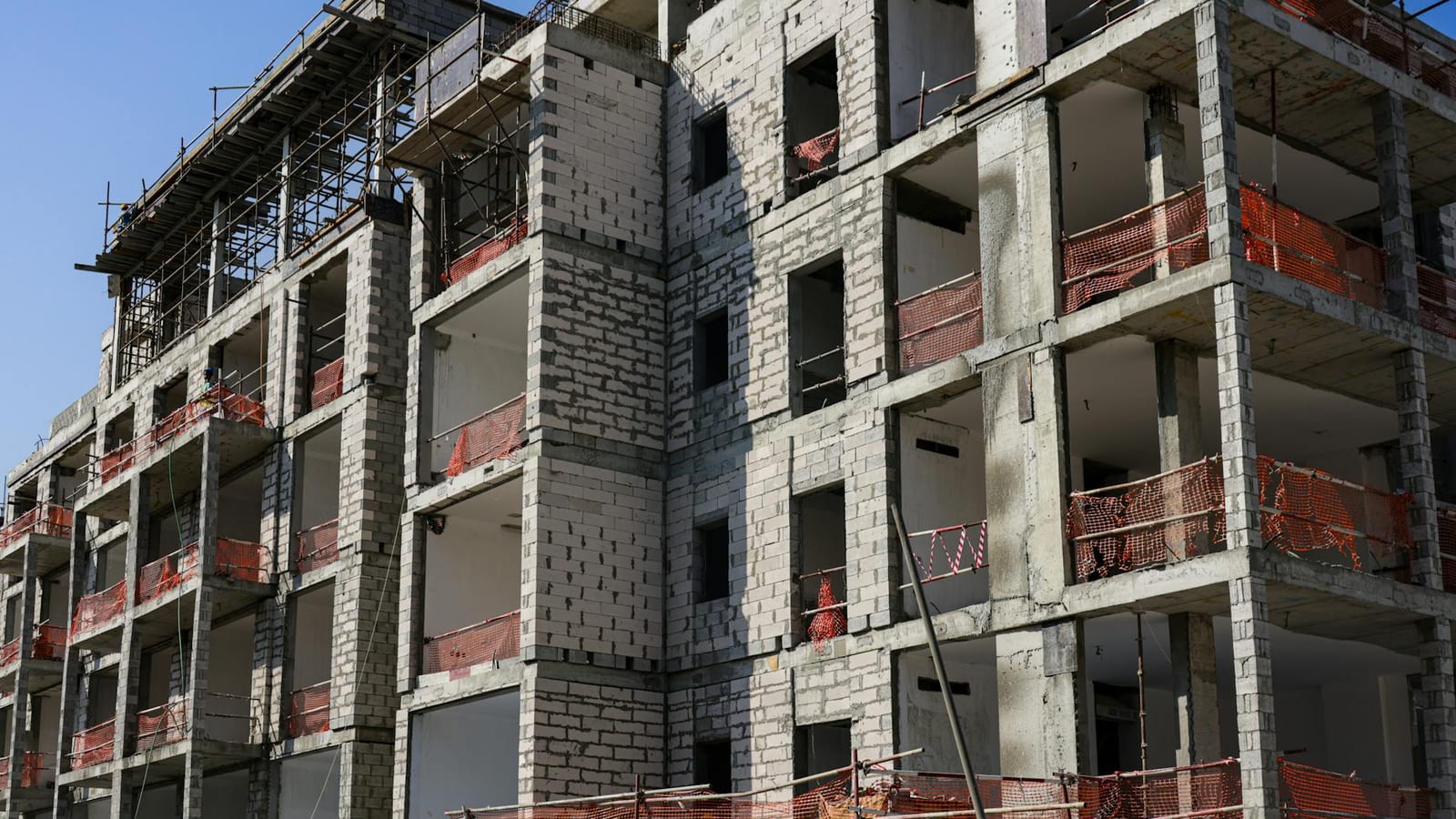
A 28-year-old woman went to work on a construction site in Nalasopara on a Tuesday and never came home. She was on the eighth floor of a building going up at Achole Road when she fell. She died at the scene.
Her death sits at the centre of a story unfolding across every suburb north of Mumbai. Vasai-Virar is building furiously. New apartment blocks, commercial complexes, and housing societies are sprouting on land that was farmland a decade ago. The demand is real, the money is flowing, and the cranes are busy. But the systems meant to protect the people doing the actual work are not keeping pace.
Construction deaths in India are not tracked with the same rigour as corporate earnings reports. The government does not publish a weekly fatality ticker for sites in tier-2 cities or fast-growing municipal zones. What we know comes piecemeal, incident by incident, from local news and police reports. What happened in Nalasopara this week is unlikely to feature in any national statistic. But for the workers on that site, and hundreds like it across the Vasai-Virar belt, it is the most concrete risk they face every morning.
The construction boom here has a clear economic driver. Vasai-Virar Municipal Corporation, known as VVMC, covers one of the fastest-growing urban clusters in the Mumbai Metropolitan Region. Property prices in Mumbai proper have pushed working families and first-time buyers further out. The western railway line has made Nalasopara, Virar, and Vasai accessible for daily commuters. Developers spotted this early. The result: a building frenzy that has transformed the skyline but strained every civic system underneath it.
In the same week a construction worker lost her life in Nalasopara, expired medicines turned up outside the Vasai Panchayat Samiti office. Not in a bin. Not in a designated biomedical waste facility. Just discarded in the open, on a footpath outside the government building. The sight raised a sharp question about where public healthcare supplies go when they cross their shelf date, and who is responsible for disposing of them.
India’s Bio-Medical Waste Management Rules, last updated in 2018, are clear on paper. All healthcare institutions, including government ones, must segregate, store, and hand over expired or unused medicines to authorised recyclers. Dumping them on a footpath is not a gray area. It is a violation. Citizens who saw it raised the alarm. As of this writing, no official explanation had been offered.
This is not unique to Vasai-Virar. Across India, government health facilities routinely struggle with the last step of waste management. The procurement systems that order medicines are often not connected to the disposal systems that handle what is left over. The result, repeated in towns from Punjab to Tamil Nadu, is that expired stock ends up where it should not be.
What makes the Vasai situation striking is the concentration of governance failures in a single week. A worker died on a construction site. Expired medicines sat openly near a government office. The Railway Protection Force ran an operation to bust an e-ticket touting ring at Nalasopara railway station, where at least one tout had been exploiting commuters who struggle to book online. And separately, the elevator at the Ward G municipal office, broken for three months, finally started working again. Three months of a non-functional lift in a government building. For elderly citizens and people with disabilities who needed to access that office, those three months were not an inconvenience. They were an exclusion.
Taken individually, each story might seem like routine civic journalism. Taken together, they describe a city that is economically buoyant and administratively overstretched.
The western suburbs of Mumbai have always lagged on infrastructure relative to their growth rate. Municipal corporations here are younger and less resourced than the BMC in Mumbai itself. VVMC was constituted in 2009. It covers a population that has grown dramatically since then, absorbing migrants from across Maharashtra and beyond, many of them workers in construction, transport, and the informal sector. Revenues and administrative capacity have not grown at the same pace as the population.
This creates a particular kind of pressure on working people. They come here for opportunity. They build the buildings, ride the trains, use the government clinics. When safety standards lapse on construction sites, when public medicines are mismanaged, when government lifts break and stay broken for three months, it is ordinary working people, not property developers or senior officials, who pay the price.
The construction industry employs over 50 million workers across India, making it the country’s second-largest employer after agriculture. Most of those workers are in the unorganised sector: no provident fund, no employer-provided insurance, no formalised grievance mechanism when something goes wrong on site. The Building and Other Construction Workers Act has existed since 1996 and mandates helmets, safety harnesses, and basic protections. Enforcement on individual sites, especially in fast-moving suburban zones, is patchy.
When a woman in her late twenties falls from the eighth floor and dies, the construction firm that built that floor, the developer who commissioned it, and the civic authority that approved the building plan all have questions to answer. In practice, a local police report is filed, the site may be temporarily sealed, and work resumes.
Vasai-Virar, like dozens of fast-growing suburban zones around India’s large cities, is at a crossroads. The economic momentum is genuine. The opportunity is real for the workers, small businesses, and families that have made this belt their home. But economic growth that consistently outruns governance ends up imposing its costs on the people with the least ability to absorb them. Safer construction sites, properly managed medical supplies, working lifts in government buildings: these are not luxuries. They are the baseline that makes urban growth mean something for the people actually living through it.