Haifa missile barrage puts oil, shipping on alert
Hezbollah's Haifa attack and Israel's strikes in Lebanon raise risks for oil, freight costs and Indian trade tied to the Middle East region.
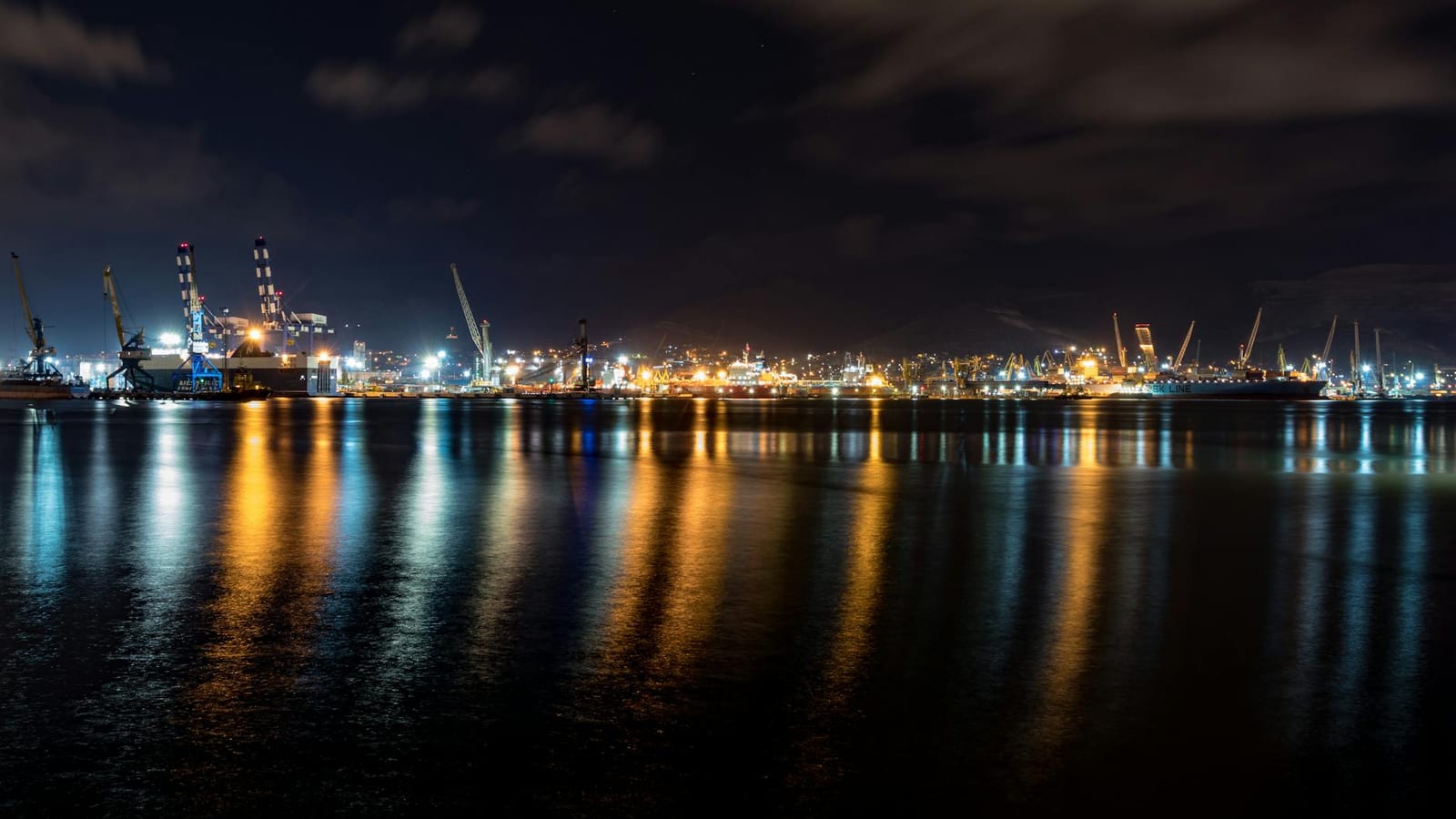
A missile fired near Haifa does not stay a Middle East story for long. It travels, quietly, into oil prices, freight costs, investor nerves, and the monthly budgets of Indian families.
On Monday, October 7, 2024, Hezbollah said it fired 135 Fadi 1 missiles towards the Haifa area in northern Israel. Israel’s military said it hit more than 120 Hezbollah targets in southern Lebanon within one hour.
For ordinary people in the region, this means sirens, shattered homes, and fear. For India, it means watching another flashpoint in a region tied deeply to oil, shipping, remittances, and trade.
Haifa attack raises regional risk
Hezbollah said it targeted a military base south of Haifa with 135 Fadi 1 missiles. Israel’s military said rockets struck Israeli areas by Monday evening.
Reports from Israeli authorities pointed to injuries in the Haifa region and southern Israel. Ten people were reported hurt around Haifa, while two others were injured in the south.
Haifa matters because it is not a small border town. It is Israel’s third-largest city and a major port city. When a place like that comes under fire, markets read it as escalation.
This was also not an isolated exchange. Israel has been fighting Hamas in Gaza and Hezbollah in Lebanon. The two fronts have now started feeding each other.
Israel hits 120 Hezbollah targets
Israel’s military said its air force carried out a wide operation in southern Lebanon. It said the strikes hit more than 120 Hezbollah targets within 60 minutes.
The Israeli military described the targets as militant infrastructure. It has also said recent operations across Lebanon hit a much larger network of Hezbollah sites.
Lebanese official and military sources said Israeli strikes killed 11 people and injured 17 others. The health ministry said six people died in an airstrike on a residential building in Kayfoun village, in Mount Lebanon’s Aley district.
Five others were killed in another Israeli strike, officials said. These numbers matter because they show the civilian cost behind every military statement.
A target map may look clean on a screen. On the ground, it often means families leaving homes, shops shutting early, and hospitals preparing for more wounded.
October 7 shadow hangs heavy
The attack came on the first anniversary of the October 7, 2023 assault by Hamas on southern Israel. That attack killed about 1,200 people, according to Israeli figures.
Hamas also took more than 250 hostages during that assault. Israel’s response in Gaza has since triggered a long and brutal war.
Iran’s Supreme Leader Ayatollah Ali Khamenei marked the anniversary by calling the Hamas operation a turning point for Palestinians. His comments signalled that Tehran still sees the conflict as a wider regional struggle.
That is why investors watch every fresh missile count. Hezbollah has Iran’s backing. Hamas has Iran’s support too. Israel sees both groups as part of a hostile network.
Once the conflict looks less local and more regional, the economic risk changes. It is no longer only about Gaza or Lebanon. It becomes about the Middle East’s wider stability.
Why India cannot look away
India has no luxury of treating this as distant noise. The Middle East sits at the centre of India’s energy life.
When tension rises there, crude oil traders usually price in risk. That does not always mean petrol prices jump the next morning. But it does make life harder for refiners, airlines, shipping firms, and importers.
A small exporter in Surat may not follow every rocket launch. But higher freight costs can still reach his invoice. A young professional paying for fuel every week may never study West Asian politics. Yet the region can still shape household costs.
Indian companies also watch shipping routes closely. Any fear around ports, tankers, or regional security adds insurance costs. Those costs often move quietly through supply chains.
There is also the human connection. Millions of Indians work across West Asia. Families in Kerala, Telangana, Uttar Pradesh, Bihar, and Punjab depend on salaries sent home from the region.
So when the region grows tense, it is not just diplomacy. It becomes a dinner-table worry for many Indian households.
Markets dislike open-ended wars
Markets can handle bad news better than uncertainty. What they dislike most is an open-ended conflict with unclear limits.
The Israel-Hezbollah exchange has that uncomfortable quality. Hezbollah can fire deeper into Israel. Israel can widen strikes inside Lebanon. Iran can harden its rhetoric. Each step adds another layer of risk.
For businesses, the key question is simple. Does this remain a controlled military exchange, or does it become a wider regional conflict?
If it stays limited, markets may absorb the shock. If it spreads, oil, gold, shipping, and defence-linked stocks may react sharply.
Indian policymakers will also watch inflation. Fuel prices affect transport, food delivery, farm costs, and factory movement. Even when pump prices stay unchanged, companies feel pressure in margins.
That pressure later shows up somewhere. It may appear in ticket prices, packaged goods, logistics bills, or weaker earnings.
There is a familiar pattern here. First come the missiles. Then come the market screens. After that, the costs move into ordinary life, often without dramatic headlines.
For India, the lesson is blunt. A conflict thousands of kilometres away can still enter the monthly budget. The next few days will show whether this exchange remains another grim chapter, or becomes the start of a larger economic headache.