Phu Quoc Is Fast Becoming India's Favourite Vietnam Getaway
Phu Quoc Is Fast Becoming India's Favourite Vietnam Getaway. Read the latest Business Leader report on the people, policy and markets affected by this.
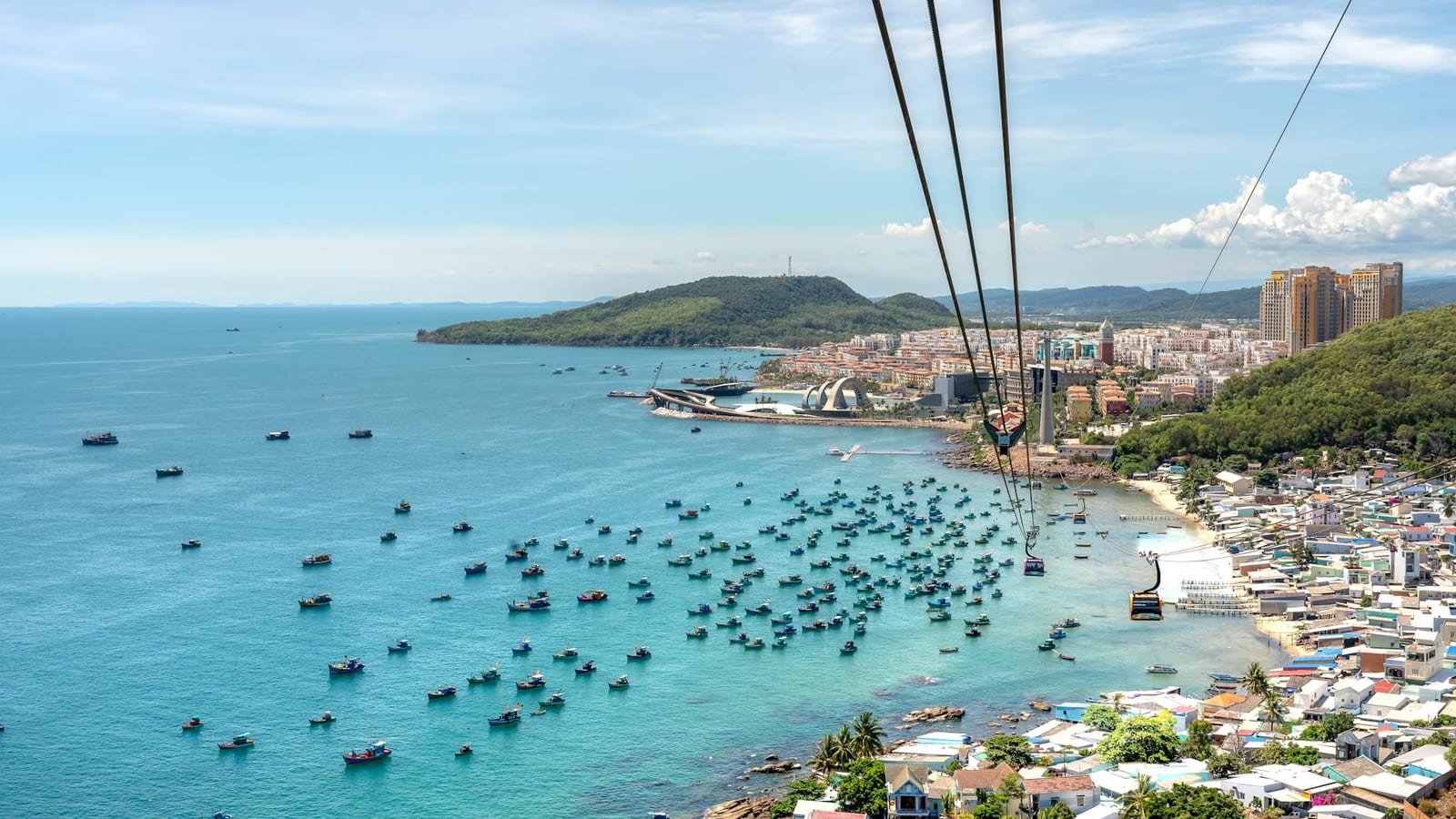
There is a Vietnamese island that most Indians couldn’t have pointed out on a map three years ago. Today, Phu Quoc is appearing on more and more wish lists, travel group chats, and long-weekend itineraries from Mumbai to Hyderabad. The shift is quiet but clear: rising search trends confirm that Indian travellers are increasingly choosing the island, drawn by what is honestly a compelling combination of ease and value.
Phu Quoc sits off the southwestern tip of Vietnam in the Gulf of Thailand, about four hours from most major Indian airports by direct or single-connection flight. It has white beaches, dense jungle, and a seafood culture that punches well above its profile. But the bigger draw, at least right now, is simpler than any of that. Getting there is relatively uncomplicated. Spending a week there doesn’t require a second mortgage.
This is exactly what a generation of Indian outbound travellers has been looking for.
The post-pandemic travel boom opened something up in the Indian middle class. People who had only thought about holidays in terms of Goa or Shimla started looking outward. Thailand came first, then Bali, then the UAE. Now the second wave of curiosity is arriving: what else is there, once you’re past the obvious?
Phu Quoc is one answer. Vietnam as a whole is another. The country is compact enough to see in a week, diverse enough to reward a longer trip, and affordable enough that a couple on a combined monthly salary of Rs 2 lakh can fly there, stay reasonably well, eat remarkably well, and come back without financial regret.
What makes Southeast Asia so suited to Indian travellers right now is not just cost. It’s the density of experience per day. Bangkok is a good example. You can walk from a riverside Buddhist temple to a rooftop bar to a Michelin-recommended street food stall inside ninety minutes. The city rewards the kind of unplanned, sensory wandering that the French call flâneuring, a word that doesn’t translate neatly but means something like drifting through a place and letting it reveal itself. Bangkok is built for that. It is chaotic in a way that Indians, accustomed to urban density, tend to find energising rather than overwhelming.
A short drive south of Bangkok, the coastal city of Pattaya holds something genuinely unlike anything else in the region. The Sanctuary of Truth is a vast wooden structure built entirely without nails or concrete. Every surface, every pillar, every ceiling, is carved. The carvings cover Hindu, Buddhist, and other philosophical traditions. Construction started more than forty years ago and continues to this day, the building still being added to by craftsmen who trained under the original builders. It is not a ruin being preserved. It is a living monument, still growing, still being made. For Indian visitors with any familiarity with temple art and iconography, it reads as both familiar and extraordinary.
This is the kind of thing that Southeast Asia does well: culture with a physical, immediate presence. Not something behind a velvet rope in a climate-controlled museum, but something you can walk under, look up into, and feel the scale of.
The variety across the region is enormous, and travel writers have recently been mapping it carefully. Tanzania and its Serengeti safaris are drawing Indian travellers willing to spend more for a rarer experience. The Gobi Desert in Mongolia, where traditional ger camps now offer a version of glamping that keeps you warm and comfortable while the landscape outside is utterly alien, is attracting a niche but growing group of Indian adventurers. Vietnam’s Phu Quoc and Croatia’s Adriatic coast are both registering as aspirational but achievable, destinations that feel far but aren’t difficult.
What this suggests is that Indian outbound tourism is maturing. The first phase was about going abroad at all, the novelty of a passport, the Instagram proof that you’d been somewhere with palm trees and a clear pool. That phase hasn’t ended, but a second phase is running alongside it: travellers who’ve already done Thailand, who’ve done Bali, who want something they can’t easily Google into a five-day package.
For families, the practical calculus matters. Parents travelling with children want places where the food is manageable, the heat is bearable, and the distances between experiences are not punishing. Phu Quoc delivers on all three. A family of four can have a beach holiday there at a cost that compares favourably to a mid-range Goa resort in peak season, which is not something you could say about the Maldives or Bali’s more popular resorts.
For working couples with limited leave, the short-haul Southeast Asia circuit is almost perfect. You don’t need ten days to make sense of Bangkok. Four days is enough to eat your way through the old city, see the temples, take a boat along the klongs, and still come back rested. Phu Quoc on a five-day trip feels generous rather than rushed.
The broader question, for anyone watching Indian travel trends, is where this curiosity lands next. The search volumes are a hint. When Indians start researching a place in volume, arrivals typically follow within a travel cycle or two. Vietnam has been registering for a while now. So has Japan, which is more expensive but increasingly popular among the demographic that has already done Southeast Asia. Eastern Europe, particularly the Croatian coast, is starting to appear in the kind of slow-travel conversation that tends to predict the next wave.
What’s clear is that the world is getting smaller for Indian travellers, not just in the logistical sense of more routes and better connectivity, but in the imaginative sense. The range of places that feel possible is expanding fast. Phu Quoc a few years ago felt obscure. Now it’s a conversation in every urban travel group worth its membership. The next Phu Quoc is already out there, already being quietly searched, already being quietly planned.