Iran Warning To US Puts Hormuz Oil Route In Focus For India
Iran's warning over any US military move raises concerns for India as Hormuz tensions threaten oil flows, travel costs, shipping and inflation.
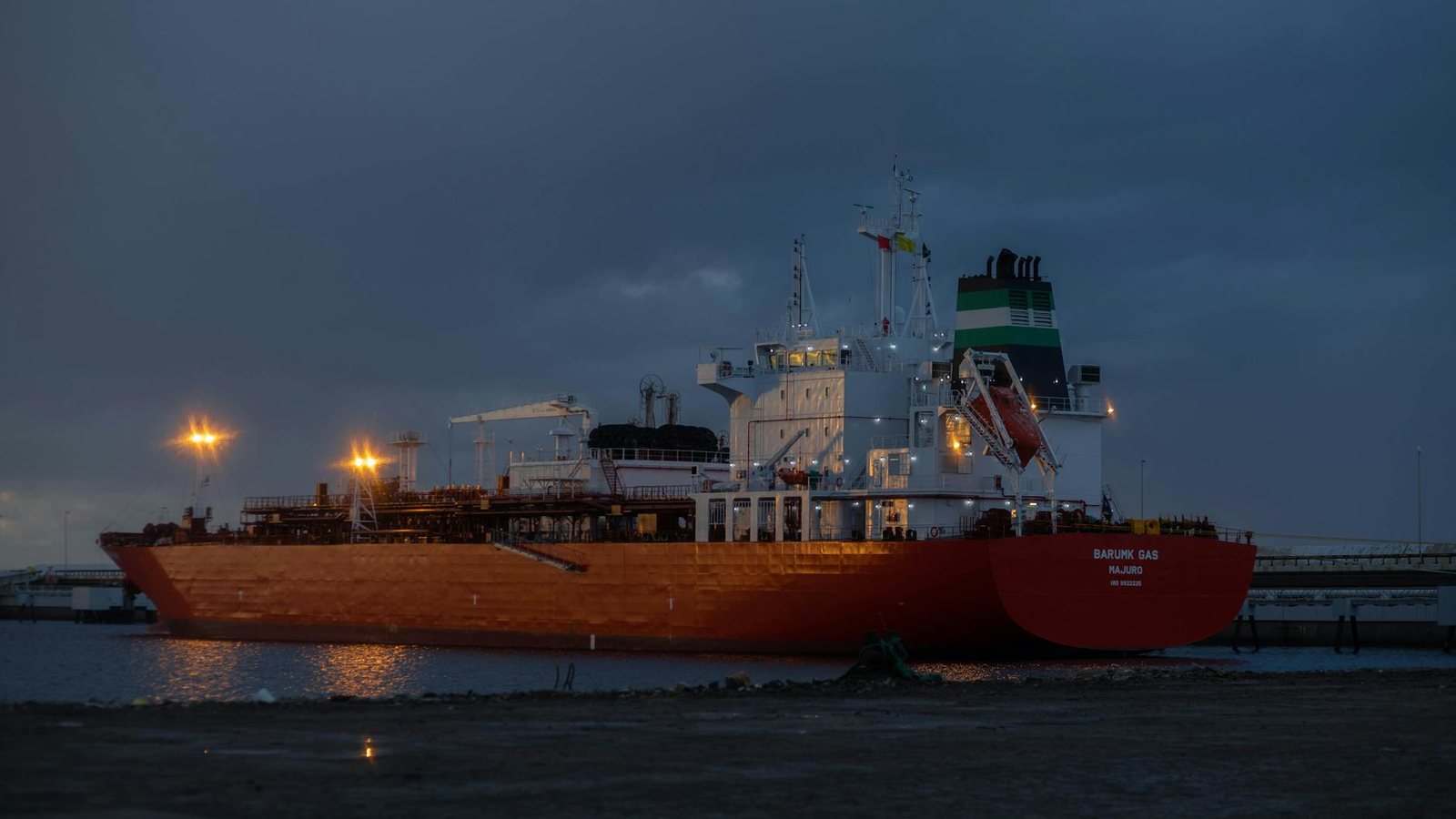
For Indians, the Gulf is not some distant war map. It is fuel, jobs, family visits, business trips, and ships carrying goods through a narrow sea lane.
That is why Iran’s latest warning to the United States matters far beyond Tehran and Washington. When a senior Iranian official says any military move on Iranian soil will bring regret, Indian households should listen carefully.
Esmail Baghaei, Iran’s foreign ministry spokesperson, has accused the US of wrecking nuclear talks and pushing the region towards a wider conflict. His message was blunt. Iran, he said, will not accept what it sees as surrender dressed up as negotiation.
Hormuz becomes the pressure point
The Strait of Hormuz is the small passage where this large crisis becomes painfully real.
A big share of the world’s oil trade moves through this waterway. For India, that means the issue is not abstract diplomacy. It can show up in petrol prices, aviation costs, shipping bills, and inflation.
Baghaei said Iran’s first priority was not a fresh nuclear bargain. He said Tehran wanted the fighting to stop and the strait to reopen safely.
His argument is simple, though many countries will dispute it. Iran says the US and Israel turned nearby Gulf territory into a launchpad for attacks. Tehran claims it then acted to stop the waterway being used against it.
For Indian travellers, this is the uncomfortable part. Gulf routes connect millions of workers, families, pilgrims, students, and business visitors. Even when flights continue, a nervous region can make tickets costlier and planning harder.
The same applies to small firms. A trader waiting for imported parts does not care about diplomatic grammar. He cares whether the container arrives on time.
Nuclear talks hit another wall
Baghaei framed the nuclear dispute as a story of broken trust.
He said Iran entered talks through Oman despite deep suspicion of Washington. He also said the US damaged the process twice in less than nine months.
Iran’s complaint is that America wants everything on its own terms. Baghaei said negotiation must involve give and take. A demand for total satisfaction from one side, he argued, is not negotiation.
The nuclear issue goes back more than a decade. Iran and world powers signed the JCPOA in 2015. That deal limited Iran’s nuclear activity in return for sanctions relief.
Donald Trump pulled the US out of the deal in 2018 during his first term. Iran says it waited for European countries to soften the blow. When that did not happen, Tehran began reducing its own commitments.
Baghaei also pointed to inspections by the International Atomic Energy Agency. He argued that Iran’s nuclear programme remained peaceful under those checks.
The American position has long been different. Washington fears Iran may move towards nuclear weapons capability. Israel has also pushed hard against Iran’s nuclear programme for years.
This is where diplomacy becomes a locked room. Iran says it has the right to peaceful nuclear energy. Its rivals say trust has run out.
India watches the Gulf closely
India cannot treat this as a foreign spectacle.
The Gulf sits inside India’s daily life. It powers factories, moves remittance money, and links families across cities like Kochi, Hyderabad, Lucknow, Mumbai, and Delhi.
When the Gulf shakes, India feels the tremor through many channels. Oil prices can rise. Shipping insurance can become costly. Airlines may need longer or more expensive operating plans if tension spreads.
Baghaei acknowledged that countries such as India were suffering from the crisis. But he blamed the US and Israel, not Iran.
He said Iran itself depends on the Strait of Hormuz because it is a coastal state. Tehran, he argued, wants safety in the lane, not permanent disruption.
That line will matter in New Delhi. India has relations with Iran, the US, Israel, and Gulf Arab states. It cannot afford to turn every tension into a public choice between camps.
This is not new for Indian diplomacy. India has often bought energy, protected diaspora interests, and avoided loud slogans at the same time. The challenge now is sharper because the strait affects everyone at once.
Israel stays in Iran’s crosshairs
Baghaei reserved some of his strongest remarks for Israel.
He called it absurd that Israel questions Iran’s nuclear programme while staying outside the Nuclear Non-Proliferation Treaty. Israel is widely believed to have nuclear weapons, though it does not publicly confirm them.
Iran has been a member of the treaty since 1970. Tehran uses that fact to say it has rights as well as obligations.
Baghaei described Israel as the real barrier to a nuclear-free Middle East. That claim will be rejected strongly in Israel and by its supporters.
But the charge tells us something important. Iran wants to shift the argument away from only its enrichment programme. It wants the region to ask who holds power, who gets inspected, and who escapes scrutiny.
That debate will not settle soon. But it will shape the next phase of talks, if talks resume.
Tehran signals it is ready
Baghaei also rejected claims that Iran’s military strength has been badly weakened.
He said Iran still has many capabilities and will use them if needed. He did not offer details, and that may be the point. In a crisis, ambiguity can be a weapon.
He also warned against any ground operation. His message was aimed at Washington, but it echoed across the Gulf.
For ordinary Indians, the fear is not only full war. It is the slow burn before it. A few more attacks. A few more threats. A few more days of uncertainty in shipping and energy markets.
That is often how global crises enter Indian homes. Not with sirens, but through a higher cab fare, a delayed shipment, or a family member stuck between travel plans.
The immediate question is whether both sides leave room for a face-saving pause. Iran says it wants the war to stop first. The US wants nuclear concessions. Israel wants Iran contained. India wants the strait open, fuel stable, and its people safe.
For now, the Gulf remains tense because every side says it is acting in defence. That is the oldest script in conflict. The bill, as usual, reaches ordinary people first.