Punjab to build 3,350 sports grounds to counter drug crisis
Punjab CM Bhagwant Mann inaugurated 250 rural sports grounds and announced 3,100 more by July 15 as the state bets on sport to fight the drug crisis.
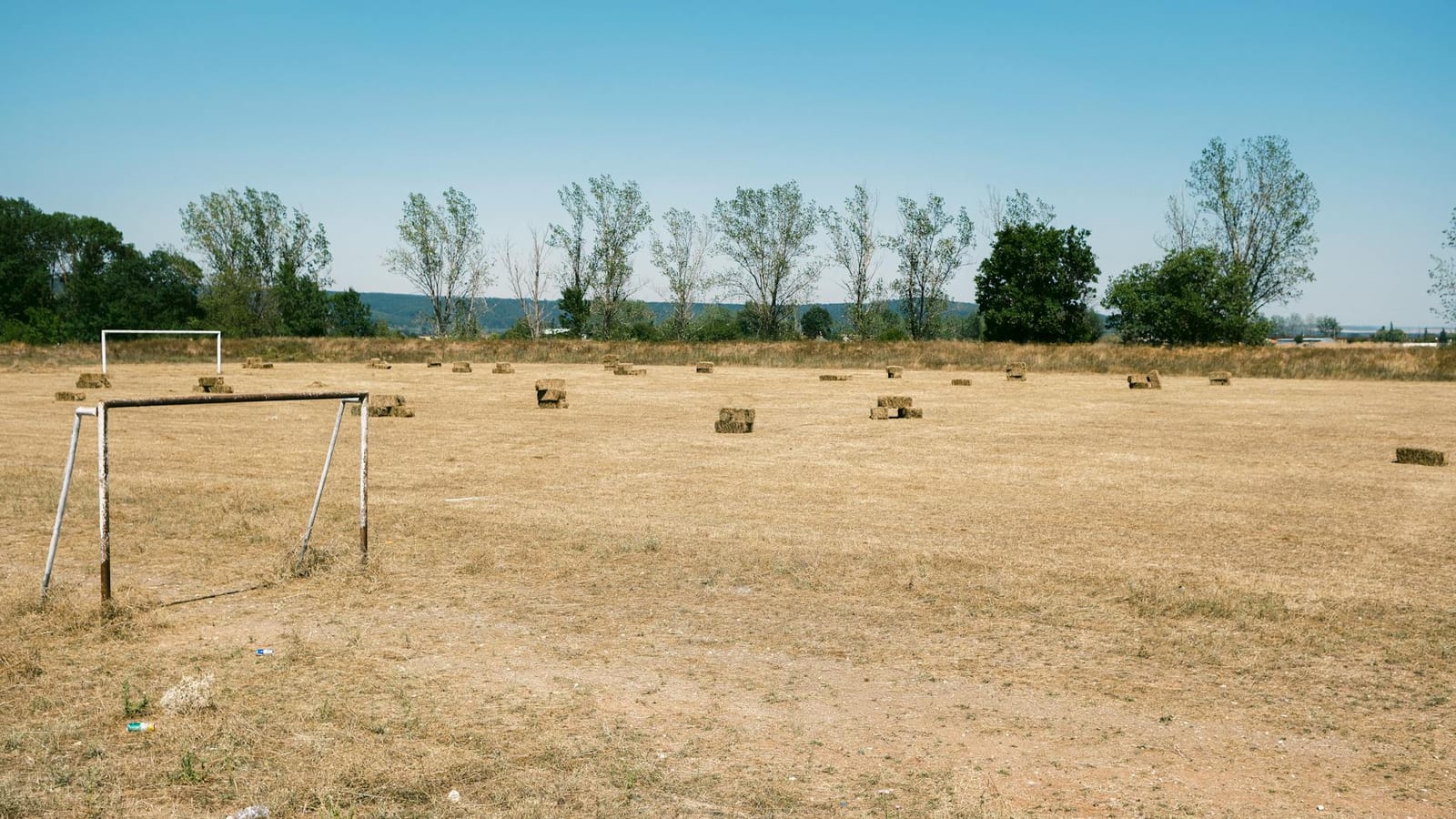
Two hundred and fifty plots of land across Punjab became sports grounds on the same morning. Chief Minister Bhagwant Mann inaugurated all of them simultaneously at an event in village Kalewaal, and the symbolism was hard to miss.
Punjab has a drug problem. It has had one for years. The state government’s argument is simple: give young people a pitch to play on, a mat to wrestle on, a track to run on, and some of them will choose sport over the substances that have claimed so many lives here.
Mann told the gathering that by July 15, Punjab would add 3,100 more of these model rural sports grounds. That is a combined total of over 3,350 grounds built or under construction, spread across villages where the government says idle youth are most vulnerable.
The math is sobering. Punjab has roughly 13,000 villages. Even 3,350 grounds means most villages are still waiting. But the pace is deliberate. These are not token patches of dirt with a goalpost. The state calls them “model” grounds, which implies a standardised design with proper facilities. What those facilities actually include is worth watching as the July deadline approaches.
The anti-drug strategy through sport is not new. State governments across India have tried versions of it for decades, with uneven results. Infrastructure alone does not beat addiction. There needs to be coaching, competitions, pathways into professional sport. A ground without a coach or a league to aspire toward is just an open field.
But Punjab does have one thing going for it: it produces athletes. Kabaddi players, wrestlers, cricketers, hockey players. The state has always had sporting ambition, even when the administration has not kept pace with it.
The Master Premier League continued this week, and it produced one of cricket’s most emphatic results. Ajanta Warriors dismantled Yeshav Night Riders by 10 wickets. A 10-wicket win means the chasing team did not lose a single batsman while knocking off the target. It requires excellent bowling first, then a batting partnership that simply refuses to break.
Buggy Ratia was the standout performer with the bat, scoring 43 runs off just 10 balls. That strike rate, over 400, means he was clearing the boundary or piercing the gaps almost every time he connected. In a format built around explosive hitting, that is exactly what the game demands.
The Master Premier League is not an IPL-level competition. But it matters. Regional leagues are where Punjab’s cricket talent first gets seen, where performances build reputations, and where the next generation of state-level cricketers gets sorted from the talented-but-raw. A player putting up 43 off 10 in a regional final is the kind of number that coaches and selectors quietly note.
This is also precisely the kind of cricket that the rural grounds initiative is supposed to feed. Build the grounds, build the leagues, build the players. In theory, at least, these things connect.
But the Punjab sports ecosystem this week also produced a grimmer story.
The Punjab Police Anti-Gangster Task Force, working with central agencies and Tripura Police, arrested a man named Aditya, also known as Makhan, from Agartala. He is accused of being one of the shooters involved in the murder of Kanwar Digvijay Singh, known as Rana Balachauria.
Rana Balachauria was a kabaddi promoter. Kabaddi in Punjab is not just a sport. It is a cultural institution, a source of enormous local pride, and increasingly a serious commercial enterprise. Promoters organise tournaments, bring in sponsors, and create the events at which rural Punjab’s kabaddi talent gets displayed and paid. Without promoters, the village-level kabaddi circuit does not function.
The murder of someone embedded that deeply in sporting culture is not merely a crime story. It reflects a troubling pattern: the intersection of gangster networks and sports promotion in the state. When organised crime moves into sport, it brings intimidation, financial manipulation, and violence. Punjab has seen this dynamic before. It is corrosive precisely because it exploits something people genuinely love.
Catching the shooter in Tripura, thousands of kilometres from Punjab, is a reminder of how mobile criminal networks have become. That the task force coordinated across state lines and with central agencies signals that the investigation carries weight. How deep the links go, and who ordered what, are questions the courts will eventually have to answer.
Taken together, these three stories offer a complicated picture of sport in Punjab right now.
The government is betting that infrastructure can shape behaviour, that a sports ground in a village is a physical argument against idle time and its consequences. The regional cricket circuit is doing what it is supposed to do, producing matches where a batsman can score 43 off 10 and be seen doing it. And the criminal justice system is pursuing the men who brought lethal violence into kabaddi, one of the sports that Punjab holds most dear.
None of this is a clean story. It rarely is.
For a young person in a Punjab village, the next few months will say a great deal. Whether a sports ground appears near them. Whether coaches follow. Whether the leagues that form around these grounds stay clean and competitive.
Those are the questions that the government’s 3,350-ground promise needs to answer. Announcing grounds is the easy part.