Former India U-19 Cricketer Amanpreet Singh Gill Dies at 36
Punjab Cricket Association confirmed the death of Amanpreet Gill, 36, who once shared an Under-19 dressing room with Virat Kohli and Ravindra Jadeja.
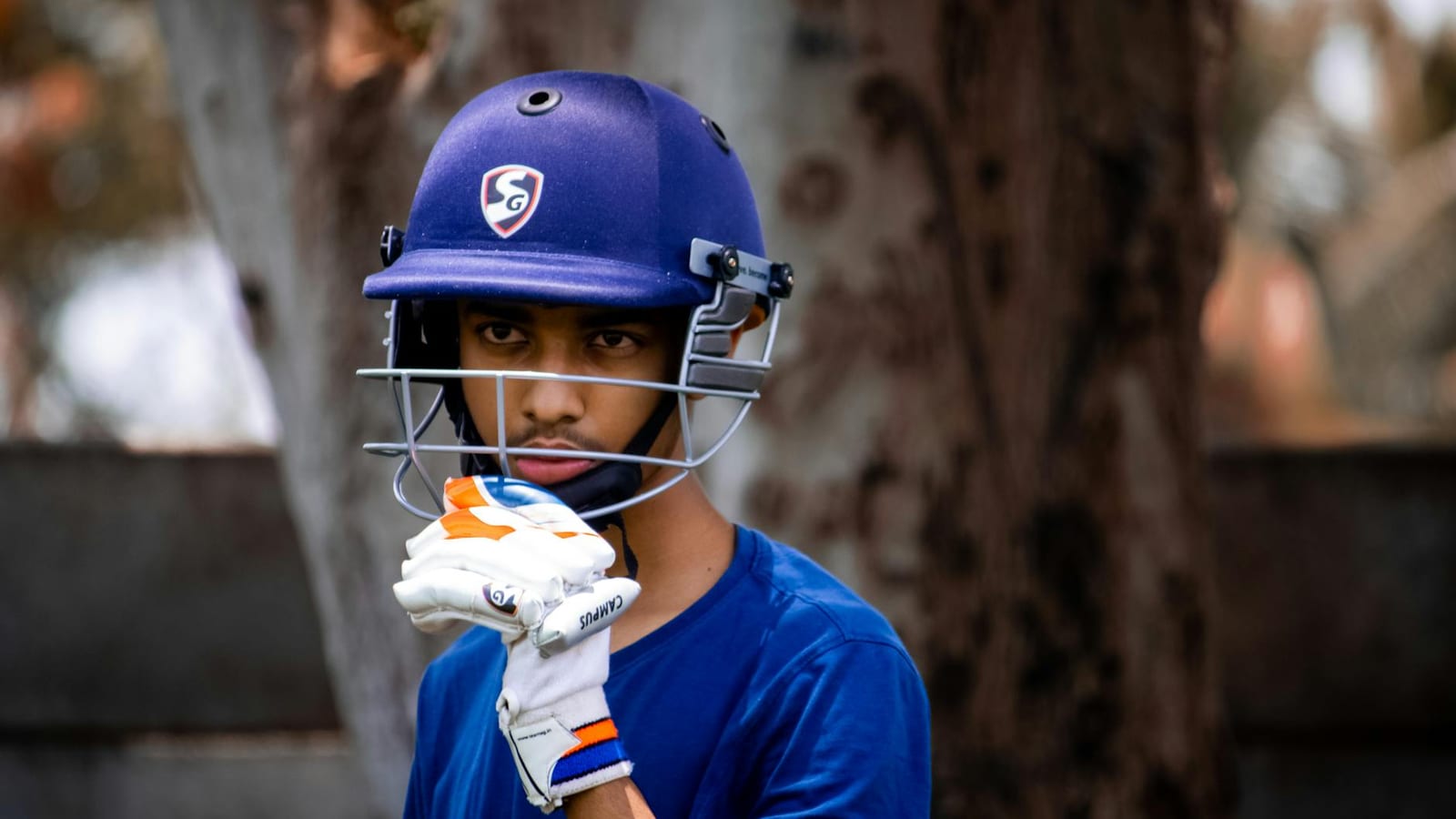
The Punjab Cricket Association confirmed the news on a Wednesday morning, in the quiet, matter-of-fact way cricket often delivers its grief. Amanpreet Singh Gill, a cricketer who once shared a dressing room with a teenage Virat Kohli and a young Ravindra Jadeja, was gone at 36.
No packed stadium to bid farewell. No ticker-tape tribute on a broadcast. Just a post on X and the silence that follows when someone leaves before their time.
Gill was part of the India Under-19 squad that played alongside players who would go on to define a generation of Indian cricket. Kohli became arguably the greatest batter of his era. Jadeja evolved into one of the finest all-rounders in Test history. Gill carved out his career in domestic cricket, wearing Punjab colours, competing in the Ranji Trophy and related competitions, far from the headlines and the IPL auction halls that eventually swallowed his former teammates whole.
That gap between Under-19 promise and a senior Indian cap is where most Indian cricketers actually live. The National Cricket Academy, the Ranji grind, the Duleep Trophy, the early-morning pitches in Mohali and the afternoon sessions in Dharamsala. For every Kohli who breaks through, there are dozens of Amanpreet Gills who play quietly and well for their state, year after year, contributing to the depth of Indian cricket without ever quite stepping into the national spotlight.
The Punjab Cricket Association noted in its announcement that Gill had shared Under-19 colours with Kohli and Jadeja. That one line does a lot of work. It is both a tribute to how gifted he was at that age and a reminder of how brutally selective the path to the Indian cap truly is.
At 36, he was not old. Test careers have stretched well past that age. Cheteshwar Pujara played international cricket into his late 30s. Jadeja himself is 36 and remains one of India’s first-choice picks across formats. The BCCI has published no further details on the cause of Gill’s passing, and the Punjab Cricket Association’s announcement was brief. For a life spent giving everything to the game, the farewell felt smaller than it should have.
The Punjab cricketing community knows how to grieve a cricketer. This is a state that produced Kapil Dev, Harbhajan Singh, and Yuvraj Singh. It has a deep love of the game and a deep respect for the men who play it with commitment, regardless of how many caps they accumulated. Gill was one of those men.
There is something worth sitting with in the timing of this news. On the same day the cricket world learned of Gill’s passing, the updated ICC T20 team rankings confirmed that India has retained its position at the top of the standings. Suryakumar Yadav leads a side that has made the shortest format look almost effortless. The IPL has turned young cricketers into franchise assets overnight. The system has never looked more sophisticated on the surface.
But the pipeline that produces a Suryakumar or a Kohli is also one that quietly leaves behind hundreds of talented men who get close, sometimes very close, and then drift out of the frame. Amanpreet Singh Gill was not a failure by any measure. You do not play Under-19 cricket for India if you are not exceptional. You do not continue competing in domestic cricket for years if the love for the game has died in you.
The Ranji Trophy has always been where the real story of Indian cricket plays out, not in World Cup finals or IPL closing ceremonies, but in the long domestic seasons where players keep showing up, match after match, for their state and for the game itself. These are men who understand that a career in cricket does not always come with a national jersey. For most of them, that understanding does not diminish what they have given.
Gill gave that for Punjab.
His Under-19 contemporaries, now among the most celebrated athletes in the country, have lost a teammate from those early days, from the time before the fame and the franchise contracts, when they were all just young men competing for the same dream.
When you follow domestic cricket closely, you learn to read Under-19 squad lists differently. Not as a prediction of who will play for India, but as a snapshot of a group of teenagers at their most hopeful. The country’s development infrastructure produces these groups every two years. Most of the names never appear in a national broadcast. Many go on to have long, honest, competitive careers in first-class cricket. A few get their national caps. And occasionally, the country loses one of them far too early.
The contrast between India sitting at the top of T20 world rankings and the passing of a domestic cricketer at 36 is not a contradiction. Both things exist in the same cricket ecosystem. The apex is visible because the base is wide and deep, built by players like Gill who kept competing without the promise of global recognition.
For the Punjab Cricket Association, for his former teammates, and for the domestic cricket community that knew his name, this is a week of grief. For everyone else who follows the game, it is perhaps a reminder that Indian cricket’s story is far wider than the 11 players on the field at any given moment.
Amanpreet Singh Gill played his cricket, trained alongside future legends, and spent years giving what he had to a state that takes its cricket personally. That life in the game deserves more than a footnote.