Alleppey Ripples backs Bishop Moore volleyball team
Alleppey Ripples has taken over Bishop Moore College's volleyball team in Mavelikara to build a stronger pathway for young Kerala players.
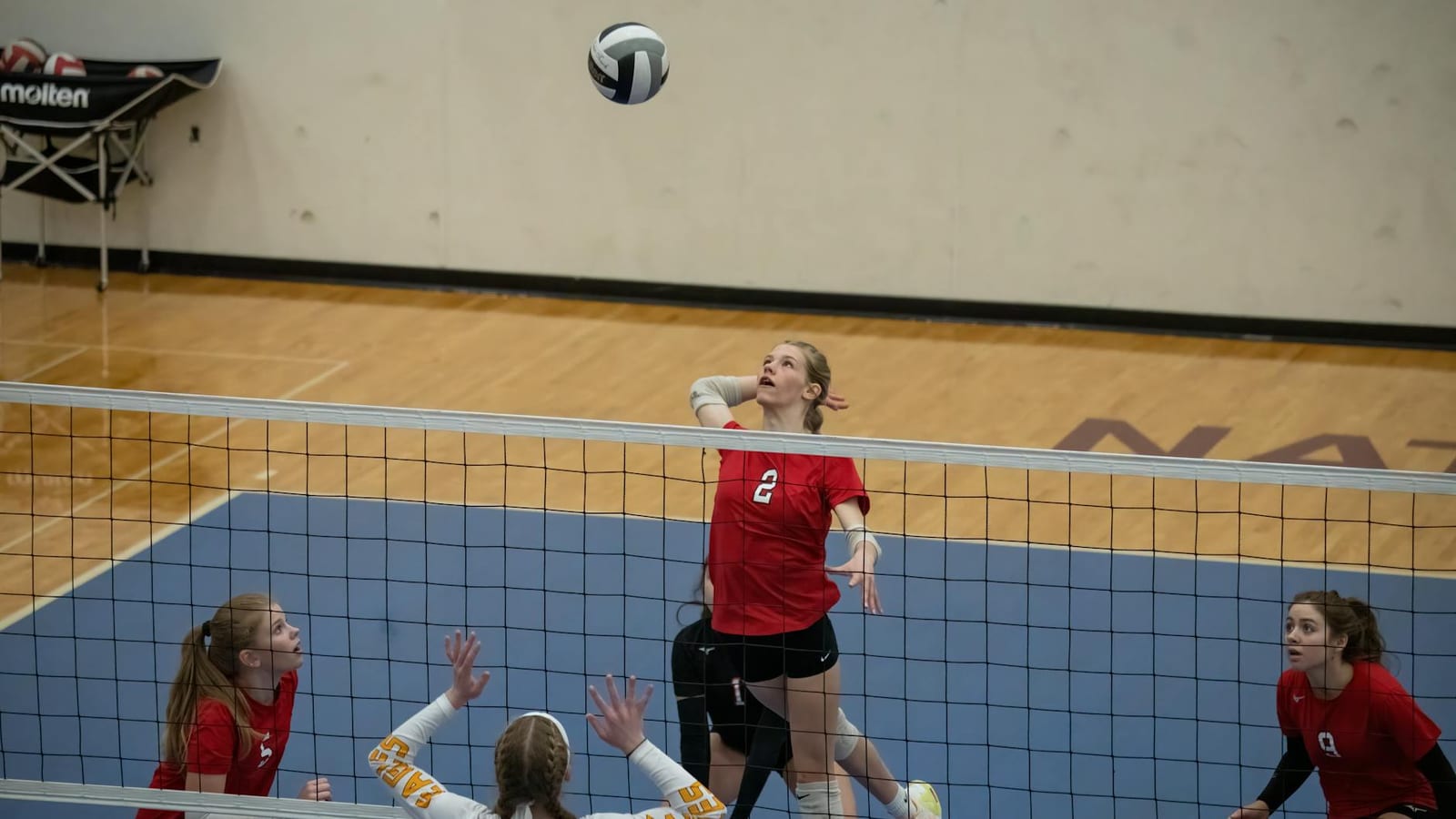
A cricket franchise walking into a college volleyball court says something about Kerala sport right now.
Alleppey Ripples, known to fans through the Kerala Cricket League, has now taken over the volleyball team of Bishop Moore College in Mavelikara.
For young players in smaller towns, this matters. A proper team setup can mean better coaching, travel, visibility, and fewer careers lost between college courts and national camps.
Alleppey Ripples enters volleyball
The move takes Alleppey Ripples beyond cricket and into a sport Kerala understands deeply.
Volleyball has long had a strong village and campus culture in the state. Many good players come through school grounds, local tournaments, and college teams. Yet only a few get the structure needed to go further.
That is the gap Alleppey Ripples now wants to attack. The management has taken over the Bishop Moore College volleyball side and plans to build it as a serious platform.
Owner and CSS Group chairman T. S. Kaladharan said the aim is to strengthen Alappuzha’s sporting dreams. He said the cricket project gave the group a start, but volleyball could take the effort deeper into rural Kerala.
That line is important. Cricket already has sponsors, television, academies, and parents willing to invest. Volleyball still depends heavily on local passion and institutional backing.
A franchise-style push can change that equation, if done with patience.
A squad with camp pedigree
The new team is not being built as a token campus project.
The squad includes junior India player Akshay Prakash and Mohammed Nihal C. K., who is part of the current senior India camp. That gives the side immediate credibility.
Mohammed Jasim and Aljo K. Sabu, both with Prime Volley experience, also add a higher level of match exposure. In volleyball, that matters because pressure comes fast. One poor reception or one loose block can shift a set.
The team also includes Suryanarayanan, Albin, Sanjay and Sujith, who have represented Kerala at the National Youth Championship.
Players from Indian university teams and other university circuits have also joined the squad. The management has brought in talent from outside Kerala too, including players from Karnataka and West Bengal.
That mix tells us two things. First, the team wants to compete quickly. Second, it does not want to depend only on local reputation.
This is how modern Indian sport now works. Talent still begins locally, but squads need wider scouting. A player from a college court in Kerala may train beside someone from Bengal or Karnataka. That is healthy.
It also raises standards. Young local players learn what national-level intensity looks like during practice, not only during tournaments.
Manoj S gets the reins
A squad like this needs more than names on paper.
Former Kerala Sports Council volleyball coach Manoj S. will train the side. He has also coached in Prime Volley, which means he has seen both the development system and the newer professional setup.
That background could help this team avoid a common trap. Many new sports projects announce big names, then struggle with daily discipline. Training loads, recovery, role clarity, and tournament planning decide the real outcome.
Volleyball is a rhythm sport. Setters, attackers, blockers, and liberos need time together. A good coach must build trust as much as technique.
Manoj will also have to balance different player profiles. Some players arrive with national camp exposure. Others come from university or youth championship routes. The challenge is to turn that into one unit.
For Kerala volleyball, this is the part worth watching. If the setup gives players regular competition and proper strength work, it can become more than a press announcement.
Why rural sport needs this
Kaladharan said the group wants to find promising players and give them support. He also said the long-term goal is to create athletes who can make India proud.
That sounds ambitious, but the logic is simple. Rural sport in India often loses players at the exact age when they need help most.
A teenager may dominate local tournaments. Then comes the difficult part. Who pays for travel? Who handles nutrition? Who guides selection trials? Who makes sure studies do not collapse?
Families cannot always carry that load. Many parents want sport to remain a hobby unless they see a clear path.
That is where college-linked teams can help. A campus provides education, daily structure, and peer competition. A franchise brings money, branding, and access.
Bishop Moore College principal Dr. Ranjith Mathew Abraham said the partnership could help both the college and Alappuzha’s sports scene. He also said it could support rural sports development and youth empowerment.
Those words will now be tested on the court.
The first measure will not be a trophy. It will be whether players get better over a season. Are they fitter? Do they face tougher opponents? Do selectors notice them? Do younger players in nearby schools start seeing volleyball as a real route?
That is how sporting ecosystems grow. Not through one flashy signing, but through visible proof.
Kerala’s volleyball moment
Kerala has always had the raw material for volleyball. Tall athletes, strong school competitions, passionate local crowds, and a culture of outdoor play all exist here.
What has often been missing is continuity. A player moves from school to college, then to a job hunt, then the trail weakens.
Professional leagues have helped bring volleyball back into public conversation. But league visibility alone cannot build the base. Teams need feeders, coaches need contracts, and players need a ladder.
Alleppey Ripples’ move sits at that intersection. It brings a cricket-backed sports brand into a college volleyball system. If handled well, it can create a small but useful bridge between grassroots and elite sport.
The selection of players shows a clear intent. The management has not filled the team with unknowns and promises. It has put together a group with junior India, senior camp, Prime Volley, youth championship, and university experience.
That blend should make the team competitive from the start. It should also create a demanding dressing room, where young players cannot hide behind potential.
For fans, the attraction is clear. They now get another local team to follow, another court to fill, and another set of young athletes to back.
For players, the stakes are sharper. A better platform also brings tougher judgment. Perform, and the next door may open. Drift, and someone else will take the spot.
That is not a bad thing. Indian sport needs more such pressure, as long as it comes with fair coaching and real support.
Alleppey Ripples has made the easy part public. It has announced the team, named the players, and set the ambition. The harder work begins in practice halls, buses, recovery rooms, and tight fifth sets. If this project holds steady, a few families in Kerala may soon see volleyball not as a risky dream, but as a serious road worth taking.