Schools Urged To Rethink Maths As Rote Learning Loses Ground
Educators are questioning old maths teaching models as smartphones and AI reduce the value of hand calculation in everyday life.
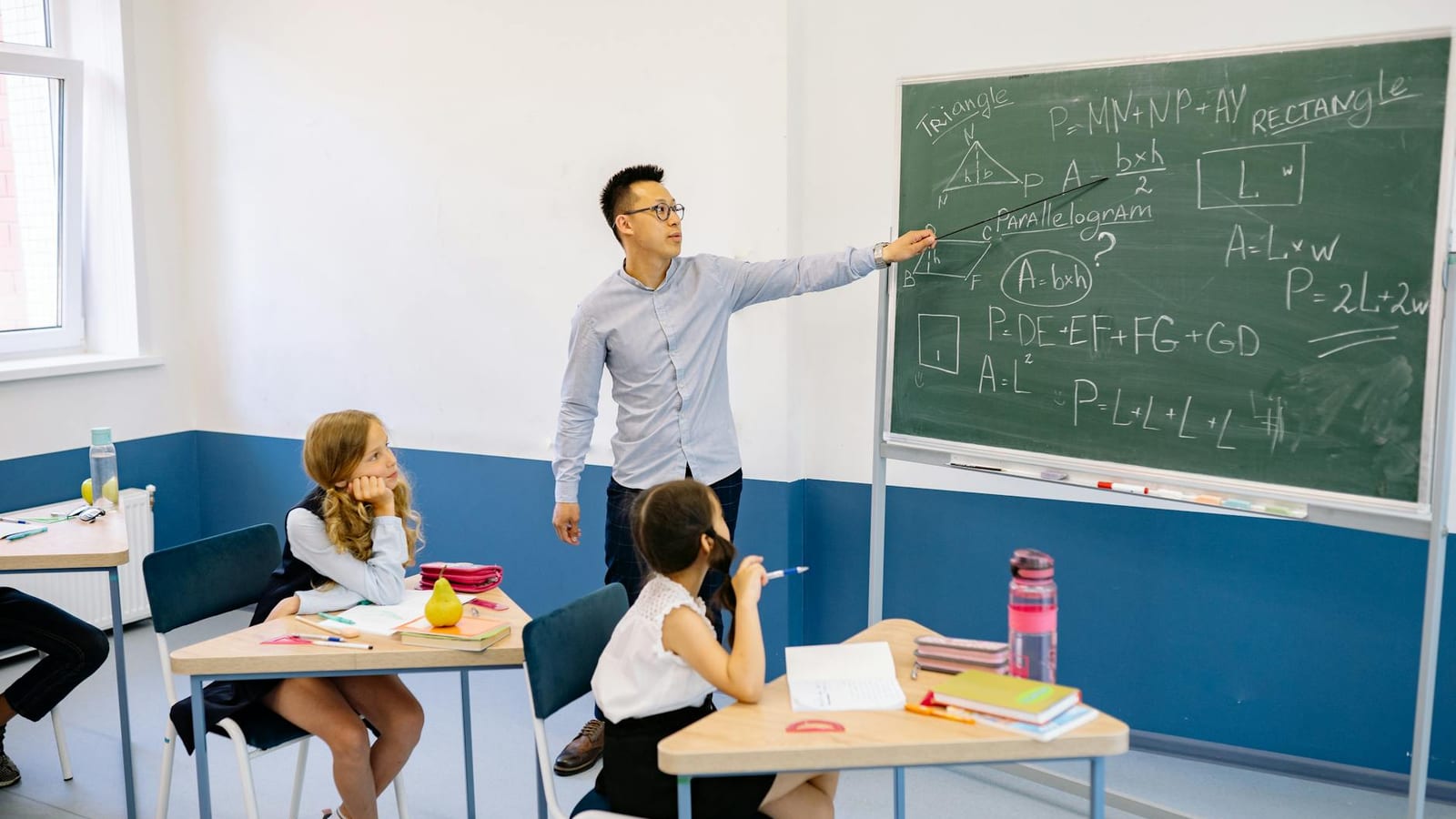
For many Indian adults, mathematics still smells of exam halls, sharpened pencils, and panic.
The old fear returns with one word: algebra. Then come geometry, trigonometry, formulas, and that familiar school memory of solving pages of sums without knowing why any of it mattered.
Now a sharper question is troubling educators across the world. What if children are not weak at maths? What if schools are teaching the wrong kind of maths for the life they will actually live?
Rote maths is losing relevance
Much of the modern school maths ladder still carries the weight of an older age. The current sequence of algebra, geometry, trigonometry, and calculus took shape in the late 19th century, when hand calculation mattered deeply.
Back then, architects, astronomers, surveyors, and civil engineers needed to calculate by hand. Speed and accuracy were valuable skills. A wrong number could mean a failed bridge or a faulty map.
That world has changed. A smartphone now does in seconds what earlier took long, careful work. Yet classrooms still spend years training children to perform calculations that machines do faster.
Ted Dintersmith, author of Aftermath: The Life-Changing Math That Schools Won’t Teach You, argues that education has fallen behind real life. Today’s world runs on data, algorithms, probability, statistics, and artificial intelligence.
But many schools still chase memorised methods and test scores. The child who can solve a familiar equation wins marks. The child who can question a misleading graph often gets no reward.
That gap matters. It is not just an academic complaint. It shapes how people read loan offers, medical reports, election promises, and investment claims.
Data sense now matters more
For an Indian audience, this debate should feel close to home. Families spend heavily on tuition, test prep, worksheets, and coaching. Maths still carries enormous social pressure.
Parents see it as the subject that keeps science, engineering, finance, and government jobs open. So children often learn to fear mistakes before they learn to think.
But adult life rarely asks people to factorise a polynomial. It asks them to compare interest rates, understand inflation, check a bill, read a health report, or spot a fake claim online.
OECD education director Andreas Schleicher has warned that poor mathematical understanding can become a practical risk. People may misunderstand medical test results, especially when probability enters the picture.
A test may sound frightening because it gives a positive result. But without understanding chances, false positives, and risk levels, people can make poor choices.
The same problem appears in money decisions. A person who cannot understand compound interest may treat a credit card bill casually. A young professional may misread a home loan offer. A family may choose an investment because the headline return looks attractive.
This is where maths stops being a school subject. It becomes a life skill.
AI has changed the classroom question
British technology thinker Conrad Wolfram has made a blunt point about maths education. Schools spend too much time on calculation, even though computers now handle calculation better.
His argument does not say children should ignore numbers. It says they should spend more time asking better questions.
What does the data show? Which number matters? Is this average hiding something? What happens if a cost rises by 8 percent each year? Can a graph mislead without lying?
These are the questions modern citizens face every day. They appear in medicine, personal finance, climate reports, food prices, and even social media trends.
Artificial intelligence has made this shift more urgent. AI tools can calculate, summarise, predict, and generate charts. But they can also make errors with great confidence.
So students need judgment. They must know when a number makes sense, when a pattern looks suspicious, and when a conclusion is too neat.
In that sense, the future of maths is not less maths. It is better maths. Less drudgery, more reasoning. Less blind procedure, more real-world sense.
India’s maths anxiety runs deep
In India, maths is not just a subject. It is a social filter.
It decides streams after Class 10. It shapes entrance exam dreams. It affects how relatives judge a child’s “intelligence” at family gatherings.
That pressure creates maths anxiety early. Many children stop seeing numbers as tools. They see them as traps.
The result follows people into adulthood. A person may run a small shop but feel unsure about margins. A salaried worker may sign insurance papers without grasping the returns. A first-time investor may follow a viral tip because the chart looks impressive.
None of this means traditional maths has no place. Algebra and geometry teach structure. Calculus opens doors in science and engineering. Mental arithmetic still builds confidence.
But the balance looks wrong. If a student leaves school unable to understand taxes, interest rates, risk, and data, something basic has failed.
A serious maths curriculum should prepare students for real choices. It should teach them how numbers behave in daily life, not only inside answer sheets.
A curriculum for real decisions
The useful shift is not hard to imagine. Schools could teach statistics through cricket scores, rainfall, food prices, and public health data. They could teach interest through loans, savings, and credit cards.
Students could learn probability through medical tests, weather forecasts, and insurance. They could learn data reasoning by checking claims made in advertisements and political speeches.
This approach would not make maths easier in a lazy way. In fact, it may make maths more demanding. Students would have to think, explain, compare, and defend their answers.
That is harder than memorising a method. It is also far more useful.
For Indian families, the bigger shift may be emotional. Parents may need to stop treating speed as the only sign of talent. A child who asks why a number matters is doing real maths too.
Schools may need to reward curiosity more than neat working steps. Exams may need fewer predictable sums and more real situations.
This change will not happen overnight. Textbooks, teacher training, board exams, and coaching markets all move slowly. They also protect the old system because everyone understands its rules.
But the pressure is building. Workplaces already value people who can read data, question assumptions, and make sound decisions. Daily life now demands the same skill.
The child who learns maths as a language of real choices will carry it beyond school. That may matter more than one more page of solved equations. For ordinary people, the maths that counts now is the maths that helps them live with clarity, not fear.