Schools urged to rethink maths for a data-driven economy
As calculators and AI reshape work, educators are questioning whether school maths should move from rote calculation to data, finance and reasoning skills.
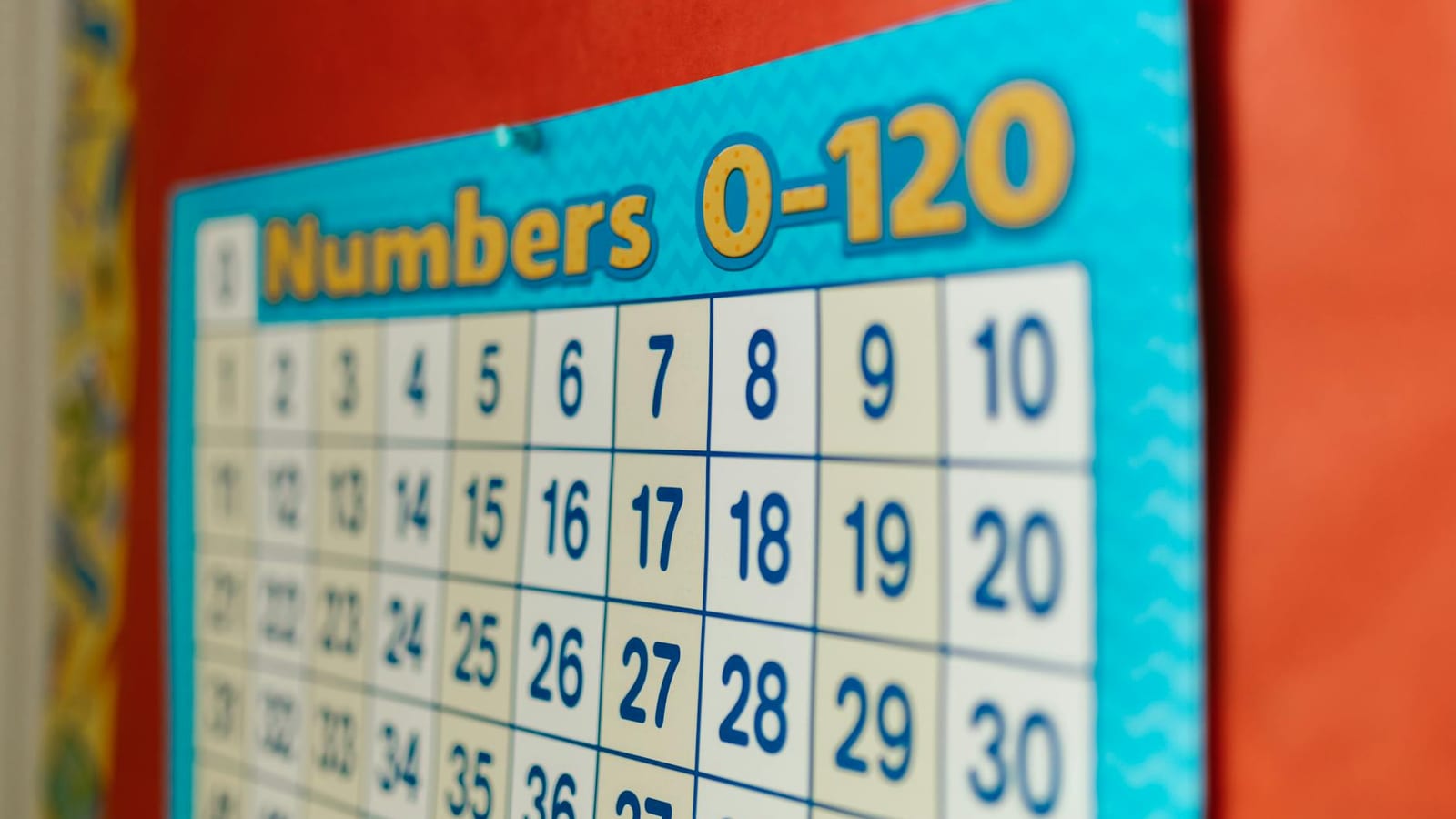
For many adults, maths still smells like exam halls, sharpened pencils, and panic.
Algebra, geometry, trigonometry, long division. A whole childhood spent chasing the right answer, often without knowing why it mattered.
Now a sharper question sits on the table. If phones can calculate faster than any classroom, why do schools still treat manual calculation as the heart of maths?
Old maths meets new life
Much of the school maths ladder used across the world has old roots. The structure drew heavily from the late 19th century, when engineers, architects, and astronomers needed hand calculation.
That made sense in 1893. It makes less sense in 2026.
Ted Dintersmith, author of Aftermath, has argued that the world now runs on data, algorithms, statistics, and artificial intelligence. Yet schools still push children through routines built for another century.
This is not an argument against maths. It is an argument for better maths.
A student who can solve a neat equation may still fail to understand a loan offer. A child who scores well in trigonometry may not know how interest grows on a credit card bill.
That gap matters in India. Families discuss EMIs, school fees, insurance, petrol prices, and food bills every month. These are all maths problems, but not the kind usually rewarded in exams.
Rote learning is losing value
The old model rewards speed and memory. Learn the method, repeat the steps, avoid mistakes, move on.
That system comforts schools because it is easy to test. A multiple-choice paper can check whether a child got the answer right. It cannot easily check whether the child understood the problem.
Conrad Wolfram has made a blunt point about this. Current maths education spends too much time on calculation, even though computers do that job better.
His argument is simple. Let machines handle the heavy arithmetic. Let students spend more time asking better questions.
That would change the classroom mood. Instead of asking only, “What is the answer?”, teachers would ask, “What does this number mean?”
For a teenager, that difference is huge. It decides whether maths feels like punishment or like a tool.
Think of a young professional comparing two home loans. The smaller EMI may look attractive. But the longer loan can cost far more over time.
That is maths with consequences. It decides how much freedom a household has for years.
Data sense is daily survival
OECD education director Andreas Schleicher has warned that weak practical maths is not just an academic weakness. It can affect health, money, and public judgment.
That sounds dramatic, but it is true.
A medical test result is full of numbers. Risk, probability, false positives, averages. Without basic data sense, patients can misunderstand what a report really says.
The same problem appears in personal finance. Inflation quietly reduces savings. Interest compounds quietly too, sometimes for the saver, sometimes against the borrower.
Many people fear maths so much that they switch off when numbers appear. That fear has a price.
When people cannot read numbers, others read numbers for them. Banks, apps, sales agents, political campaigns, and advertisers all know this.
A kirana store owner in a tier-2 city may understand margins better than many graduates. But a graduate may still struggle with tax slabs, mutual fund returns, or a “zero-cost” loan.
That is the strange split modern education has produced. People survive with practical number sense, while formal maths often floats above daily life.
What schools could teach instead
The reform case does not say children should stop learning basics. Addition, subtraction, fractions, ratios, and logic still matter.
But the balance needs repair.
Schools could teach students how to read a chart without being fooled. They could explain why averages hide inequality. They could show how a small interest rate change affects a family budget.
They could teach probability through weather, sports, health, and elections. They could teach data through transport, food delivery times, pollution levels, and prices.
This would make maths feel less like a locked room.
AI also changes the question. If a tool can solve an equation instantly, the student’s real skill lies elsewhere. Can the student frame the problem correctly? Can they spot a wrong answer? Can they explain the result?
That is where human judgment enters.
For India, this matters beyond classrooms. The country is pushing digital payments, online investing, health apps, and AI tools into ordinary life.
A citizen who cannot question numbers becomes easy to impress and easier to mislead.
Parents need a new yardstick
Indian parents often treat maths marks as a measure of intelligence. Coaching classes, extra worksheets, and exam drills reinforce that belief.
But high marks do not always mean useful understanding.
A child may know how to factorise an expression and still not understand GST on a bill. Another may hate algebra but quickly grasp profit, loss, discounts, and risk.
The second child is not bad at maths. The system may simply be testing the wrong thing.
This shift will also affect teachers. They need training, better material, and freedom from exam-only pressure. Without that, reform will remain a nice seminar topic.
Boards and schools also need courage. Changing maths means changing tests. Once tests change, teaching will follow.
For ordinary families, the real promise is practical confidence. A child who understands data can read a loan document, question a medical claim, compare investments, and judge political promises.
That is not fancy education. That is adult life.
The next big maths reform will not be about making children calculate faster. Machines have already won that race. The real task is helping young people understand what numbers are doing to their lives, their money, and their choices. That is the maths worth carrying beyond the exam hall.