Schools Need Practical Maths As Formula Learning Falls Short
A growing debate asks whether schools should shift from rote algebra and hand calculation to practical maths for money, data and daily decisions.
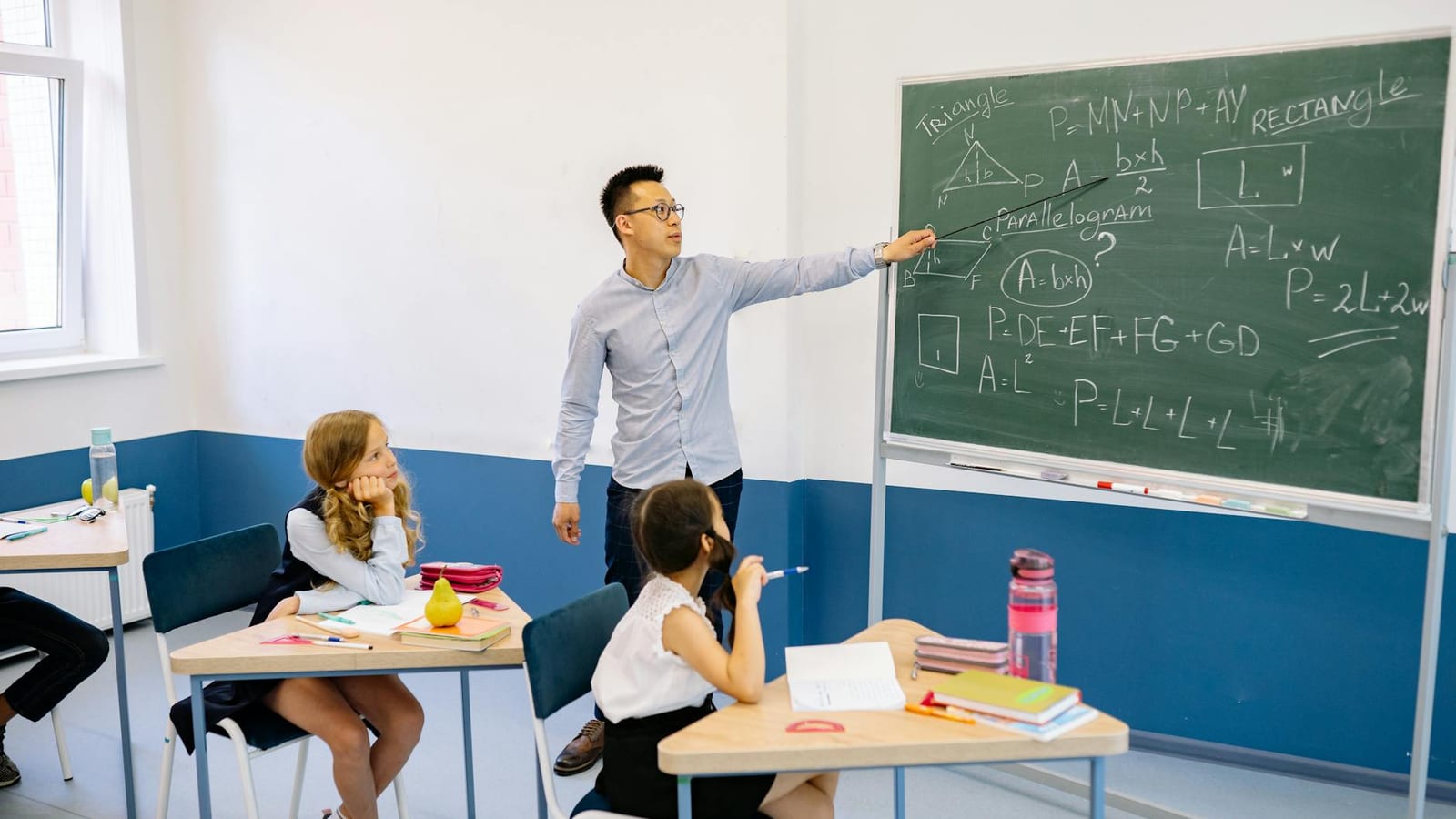
A schoolchild can solve for x, but may still not understand a loan EMI. That small gap now looks like a very large problem.
For generations, Indian homes have treated mathematics like bitter medicine. Children memorise formulas, parents chase marks, and tuition teachers drill sums late into the evening. Yet many adults still freeze when a bank explains compound interest.
That is the uncomfortable question behind a growing global debate. Are schools teaching the maths people actually need, or the maths that made sense in 1893?
The old maths still lingers
The modern school maths ladder, algebra, geometry, trigonometry and calculus, owes much to the Committee of Ten, an American education group from 1893. Back then, hand calculation mattered deeply.
Architects, astronomers and engineers needed to calculate by hand. Accuracy meant skill, and skill meant long practice. So schools built a system around solving sums manually.
That logic now feels dated. A smartphone can do in seconds what once took pages of working. Yet classrooms still reward children for doing what machines do faster and cleaner.
This does not mean maths has become useless. It means the useful part has shifted. The real need today is not only calculation. It is judgement.
A student must know what data means. They must spot a weak claim, read a chart, compare loan offers, and understand risk. That kind of maths sits much closer to life.
Data now shapes daily life
Author Ted Dintersmith has argued that schools still chase old-style test scores while modern life runs on data, algorithms, statistics and artificial intelligence. His point should worry every parent.
A child today grows up inside numbers. Food apps rank restaurants. Banks score borrowers. Fitness bands count steps. Social media feeds decide what people see next.
Even fashion, music and travel now carry a data layer. Trends spread because platforms measure attention. Discounts appear because companies study behaviour. Taste itself is quietly being sorted by numbers.
For urban Indian families, this matters in very ordinary ways. A young professional comparing two credit cards needs maths. A parent choosing health insurance needs maths. A small business owner checking digital ad spending needs maths.
But this is not the maths of proving a theorem on paper. It is the maths of asking, what does this number hide?
That skill has become part of modern living. It affects money, health, work and even confidence. People who understand numbers move through systems with less fear.
When numbers affect health
The OECD education director Andreas Schleicher has warned that weak practical maths is not just a school problem. It can become a life problem.
His concern is simple. Many people struggle to understand medical risk. They may read a test result wrongly. They may confuse probability with certainty. They may panic over a number without context.
Anyone who has sat with a family member outside a diagnostic lab knows this feeling. A report arrives, full of figures, ranges and percentages. The doctor explains, but anxiety often fills the gaps.
In such moments, basic statistical thinking helps. It tells people that one number rarely tells the full story. It teaches them to ask about false positives, repeat tests and risk levels.
The same problem appears in public health. During Covid, many people saw graphs daily for the first time. Some understood trends. Others got lost in case counts, death rates and changing denominators.
That was a national lesson in data literacy. It showed that numbers do not speak for themselves. Someone must read them well.
Money mistakes begin early
Financial literacy may be the clearest example. Schools teach interest formulas, but many students leave without understanding debt.
That gap follows them into adulthood. Credit card dues, home loans, mutual funds and insurance plans all depend on simple numerical judgement. Yet the language around them can feel designed to confuse.
A person may know how to solve a quadratic equation. But they may still not know how a 2 percent fee eats into savings. They may not see how inflation reduces the value of cash.
Some research cited in the education debate links maths anxiety with poor financial choices. The precise figure may vary across studies, but the pattern is familiar. Fear of maths pushes people away from money decisions.
In India, this carries a sharper edge. More first-generation investors are entering markets through apps. More families are taking formal loans. More small traders accept digital payments.
That is progress. But it also means more people face financial products with hidden traps. Practical maths becomes a form of self-defence.
Calculation is no longer enough
Education thinker Conrad Wolfram has made a blunt argument. Schools spend too much time on hand calculation, while computers can handle that job.
His larger point is not that children should stop learning basics. They must know what numbers mean. But endless manual solving should not swallow the timetable.
He argues that students should spend more time framing problems. What question are we asking? What data do we need? Which tool should we use? Does the answer make sense?
That is how real work happens now. An analyst, designer, doctor or entrepreneur rarely wins by calculating fastest. They win by choosing the right problem and reading the result wisely.
For Indian classrooms, this is a difficult shift. Exams still reward neat steps and fixed answers. Coaching systems still train speed. Parents still trust visible hard work.
A child filling notebooks looks busy. A child questioning a dataset may look less serious. That old visual comfort keeps the system stuck.
But the economy has moved. Jobs increasingly need people who can interpret information, not just follow procedure. Even lifestyle choices now demand sharper number sense.
The change will not be easy. Teachers need support, not slogans. Textbooks need better examples from health, shopping, tax, climate, sports and household budgets. Exams must test reasoning, not memory alone.
India also has to be careful. Digital tools cannot become another excuse for weaker fundamentals. Children still need number sense. They still need estimation. They must know when a calculator answer looks absurd.
The better path sits between old discipline and new relevance. Teach enough calculation to build confidence. Then move quickly towards data, money, probability and real decisions.
For ordinary readers, this debate is not about making maths fashionable. It is about making it humane. The next generation should not spend years fearing formulas, only to feel helpless before an EMI, a medical report or a misleading chart. The real test of maths education is not the board exam. It is whether people can use numbers to live with more clarity, less fear and better choices.