Schools Must Rethink Maths for Money, Data and AI Skills
As calculators and AI handle routine sums, educators are questioning whether classrooms should focus more on risk, money, data and real-life numeracy.
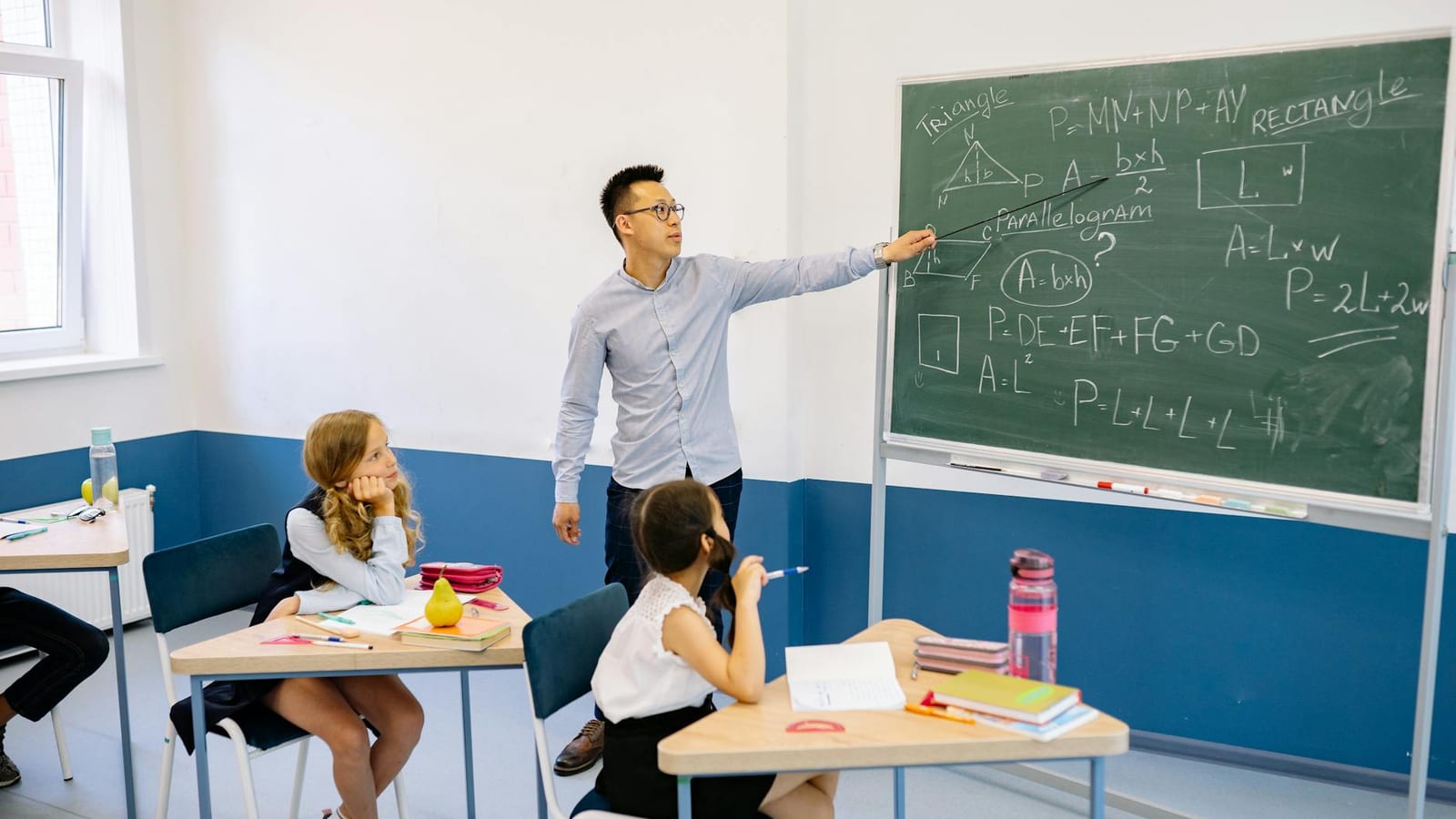
A child can solve for x, yet freeze before a credit-card interest rate. That gap says plenty about modern education.
For generations, maths has carried a strange social power. Parents celebrate speed, schools reward memorised steps, and students quietly carry fear. But the real world now asks a different question. Can people understand risk, data, money, health reports, and algorithms?
That is why the old maths debate has returned with fresh urgency. The issue is not whether maths matters. It does. The sharper question is whether schools still teach the maths people actually need.
Old maths meets a new world
Much of today’s school maths still follows an old ladder. Algebra first, then geometry, then trigonometry, then calculus for the chosen few. This structure made sense when engineers, architects, and astronomers needed hand calculation.
That world has changed. A phone now performs calculations faster than any classroom topper. Yet students still spend years doing long manual steps that machines handle instantly.
Ted Dintersmith, author of Aftermath, has argued that education still worships test scores and old routines. His broader point is simple. Life now runs on data, statistics, algorithms, and artificial intelligence.
But many classrooms still treat computation as the main skill. Computation means doing the arithmetic or algebra by hand. It has value, but it is no longer enough.
The bigger skill is judgement. What does a number mean? Is a graph misleading? Does a claim about growth hide a weak base? Can a person compare two loans without panic?
These are not abstract questions. They sit inside everyday life. A young professional taking a home loan faces them. So does a family reading a hospital report.
Why maths anxiety matters
Maths fear looks private, but it has public consequences. A student who learns to fear numbers often becomes an adult who avoids them. That avoidance can cost real money.
OECD education official Andreas Schleicher has warned that weak practical maths is more than a school problem. It can affect life decisions, including health and finance.
Medical reports offer a clear example. Many tests come with probabilities, margins, and risk levels. Without basic data sense, patients may misread what a result actually means.
A “positive” result does not always mean certainty. A “risk reduction” can sound huge while the actual benefit remains small. These distinctions matter when families make stressful decisions.
Money works the same way. Inflation, compound interest, and loan terms punish confusion. A person need not become a mathematician to understand them. But basic comfort with numbers is now survival skill.
That is especially true in India. More people use digital payments, trading apps, insurance products, and buy-now-pay-later schemes. Financial products have entered everyday life faster than financial education.
A kirana store owner in a tier-2 city now deals with QR payments, small loans, GST records, and changing prices. This is maths in the wild. It rarely looks like a textbook chapter.
Data reasoning enters daily life
The new argument is not against algebra or geometry. It is against treating them as the whole universe of maths.
Conrad Wolfram has long argued that schools spend too much time on manual calculation. He says students should focus more on framing problems and reading data.
That idea feels obvious in 2026. Computers can calculate, but they cannot decide what matters for a family budget. They cannot judge whether a chart hides a political trick.
Students need to ask better questions. What data has been used? What has been left out? Is the average hiding inequality? Does a percentage sound bigger than it is?
This skill now touches politics too. Governments announce growth rates, welfare numbers, employment figures, and inflation data. Citizens need enough number sense to examine these claims calmly.
The same applies to technology. Artificial intelligence depends on data patterns. If people do not understand bias, probability, and error, they may either worship AI or fear it blindly.
That is where lifestyle and education quietly meet. Modern urban taste already values coding classes, robotics kits, and finance apps. But the deeper shift is cultural. Numeracy is becoming a marker of confidence.
Parents once asked whether a child could calculate quickly. The better question now is whether the child can reason clearly. Speed impresses in exams. Clarity helps in life.
What schools may need to change
A practical maths classroom would look different. It would still teach foundations. But it would connect them to decisions students recognise.
Interest rates could teach exponential growth. Grocery bills could explain inflation. Medical screening could introduce probability. Election surveys could teach sampling and error.
This does not mean turning every lesson into a life-skills workshop. It means making maths less performative and more useful. Students should see why a concept matters before they drown in procedure.
Assessment also needs a rethink. Multiple-choice tests reward speed and pattern recognition. Real life rewards interpretation. A person must explain why one loan is costlier, not just tick option C.
For India, this debate deserves attention beyond elite schools. The pressure of board exams often leaves little room for curiosity. Coaching culture then doubles down on tricks and shortcuts.
That may help students clear a paper. It may not help them read a mutual fund document, question a survey, or understand a health risk.
The change will not be easy. Teachers need training. Textbooks need fresh examples. Exams must stop punishing students for using tools that every adult uses daily.
Calculators and computers should not be treated as enemies. They should free students from repetitive labour. Then classrooms can focus on judgement, logic, and meaning.
The real test of maths education should come after school ends. Can a student compare salaries and costs in two cities? Can she understand taxes? Can he spot a fake statistic online?
If the answer is no, then high marks may be hiding a weak education.
The future of maths will not be about abandoning rigour. It will be about moving rigour to the right place. The next generation needs fewer hours of fear and more practice in thinking with numbers. For ordinary people, that could mean better loans, wiser health choices, and less helplessness before the fine print.