Raveena Ravi weds director Devan Jayakumar in private ceremony
Actor and dubbing artist Raveena Ravi married director Devan Jayakumar on May 10 in a quiet ceremony attended by close family and friends.
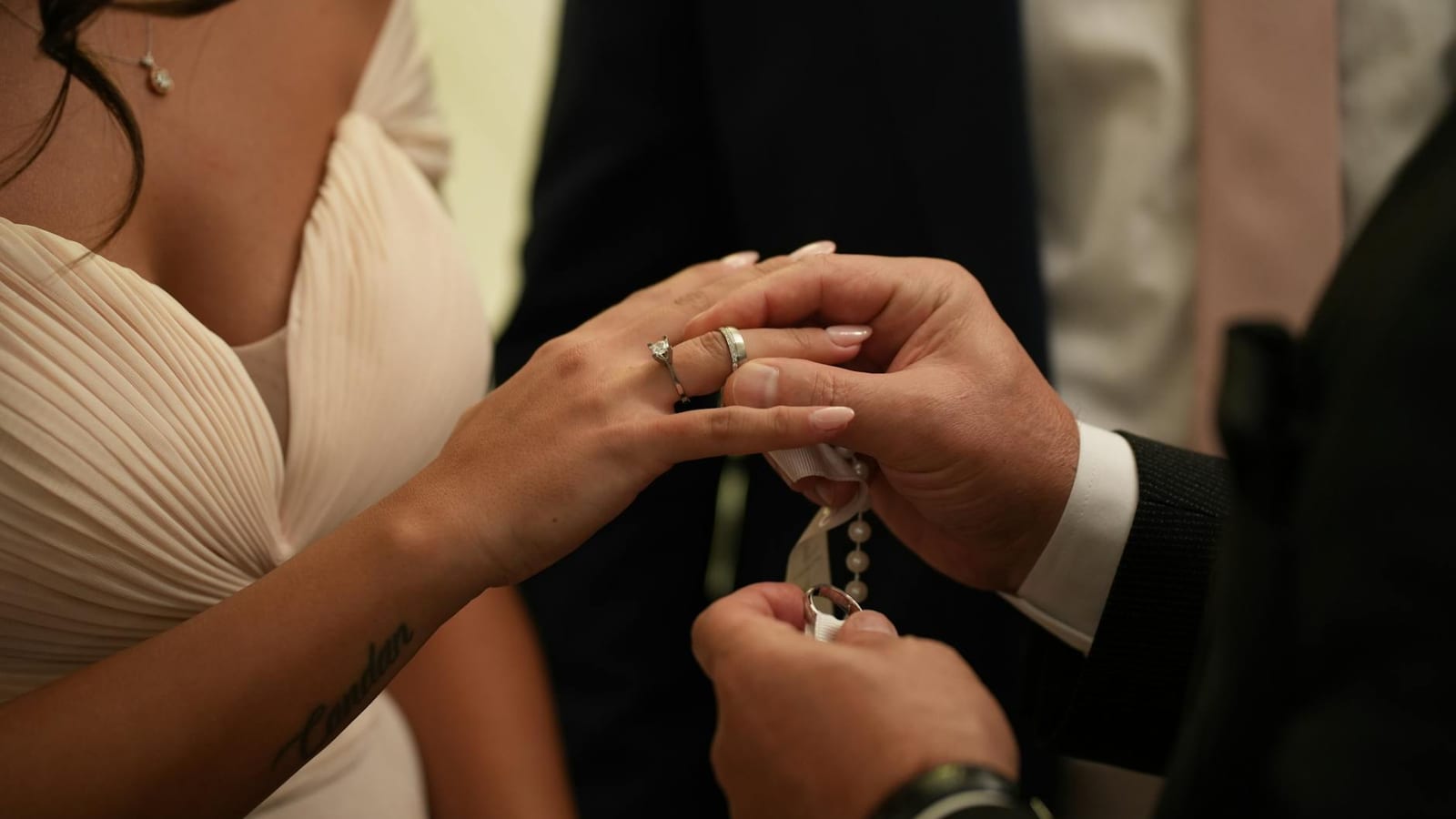
A quiet wedding can say more than a grand one, especially in cinema families.
Actor and dubbing artist Raveena Ravi married director Devan Jayakumar in a private ceremony on May 10, 2026. Her mother, veteran dubbing artist and actor Sreeja Ravi, shared the wedding photographs on social media, along with a note that carried both joy and grief.
The couple kept the ceremony simple. Close family members and a small circle of friends attended it. There was no large industry gathering, no packed guest list, and no attempt to turn the wedding into a public spectacle.
That choice had a deeply personal reason.
Sreeja Ravi said the family could not celebrate the occasion in a large way after the death of her husband, Ravindranath. He passed away in August 2021. She wrote that she had once dreamt of celebrating her daughter’s wedding with the film fraternity, especially after a 50-year journey in cinema.
But without him, that dream felt incomplete.
For many Indian families, weddings often become public statements. The guest list speaks. The venue speaks. The photographs speak. In film families, even more so. A wedding can quickly become an industry event, watched by fans, peers, stylists, photographers, and social media pages.
Raveena Ravi’s wedding moved in the other direction.
It was intimate, almost old-fashioned in its restraint. That made it stand out. At a time when celebrity weddings often arrive in carefully edited batches of haldi, mehendi, sangeet, and reception posts, this one carried a quieter emotional weight.
Sreeja Ravi’s note did not read like a formal announcement. It sounded like a mother speaking from a place of memory. She said her daughter had begun a beautiful new chapter. She also said she was neither physically nor mentally ready for a large celebration.
That honesty is rare in celebrity culture, where grief is often hidden behind polished smiles.
Raveena Ravi comes from one of South Indian cinema’s most recognisable voice families. Her mother, Sreeja Ravi, has been a major presence in dubbing for decades. Raveena entered cinema as a child, lending her voice in the Mohanlal film Vanaprastham.
That is not a casual beginning. Dubbing is invisible work to many viewers, but it shapes how audiences remember characters. A voice can soften a scene, sharpen anger, carry heartbreak, or make a performer feel closer to the audience.
Raveena Ravi built her career in that space before expanding into acting.
She dubbed for Malayalam films including FIR and Dubai, and worked across other South Indian languages too. She also lent her voice in Valatty, the film directed by Devan Jayakumar. That detail gives the wedding a neat professional echo, though the family kept the announcement personal.
As an actor, Raveena appeared in Malayalam films such as Nithyaharitha Nayakan and Azadi. Tamil audiences also saw her in films including Maamannan. Her screen career has grown alongside her voice work, which is not easy.
In Indian cinema, dubbing artists often remain known inside the industry before the public fully recognises them. Actors face the camera. Dubbing artists complete the emotional bridge. Raveena Ravi belongs to both spaces, which makes her career unusual and interesting.
Her decision to continue acting and dubbing after marriage also matters.
It may sound routine, but in cinema families, marriage still attracts old questions. Will the actor continue? Will work slow down? Will family expectations change? Female performers hear these questions far more often than men do.
Raveena Ravi’s plan to keep working quietly answers that.
It also reflects a wider change in South Indian cinema. More women now treat marriage as one part of life, not a full stop. Audiences have changed too. They are less surprised when women return to work quickly, choose their own pace, or keep professional identities intact.
That shift has not happened evenly. But it is visible.
Devan Jayakumar, too, comes from a film-linked family. His father, Jayan Mulankad, has contributed to Malayalam cinema as a producer and director. His mother, Kala Jayan, taught at SD College in Alappuzha. His sister, Devi Jayan, is a psychologist at the University of Chicago and lives in the United States with her family.
Sreeja Ravi said she was happy to welcome Devan as a loving son, and through him, a new family. She also thanked those who stood by them, naming several people in her social media note.
She apologised to those the family could not inform or invite. That line will feel familiar to many Indian households. Weddings, even small ones, carry a strange burden of explanation. Someone is always left out. Someone always expects a call.
Here, the apology felt less like formality and more like a request for understanding.
The wedding also tells us something about how celebrity intimacy is changing. Not every public figure wants a high-gloss wedding rollout. Not every family moment needs to become content. Sometimes, especially after loss, privacy becomes the real luxury.
For fans, the photographs offered a glimpse. But the larger story sat in the mother’s words. A daughter beginning married life. A late father remembered at the centre of the day. A mother balancing happiness with absence.
That mix is very Indian, and very human.
Weddings in cinema often invite talk about clothes, jewellery, venues, and guest lists. Those details have their charm. They feed aspiration, fashion pages, and fan culture. But this wedding drew attention because of what it chose not to do.
It did not chase scale. It did not turn grief into performance. It kept family at the heart of the occasion.
For Raveena Ravi, the next phase will likely be watched with interest by Malayalam and Tamil audiences. She has already built a dual identity, as a voice artist and actor. That gives her a rare kind of flexibility in an industry that often boxes women quickly.
For Devan Jayakumar, whose Valatty brought a distinct directorial voice, this moment also places him in a family with deep cinema roots. Malayalam cinema has always worked through such overlapping creative circles. Families, collaborators, technicians, actors, and voice artists often grow around one another.
That is why this wedding feels larger than a personal update, without becoming a spectacle.
It reminds audiences that behind cinema’s bright surface are working families, private griefs, and ordinary decisions. A simple wedding can still carry history. A social media post can still carry tenderness. And a new marriage can begin with both blessing and memory in the same frame.