Maths Education Faces Rethink as Life Skills Gap Widens
Debate grows over school maths as parents and educators question rote learning and push for practical numeracy for real-life decisions.
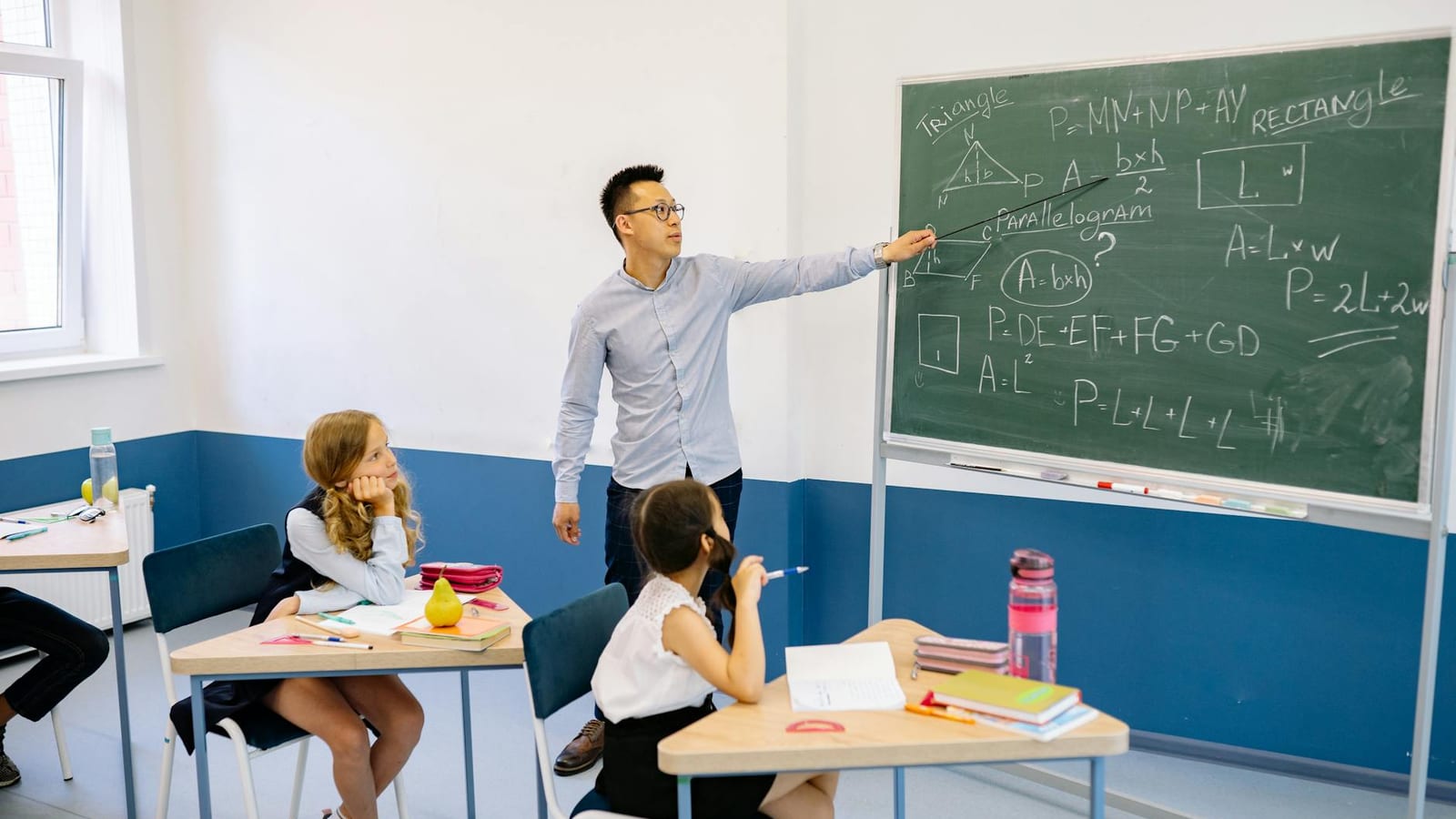
Maths fear starts early in many Indian homes. One marksheet can turn dinner into silence.
For years, children have been told that algebra, geometry and trigonometry build discipline. Parents have paid for tuitions, extra worksheets and weekend tests. Yet many adults still freeze before a loan document, a medical report, or an investment pitch.
That gap now sits at the heart of a wider debate. The question is no longer whether children need maths. They do. The sharper question is what kind of maths helps them live better.
The old maths bargain is cracking
Much of today’s school maths still carries the shape of an older world. The Committee of Ten, formed in the United States in 1893, helped define a curriculum built around formal calculation.
That made sense then. Architects, astronomers and civil engineers needed strong manual calculation. There were no smartphones, spreadsheets, or AI tools doing the heavy lifting.
The problem is that classrooms have changed far less than life outside them. A teenager can order food, compare cab fares and edit video on one device. Yet in school, the same teenager may spend hours solving equations by hand.
This is not only an American debate. Indian parents know this script very well. Maths often becomes the subject that decides confidence, stream choices and family prestige.
A child who cannot quickly solve a textbook problem is labelled weak. But the same child may understand patterns, prices and probabilities in real life. The system rarely rewards that kind of intelligence.
Data now runs ordinary life
Author Ted Dintersmith has argued that schools still chase old test scores while the world has moved to data, algorithms, statistics and AI.
That sounds like a tech-sector complaint at first. It is not. Data now decides very ordinary parts of modern life.
A family compares two health insurance plans. A salaried worker checks a home loan rate. A shopkeeper studies digital payment trends before stocking inventory. None of this needs advanced calculus. It needs clear numerical judgment.
This is where the old curriculum starts looking thin. Students may learn to manipulate symbols, yet still struggle with interest, tax, inflation and risk.
For India, the stakes are even sharper. More people now invest through apps. More families borrow for education, homes and small businesses. Digital finance has moved faster than financial understanding.
A young professional may know how to solve a quadratic equation. But that may not help while choosing between fixed and floating interest rates.
The real lifestyle shift is visible here. Urban India now treats money, health and technology as daily self-management. Maths sits quietly under all three.
Rote learning misses real risk
The OECD has warned through its education work that poor practical maths is not just a school problem. It can affect health and life choices.
Andreas Schleicher, who leads education work at the OECD, has often pushed countries to focus on how students use knowledge. That matters when numbers arrive in confusing forms.
Take a medical test report. A patient may see percentages, ranges and risk levels. Without basic data sense, families can panic or ignore warning signs.
Doctors also communicate through numbers. A small risk may sound huge when framed badly. A large risk may sound harmless when buried in soft language.
This is why maths anxiety has real costs. People who fear numbers often avoid money decisions. They delay investments, accept poor terms, or trust whoever sounds most confident.
That is a dangerous mix in a market full of shiny finance products. A small monthly payment can hide a large total cost. A “low risk” product may still carry conditions.
For a kirana store owner in a tier-2 city, maths is not abstract. It decides margins, credit cycles and stock planning. For a family on a housing loan, it decides years of pressure.
The social signal is also changing. Earlier, “good at maths” meant speed and accuracy on paper. Now it increasingly means knowing which number matters.
Computers can calculate, children can think
Education thinker Conrad Wolfram has made a blunt point. Schools spend too much time on calculation, while computers do that better.
His argument is not that children should stop learning maths. It is that they should spend more time asking the right questions.
What is the problem? Which data is useful? What does the answer mean? Can it be trusted? These are human skills.
A calculator can multiply faster than any student. AI can solve many textbook problems within seconds. But neither can decide what a family can afford next year.
That judgment needs context. It needs common sense. It also needs comfort with uncertainty, because real life rarely gives clean multiple-choice answers.
This is where data reasoning becomes important. It teaches students to read graphs, compare claims and spot misleading averages.
Financial literacy belongs in the same bucket. A school-leaver should understand tax, interest, compounding and basic investment risk. These are not luxury skills.
For Indian households, compounding is a daily miracle and a daily trap. It can grow savings over time. It can also make debt quietly dangerous.
The curriculum debate, therefore, is not about making maths easier. It is about making it more honest.
Classrooms need a new common sense
Changing maths education will not be simple. Exams drive classrooms, and classrooms drive coaching. Parents also trust what they can measure.
A worksheet full of solved sums looks productive. A discussion on loan rates may look loose, even if it teaches more useful thinking.
Teachers will need support too. Many were trained in the same rote-heavy system. Asking them to teach data reasoning without tools or training would be unfair.
India also has a scale problem. Any serious shift must work in elite schools, government schools and small-town coaching centres. It cannot remain a polished urban experiment.
Still, the direction is clear. The future classroom must treat calculation as one part of maths, not the whole subject.
Students should still learn structure, logic and discipline. But they should also learn how numbers behave in messy life.
That means more real examples. Food prices, health data, bank rates, election figures, climate charts and household budgets can all become maths lessons.
It also means changing what marks reward. Speed matters less when machines are faster. Interpretation matters more when misinformation travels quickly.
For parents, this may require an emotional shift. A child who asks why an answer matters may be doing better maths than one who only writes it neatly.
The deeper story is not about algebra losing status. It is about maths returning to life. If schools can make numbers less frightening and more useful, the gain will travel far beyond exams. It will show up in calmer families, smarter borrowers, safer patients and citizens who ask better questions.