Maths education faces rethink as AI reshapes classroom needs
As calculators and AI handle complex sums, educators are questioning whether schools should move from rote maths to data and reasoning skills.
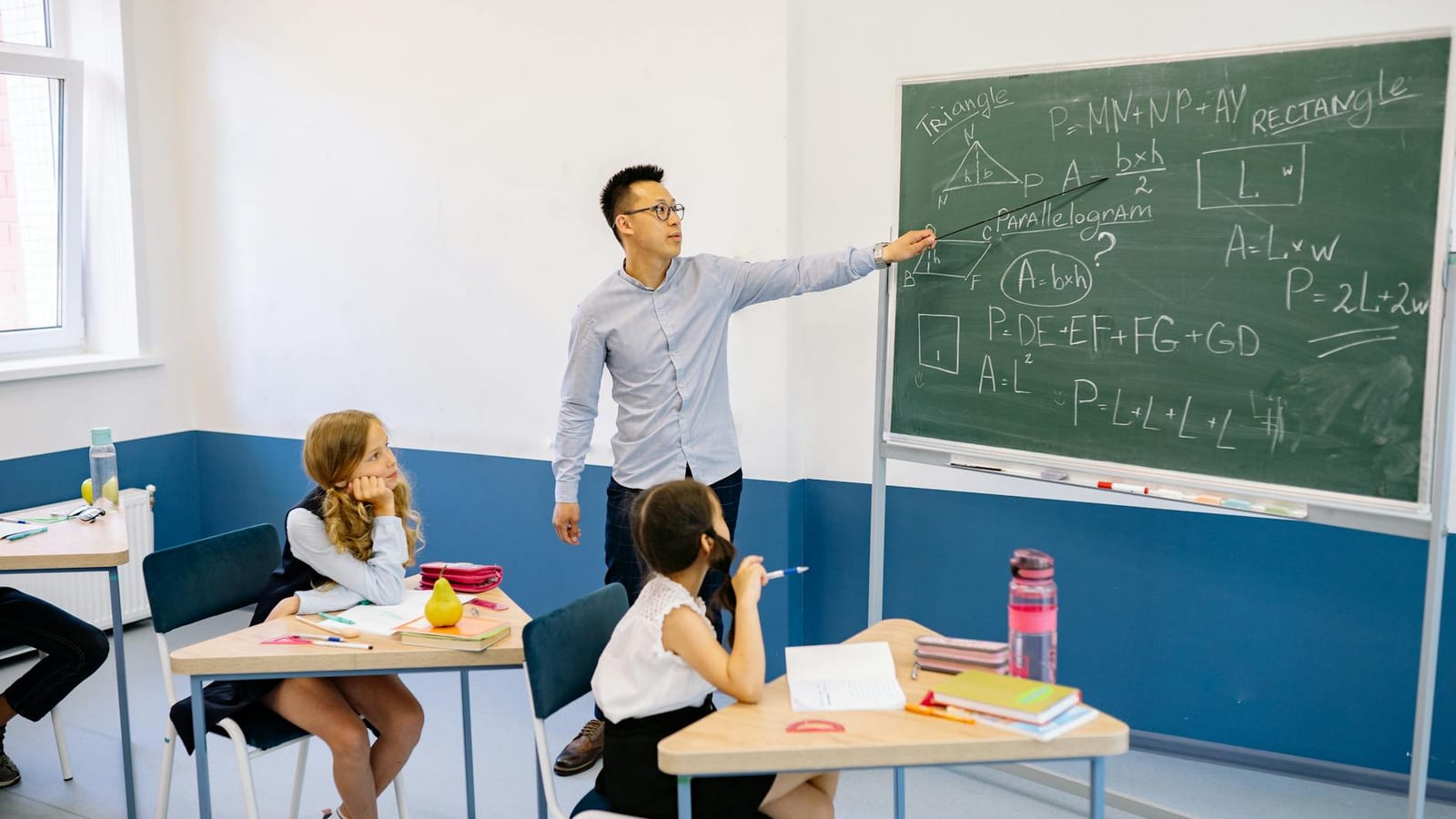
The scariest sound in many Indian classrooms is still simple: “Open your maths notebook.”
For generations, children have treated mathematics like a test of courage. Algebra, geometry, trigonometry, long calculations, and pages of steps. Many adults still remember the panic. The funny part is, most of that fear did not prepare them for real life.
Today, a phone can solve complex sums faster than any student. Yet schools still spend years training children to do what machines already do better. That is the uncomfortable question now facing maths education.
Why old maths feels broken
Much of the modern maths syllabus still carries the smell of the 19th century. In the United States, the old structure goes back to an 1893 education group called the Committee of Ten.
That world needed people who could calculate by hand. Architects, astronomers, and civil engineers had to work through numbers manually. A small error could change a bridge, a building, or a map.
But today’s world runs on data, algorithms, statistics, and artificial intelligence. The workplace has changed. The classroom has not changed fast enough.
Author Ted Dintersmith, who wrote about maths that schools rarely teach, argues that children are still pushed through old routines. They chase test scores, formulas, and multiple-choice answers.
The problem is not that maths has no value. The problem is that schools often teach the least useful part first. They reward speed in calculation, not clarity in thinking.
A student may solve a quadratic equation. But the same student may not understand a loan, an insurance clause, or a misleading graph. That gap matters far more outside the exam hall.
Data now shapes daily life
This is no longer a debate for education experts alone. Maths now sits inside every ordinary decision.
A family reading a medical report needs basic data sense. A young professional comparing home loan rates needs it too. A shop owner looking at digital payment charges also needs it.
OECD education director Andreas Schleicher has warned that poor practical maths can become a life risk. People may misunderstand medical test results. They may make weak financial choices.
That sounds dramatic, but it is easy to see. A percentage looks small until it compounds. A health risk looks huge until one understands probability. A loan looks cheap until the total interest appears.
This is where old-style maths fails many people. It teaches the ritual of calculation. It often skips the judgment needed to use numbers well.
For Indian families, this has sharp meaning. Household budgets now face school fees, rent, EMIs, medical bills, and rising prices. A weak grip on numbers can quietly drain money every month.
The source material also points to maths anxiety. It says many people who fear maths fall into financial traps. That is not just a school memory. It becomes an adult burden.
Let machines do calculation
Education thinker Conrad Wolfram has made a blunt case. Schools spend too much time on hand calculation. Computers and AI can do that faster and cleaner.
His argument is not that children should stop learning maths. It is that they should learn the right maths for this century.
Instead of spending most classroom time on manual steps, students should ask better questions. What problem are they solving? Which data matters? Which answer makes sense?
That shift may sound small. It is actually huge.
A child who understands interest rates can compare loans. A teenager who understands statistics can read health claims. A voter who understands data can question political promises.
This is the kind of maths that follows people into life. It does not vanish after the board exam.
Financial literacy should not remain an extra workshop. It belongs inside regular maths. Taxes, savings, inflation, risk, and investment are not abstract topics. They shape everyday survival.
The same applies to data literacy. Students should learn how charts can mislead. They should know the difference between average and typical. They should ask who collected the data, and why.
India cannot ignore this
India has a special reason to care. The country talks constantly about digital growth, AI skills, fintech, and startups. But those dreams need citizens who understand numbers.
A coding bootcamp cannot fix weak number sense overnight. A banking app cannot protect users who do not understand interest. A government dashboard means little if people cannot read trends.
This is also a social issue. Children from confident, well-resourced homes often get help outside school. They learn money talk at the dinner table. They may have parents who explain loans, markets, and tax.
Many others only get what the classroom gives them. If school maths stays trapped in rote learning, the gap widens quietly.
There is also a cultural point here. Indian parents often treat maths marks as proof of intelligence. A 95 in maths still carries social weight. Coaching centres feed that pressure.
But marks can hide a weak foundation. A child may master exam patterns without understanding real-world numbers. That is not education. It is training for one kind of race.
The better question is simple. Can the student use maths after school?
Can they spot a bad loan? Can they compare two job offers? Can they understand a medical risk? Can they read a climate chart or a market trend?
If the answer is no, then the syllabus has done only half its job.
A better classroom is possible
A useful maths class would still teach logic and structure. It would not throw away discipline. But it would connect numbers to life much earlier.
Students could study household budgets, sports data, health statistics, public spending, and business pricing. They could use spreadsheets and calculators without shame. The focus would move from “show every step” to “explain your thinking.”
Teachers would need support too. One cannot demand modern maths from teachers trained in an older system. Curriculum boards must give them better tools, not just new slogans.
Exams would also need change. If tests keep rewarding memory and speed, classrooms will follow. Parents and schools respond to what boards measure.
This is the hard part. Reforming maths is not only about adding AI or laptops. It means changing what society respects.
For now, the strongest idea is also the simplest. Children should not spend years fearing maths, only to leave school unable to use it. The next generation needs maths that helps them read life clearly. Not just solve for x, but understand the bill, the risk, the chart, and the choice in front of them.