Ukraine Recaptures Key Stepnohirsk Near Zaporizhzhia
Ukraine says it has retaken Stepnohirsk near Zaporizhzhia, gaining a strategic position that could affect drones, roads and Russian supply lines.
A village most Indians cannot find on a map may now shape a wider war.
Ukraine says it has retaken Stepnohirsk, a small but vital settlement near Zaporizhzhia. On paper, that sounds like one more battlefield update. In reality, it tells us where this war is going.
This is no longer only about tanks and trenches. It is about drones, supply roads, energy, China, NATO, and who gets tired first.
Stepnohirsk matters beyond its size
Ukraine’s military intelligence said its forces pushed Russian troops out of Stepnohirsk, after offensive operations involving the Artan special unit.
The village sits roughly 20 kilometres from Zaporizhzhia, one of southern Ukraine’s most important cities. Its height gives whoever controls it a useful view of nearby roads.
That matters in modern war. A hill is not just a hill anymore. It can become a drone lookout, an artillery marker, and a pressure point on supply lines.
Ukrainian officials said Russian forces may try to return. That warning sounds routine, but it carries weight. Russia has spent months trying to gain ground here.
Kyrylo Budanov praised Ukrainian troops holding the line in the area. He said Russia had suffered heavy losses trying to capture the village.
For families in Zaporizhzhia, this is not a chessboard. If Russia controls higher ground nearby, daily life becomes more dangerous. Roads, power lines, and civilian neighbourhoods all sit closer to fire.
Putin and Xi show their hand
While fighting continued, Vladimir Putin arrived in Beijing for a state visit with Xi Jinping. The timing was not accidental.
Russia wants to show it still has powerful friends. China wants to show it can host everyone, speak to everyone, and still keep its own interests first.
The Russian presidency said the two leaders would discuss their strategic partnership and major global issues. They also plan to sign around 40 agreements.
One joint statement is expected to speak of a multipolar world. That phrase sounds academic, but the meaning is simple. Moscow and Beijing want a world where Washington does not call every major shot.
Indian readers should watch this closely. New Delhi has long argued for a multipolar world too. But India’s version is different.
India wants strategic space, not a China-led order. It buys Russian oil, works with the United States, trades with Europe, and still watches China on the border.
That is why Putin’s Beijing visit matters here. Every tighter Russia-China embrace narrows India’s room for comfort with Moscow.
China’s drone question grows sharper
European intelligence assessments say China quietly trained around 200 Russian military personnel on its soil. The training reportedly focused on drones, electronic warfare, military aviation, and armoured infantry.
Beijing denied the claim and said it maintains an objective position. China also says it supports peace talks.
Still, the allegation lands at a sensitive time. China presents itself as a mediator. But the West sees it as Russia’s most important economic backer.
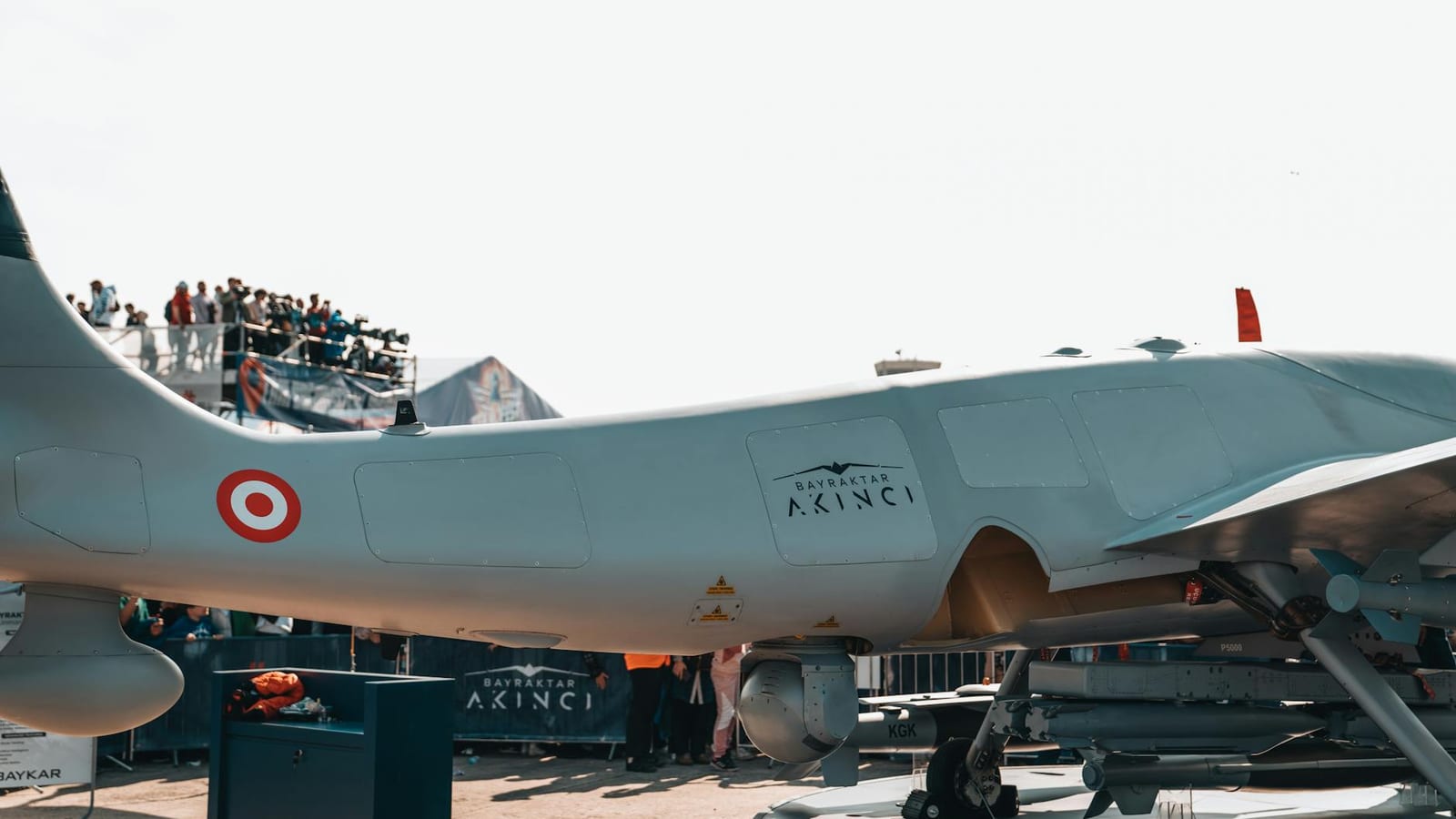
Drones sit at the centre of this dispute. They have changed the Ukraine war more than any glossy weapon system.
Small drones now spot troops, hit oil facilities, guide artillery, and force soldiers to hide differently. Cheap machines can destroy expensive equipment.
This should interest India’s defence planners. The lesson from Ukraine is brutal but clear. Future wars will not wait for slow procurement files.
Indian soldiers on the Line of Actual Control and the Line of Control already face drone threats. The Ukraine battlefield is now a live classroom.
NATO gets dragged closer
The war also spilled into Estonia’s airspace, after a drone entered southern Estonia and was shot down by a NATO fighter jet.
Estonian authorities said the drone was likely Ukrainian and probably lost its path due to Russian electronic jamming. Defence Minister Hanno Pevkur said the drone was not aimed at Estonia.
Ukraine’s foreign ministry spokesperson Heorhii Tykhyi apologised and said Ukrainian agencies were working with Estonia to establish the facts.
This episode shows how messy drone warfare has become. A drone aimed at one country can end up in another. A jammer can turn a military strike into a diplomatic headache.
For NATO, even a mistaken drone entry becomes serious. The Baltic states live with Russian pressure every day. Their airspace is not a minor issue.
For India, the lesson is again practical. Technology reduces distance, but it also raises accident risk. In crowded regions, that risk can escalate fast.
Think of South Asia, where airspace, borders, and military alert levels often sit dangerously close. One misdirected drone can create a crisis before leaders even speak.
G7 pressure and Ukraine’s bargain
G7 finance ministers said they want to keep pressure on Russia. French finance minister Roland Lescure said the will to pressure Moscow was unanimous.
The G7 said it may consider more action against Russia’s energy, finance, and military industry. Those are the three pillars keeping the war machine moving.
Energy pays bills. Finance moves money. Defence factories replace what the battlefield consumes.
But there is an awkward question hanging over the West. How long can Ukraine count on steady money and weapons?
Since Donald Trump returned to the White House, European capitals have worried about American hesitation. The G7 said it will work on financing options for Ukraine, but words still need cash behind them.
Ukraine is also bargaining with what it now knows best, drones. Washington wants access to Ukrainian drone and electronic warfare technologies, Ukrainian officials have indicated.
The Pentagon has shown interest in testing Ukrainian equipment. Kyiv, in return, wants more Patriot air defence systems and missiles to stop Russian strikes.
This is the new defence economy in plain language. Ukraine has battlefield-tested technology. America has money, scale, and air defence systems. Each side wants what the other has.
For ordinary Ukrainians, this is not theory. Russian strikes killed at least six people and injured dozens over the previous 24 hours, Ukrainian authorities said.
The hardest-hit areas included Kherson, Kharkiv, and Donetsk. Civilian zones and critical infrastructure came under attack.
That human cost explains Kyiv’s urgency. Every delayed air defence battery can mean another apartment block hit, another power station damaged, another family displaced.
India should read this war without romance. Russia is an old defence partner. Ukraine is a victim of invasion. China is watching and learning. The West is spending, but also tiring.
The real story from Stepnohirsk is not just that Ukraine retook a village. It is that small places now carry global consequences. A ridge near Zaporizhzhia can affect NATO nerves, Chinese calculations, American procurement, and Indian defence thinking.
For Indian readers, the message is simple. The next war may not begin with a dramatic invasion column. It may begin with a drone, a jammed signal, a supply road, and a village nobody noticed until it mattered.