Melting Arctic Sparks US-China Race, Raises Stakes for India Trade
A melting Arctic opens a new US-China rivalry over sea routes and resources, with growing consequences for Indian exporters and supply chains.
Every time a Houthi missile sends a container ship on a detour around Africa rather than through the Suez Canal, Indian exporters absorb the cost. Longer routes, higher fuel bills, delayed deliveries to European buyers. A disruption thousands of kilometres away arrives quietly in Indian profit margins within weeks.
That is the practical reason why a melting Arctic, and the rivalry now forming around it, deserves far more attention in New Delhi than it is currently getting.
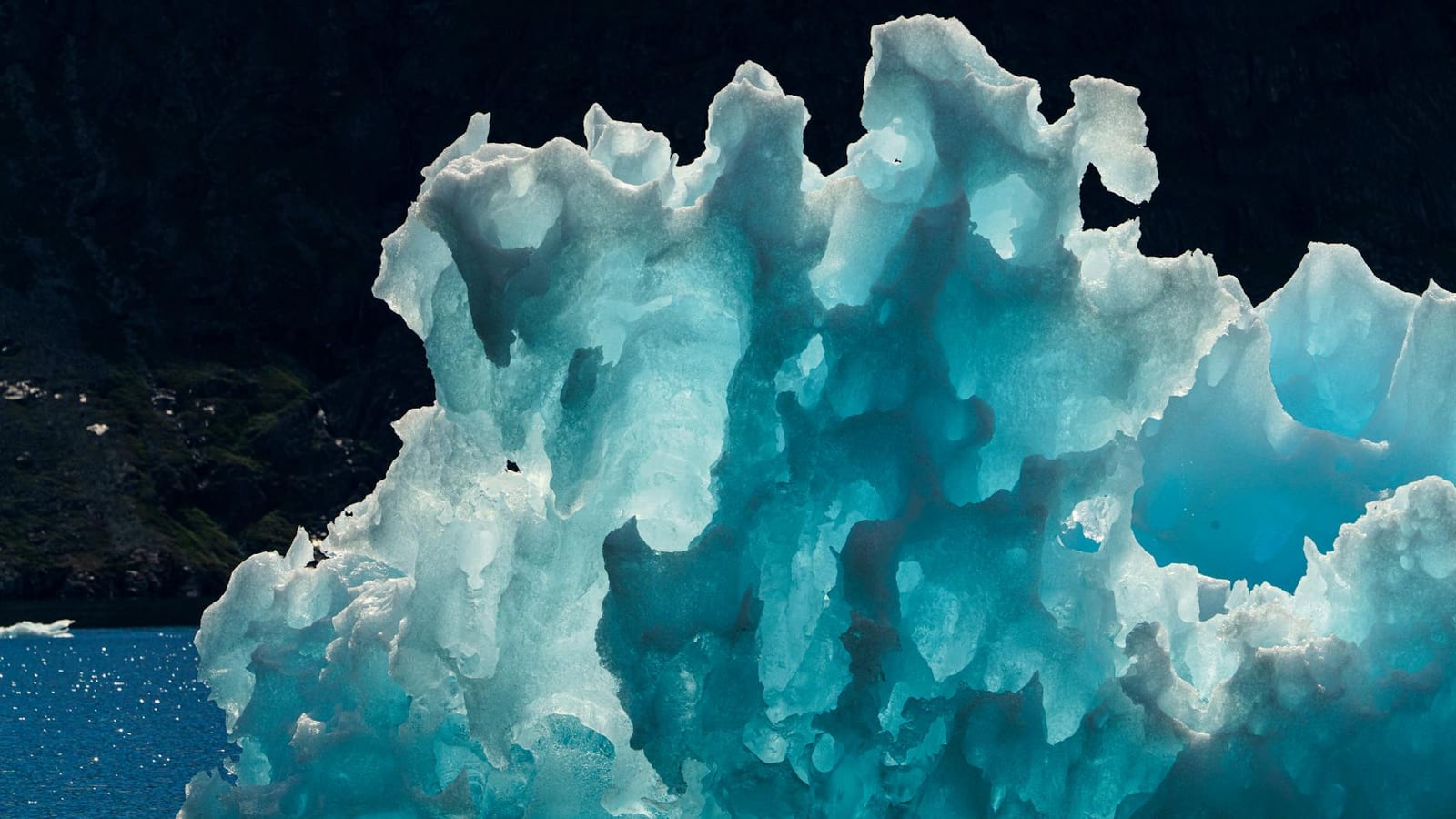
The Arctic is warming roughly four times faster than the global average. Sea ice is shrinking to record or near-record lows, and what was once a frozen expanse is increasingly navigable for parts of the year. That physical change is unlocking two things simultaneously: access to enormous untapped reserves of oil, gas, and minerals, and the possibility of shorter shipping routes between Asia and Europe. Both have drawn China and the United States into what is becoming an openly competitive contest for influence in the polar north.
The timing matters. Donald Trump’s visit to China arrives against a backdrop of severe strain on global energy markets, partly from the Iran conflict’s disruptions in the Persian Gulf. The Strait of Hormuz, through which roughly 20 percent of the world’s oil passes, has faced pressure. The Red Sea has seen sustained attacks on commercial shipping. Even the 2021 incident, when a single cargo vessel wedged across the Suez Canal for nearly a week, briefly choked global trade and sent shipping rates spiking. Each of these events has added urgency to a question that once seemed distant and theoretical: what if the Arctic becomes a reliable alternative?
For China, the Arctic offers something strategically valuable. Beijing has described itself as a “near-Arctic state,” a phrase that drew some raised eyebrows from the eight actual Arctic nations. China’s interest is not purely rhetorical. The Northern Sea Route, which runs along Russia’s Arctic coastline, could cut shipping time between China and Europe by roughly two weeks compared to the southern route through the Indian Ocean and Suez. Chinese state firms have invested in Arctic infrastructure and liquefied natural gas projects in Russia. Beijing sees the region as part of its long-term supply chain security plan.
Washington reads all of this with considerable concern. The United States is itself an Arctic nation through Alaska, and American military planners have watched China’s polar positioning with growing unease. The US has pushed to strengthen Arctic security alliances, particularly after Russia’s invasion of Ukraine prompted Finland and Sweden to join NATO, giving the alliance a dramatically longer Arctic coastline. American officials have also pushed back on Chinese involvement in infrastructure projects in Greenland and other strategically sensitive locations.
Analysts who track the relationship closely say the competition is real but not without guardrails. Both countries still need each other to manage practical challenges in the region: search-and-rescue operations, environmental standards for shipping, preventing accidents in an increasingly trafficked but still remote area. The phrase that keeps coming up in policy circles is “functional cooperation.” Rival powers competing hard while still talking on specific technical issues. It is an awkward arrangement, but it tends to describe most of the world’s most important bilateral relationships at the moment.
Here is where India’s position becomes genuinely interesting and genuinely complicated.
India has held observer status in the Arctic Council since 2013. The country has a research station in Svalbard, Norway, and Indian scientists have been studying Arctic climate and its effects on the Indian monsoon for years. The connection is real: changes in Arctic sea ice patterns influence atmospheric circulation in ways that affect rainfall over the subcontinent. The Arctic is not just a geopolitical story for India. It is also a climate story with direct consequences for agriculture and water supply.
But India has been cautious about staking out a strong public position in the Arctic’s political contest. New Delhi tends to frame its Arctic engagement around science and sustainable development rather than strategic competition. That is a reasonable posture for a country trying not to get drawn into every dimension of the US-China rivalry. However, that careful neutrality also carries a cost: India risks being a bystander in decisions about a region that will shape global trade and energy flows for decades.
The shipping dimension is particularly significant. The Northern Sea Route, if it becomes commercially viable year-round, could create a new geography of trade that bypasses the Indian Ocean entirely for certain China-Europe cargo flows. India sits at the centre of the current maritime world order. A significant shift of freight traffic to Arctic routes would not devastate Indian ports or shipping overnight, but it would gradually alter India’s geographic advantage in global logistics.
India’s energy planners are watching the resource dimension just as closely. The Arctic holds an estimated 13 percent of the world’s undiscovered oil reserves and roughly 30 percent of undiscovered natural gas. As India’s energy demand continues rising and the country works to reduce its dependence on West Asian oil, Arctic resources represent a potential diversification option, even if accessing them remains technically and politically complex.
What ordinary Indians should take from this is fairly straightforward. The disruptions that have already pushed up shipping costs and complicated India’s trade this year are not one-time events. They reflect a world where the major sea lanes are contested and unreliable in ways they have not been for decades. The Arctic’s emergence as an alternative route and as a source of energy is part of the response to that instability. Whether India shapes that response or simply adapts to it after the fact is a question that will be answered in the next few years, not the next few decades.
The ice is melting. The decisions are not waiting for the ice to finish.