Israeli strikes kill 15 in south Lebanon despite truce
Lebanon reported at least 15 deaths in Israeli attacks in the south, raising fresh risks for a fragile truce watched closely by India too.
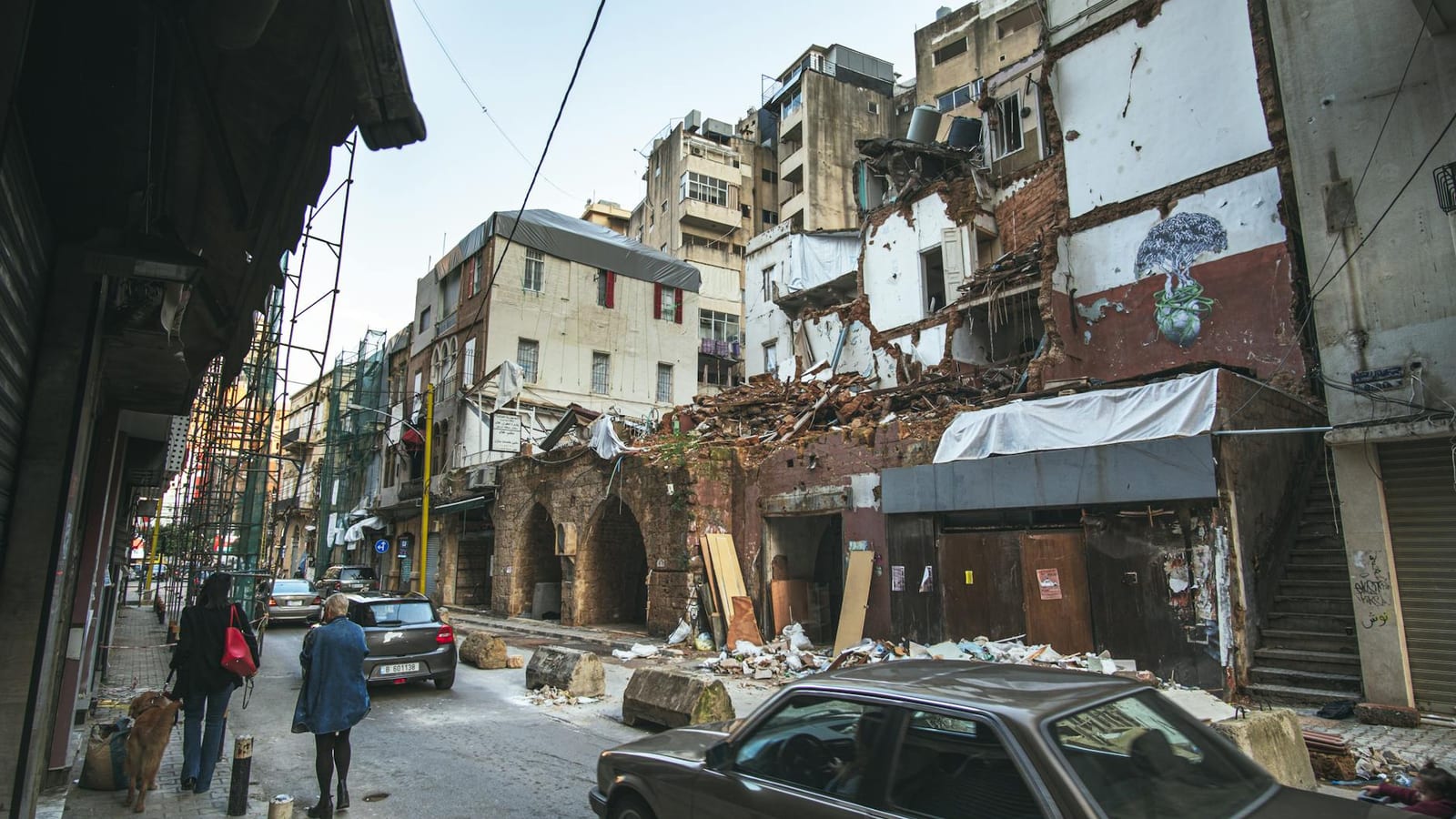
A ceasefire that needs daily explanation is no ceasefire for families under falling bombs.
On Saturday, Lebanon counted more dead in the south, even after Washington said the truce with Israel would run for another 45 days. At least 15 people died in Israeli bombardments, including many in the Tyre district.
For India, this is not a distant border war. West Asia is where millions of Indians work, where our energy ships pass, and where one spark can raise fuel prices at home.
Southern Lebanon keeps paying
Lebanon’s health ministry said Israeli attacks have killed 2,969 people and injured 9,112 since hostilities resumed on March 2. Those are not abstract figures in a region of small towns, tight families, and crowded homes.
The Tyre district saw some of the heaviest strikes on Saturday. Lebanese authorities reported deaths after homes came under attack in and around Deir Qanoun El-Naher, Tayr Falsay, Shehabiyeh, Majdal Zoun, and Hoch.
Rescue teams kept searching through rubble after one strike caused large damage to nearby houses. A rescuer linked to the Al-Rissala scouts and his mother were among those killed in Tayr Falsay.
That detail matters. In wars like this, the first people rushing in are often locals with basic equipment. When they come under fire, the whole emergency chain breaks.
Doctors Without Borders condemned a separate drone attack on May 12 that killed two Lebanese Civil Defence workers in Nabatiyeh. The group said rescuers had gone to help a survivor of an earlier strike.
The truce is already fraying
The United States said it had extended the Israel-Lebanon ceasefire by 45 days. The truce had formally started on April 17, but both sides have accused each other of breaking it.
Israel’s military said it intercepted two drones in southern Lebanon, where its forces remain deployed. It also reported mortar and rocket fire by Hezbollah, but said those attacks caused no casualties.
The Israeli military also confirmed that Captain Maoz Israel Recanati, 24, died in combat in southern Lebanon. He served as a platoon commander in the Golani Brigade’s 12th Battalion.
This is the dangerous part of a half-working truce. The political language says de-escalation. The battlefield still runs on drones, rockets, artillery, and revenge.
Lebanon’s Prime Minister Nawaf Salam sharply criticised Hezbollah for dragging the country into what he called an irresponsible war. He also said only Lebanon’s armed forces should hold weapons.
That is not a small statement in Lebanese politics. Hezbollah is not just a militia. It is a military force, a political actor, and part of Lebanon’s power structure.
So when Salam says the state must control weapons, he is touching the central fault line. Can Lebanon speak with one security voice, or will armed groups keep deciding its fate?
Drones change the battlefield
This conflict has also become a drone war. Hezbollah has used first-person-view drones, often called FPV drones, against Israeli troops.
These are small explosive drones guided by a pilot watching through a live camera feed. The idea became widely visible in Ukraine, then travelled quickly to other battlefields.
For soldiers, this changes fear itself. A fighter no longer needs a direct line of sight. A low-cost drone can hunt a vehicle, a trench, or a group of troops.
Israel has world-class air defence systems. Yet small drones create a different problem. They fly low, cost little, and force expensive armies to spend heavily on protection.
India should watch this closely. Our armed forces already study drone warfare on the northern and western borders. The lesson from Lebanon is plain: cheap technology can unsettle rich militaries.
It also makes ceasefires harder to police. A rocket launch leaves a clearer trail. A small drone can come from a field, a room, or a vehicle.
That blurs accountability. It also gives every commander more ways to escalate without waiting for a formal order.
Hormuz sends a warning to India
The war is also spilling into the sea. Iran has restricted movement through the Strait of Hormuz, one of the world’s most important oil routes.
Iranian officials said they were creating a managed traffic system through a designated route. Ebrahim Azizi, who heads Iran’s parliamentary national security committee, said the system would soon operate.
Iranian state officials also said several European countries had opened talks for passage through the strait. No European government publicly confirmed those discussions.
The United States Central Command said 78 commercial ships had been redirected and four stopped as part of enforcement linked to the blockade of Iranian ports.
Iraq’s new oil minister said Iraqi crude exports through Hormuz in April fell to almost one-tenth of pre-war levels. That should make every oil-importing economy sit up.
India imports most of its crude oil. Any disruption near Hormuz can travel quickly from shipping lanes to petrol pumps, aviation fuel, fertiliser costs, and transport bills.
A middle-class family may not follow every strike in Tyre. But it will notice costlier fuel, higher freight charges, and a fresh pinch in food prices.
Young professionals with EMIs also feel these shocks. Inflation reduces room for rate cuts. That keeps borrowing costs sticky for longer.
Gulf diplomacy has limited room
Qatar’s Prime Minister and Foreign Minister Mohammed bin Abdulrahman Al Thani met Kuwait’s Prime Minister Ahmad Abdullah Al-Ahmad Al-Sabah in Athens. Qatar said they discussed de-escalation and regional stability.
Qatar has often played mediator in West Asian crises. It has channels with actors that many Western capitals cannot easily reach.
Pakistan’s Interior Minister also visited Tehran, where Iranian officials said border trade and regional stability came up. Pakistan has tried to position itself as a mediator between Iran and the United States.
For India, the diplomatic map is delicate. New Delhi has deep ties with Israel, strong energy interests in the Gulf, and a large Indian workforce across West Asia.
It also has old civilisational and trade links with Iran. Chabahar port, for example, remains important for India’s access to Afghanistan and Central Asia.
This is why India usually avoids loud moral theatre in West Asia. It prefers balance, evacuation plans, oil security, and quiet calls for restraint.
That approach may look boring on television. But for a country with eight-million-plus citizens in the Gulf, boring can be strategic.
The trouble is that this crisis now has too many moving parts. Southern Lebanon, Iranian waters, Israeli soldiers, Hezbollah drones, US pressure, Gulf mediation, and energy markets all connect.
One misread drone strike can upset a ceasefire. One blocked tanker can move oil prices. One domestic speech in Beirut can shift militia politics.
For ordinary Indians, the lesson is simple but uncomfortable. West Asia is not far away because the map says so. It sits inside our fuel bills, remittance flows, aviation routes, and grocery budgets. Until the guns fall truly silent, that distance will keep shrinking.