Bolivia protests isolate La Paz as Paz faces fury
Road blockades and strikes have cut off La Paz, squeezing food and fuel supplies as unions and workers demand President Rodrigo Paz resign.
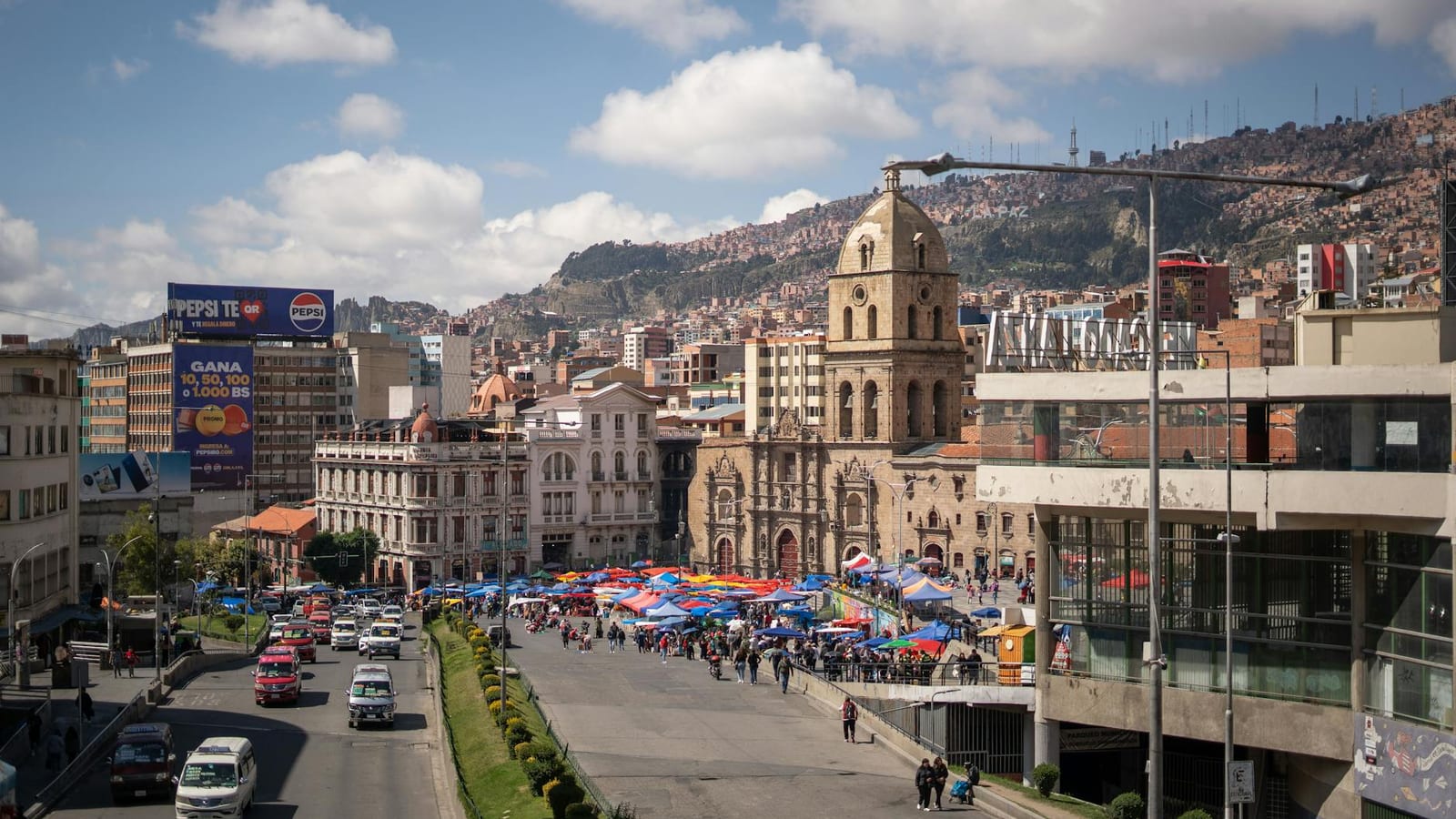
A capital city does not need a curfew to feel trapped. In Bolivia, La Paz is already cut off by road blockades, halted transport, and food supplies running thin.
Barely six months after taking office, Rodrigo Paz faces the kind of street anger that can swallow presidencies in Latin America. Workers, farmers, indigenous groups, teachers, miners, and transport unions have moved from wage demands to a blunt call for his resignation.
For Indian readers, this is not some distant Andean drama. It is a reminder of what happens when inflation, fuel stress, jobs, and distrust collide. Democracies can survive anger. They struggle when daily life stops moving.
La Paz is under pressure
The protests have now run for more than two weeks. Roads into La Paz have been blocked, leaving the capital partly isolated from the rest of the country.
Transport has stopped in several areas. Food supplies have started to tighten. The government has opened a humanitarian corridor to move essential goods into the capital.
That phrase sounds neat on paper. In real life, it means families worry about vegetables, cooking oil, milk, and fuel. It means shopkeepers cannot restock. It means daily wage workers lose money even before politics enters the conversation.
The trouble sharpened over the weekend of May 16. Security forces tried to clear public squares and roads. Clashes followed. By Monday, May 19, several people had been injured and around 100 had been arrested.
Protesters widen their demands
The movement did not begin with a demand to remove the president. It started with more familiar issues, higher wages and sector-specific grievances.
That matters because many protest movements grow this way. A salary demand becomes a symbol. A transport strike becomes a wider complaint. A road blockade becomes a vote of no confidence.
In Bolivia, this anger comes against a harsh economic backdrop. Prices have risen sharply. The country has been wrestling with a deep economic crisis. For ordinary people, inflation is not an abstract chart. It is the moment a weekly grocery list becomes a negotiation.
Paz won the October 2025 election by promising to tackle that crisis. Now, the same crisis has turned into his first major test. The protesters say the government has not moved fast enough. His supporters argue that six months cannot fix years of economic strain.
That is the old political trap. Voters often accept that repair takes time. But they also expect pain to reduce, not spread. When prices rise and buses stop, patience becomes a luxury.
Paz avoids harsher force
So far, Paz has told security forces not to use firearms. He has also ruled out a state of siege, at least for now.
That decision is politically important. A hard crackdown may clear a road for one day. It can also deepen public anger for months.
At the same time, Paz faces pressure from the right to restore order with more force. That is the dilemma every government fears. If it acts softly, it looks weak. If it acts harshly, it risks turning protest into a wider revolt.
Bolivia knows this pattern too well. Its politics has often been shaped by street power, unions, indigenous mobilisation, and regional anger. Presidents there cannot treat social movements as background noise.
The worry now is simple. If the government loses control of roads and supplies, pressure will rise. If security forces respond with greater force, the crisis may move from economic protest to political confrontation.
For Paz, this is no longer only about inflation. It is about whether people believe his government can govern without fear, shortages, or violence.
Why India should watch
India has its own very different political system and economic scale. Still, Bolivia’s crisis carries a useful warning for New Delhi, state capitals, and business leaders.
Inflation does not hit society evenly. The better-off complain. The poor adjust, cut back, borrow, or skip. Transport workers, small traders, teachers, miners, and farmers feel price pressure early because their margins are thin.
That is why street politics often begins with livelihoods. People may speak about wages, fuel, food, or transport. Underneath, they are asking a deeper question: does the system still hear us?
India has seen versions of this anxiety before. Farmers’ protests, transport strikes, job agitations, and price-rise anger all carry one lesson. Economic policy may be made in offices, but its legitimacy gets tested in markets, bus stands, fields, and homes.
There is also a geopolitical angle. Latin America may seem far away, but its instability affects global supply chains, commodities, and political alignments. Bolivia has natural resources, including lithium, which matters for batteries and electric vehicles.
India wants secure access to critical minerals. So does China. So do Western economies. When resource-rich countries face unrest, investors pause and governments recalculate.
This is where the global power shift becomes visible. Countries with minerals, food, fuel, or strategic ports have more bargaining power today. But domestic instability can weaken that hand quickly.
For India, the message is clear. Partnerships in the Global South cannot rest only on mining deals, trade visits, or diplomatic statements. They need a close reading of local politics and social pressure.
A country may look open for business on Monday. By Friday, a blockade can change the conversation.
A presidency at a crossroads
Paz’s immediate task is practical. He must reopen routes, keep food moving, and prevent more violence. But his larger task is political. He must convince angry groups that negotiation can still deliver something.
That will not be easy. Once protesters demand resignation, compromise becomes harder. Leaders fear looking weak. Protest organisers fear losing momentum. Each side starts speaking to its own base.
The government’s humanitarian corridor may ease shortages for now. It will not solve the deeper anger. Wage pressure, inflation, and distrust need a political answer, not only police planning.
Bolivia’s crisis also shows the limits of election victories. Winning power gives a leader authority. It does not automatically give room to govern through pain.
For ordinary Bolivians, the question is more basic than ideology. Can they reach work? Can they buy food? Can their children attend school? Can the government restore order without bloodshed?
That is the test Paz faces now. Not a grand speech, not a clever slogan, not a show of strength. Just the hard daily proof that the state can keep life moving while it repairs the economy. For India, watching from afar, that is the real lesson: when prices bite and trust breaks, even a young government can run out of road very quickly.