Arctic Thaw Sparks US-China Race for Polar Shipping Routes
Arctic ice retreats faster than expected, and the US-China race for polar shipping routes has direct consequences for India's energy imports.
The last time a massive cargo ship got stuck in the Suez Canal, in 2021, it blocked one of the world’s busiest trade arteries for nearly a week. Roughly 12 percent of global trade flows through that narrow Egyptian channel. Indian exporters, who send everything from garments to pharmaceuticals to European buyers, watched helplessly as their shipments sat in holding patterns at sea.
That six-day fiasco was a preview. The bigger story, the one Beijing and Washington are quietly positioning for, is happening 8,000 kilometres to the north.
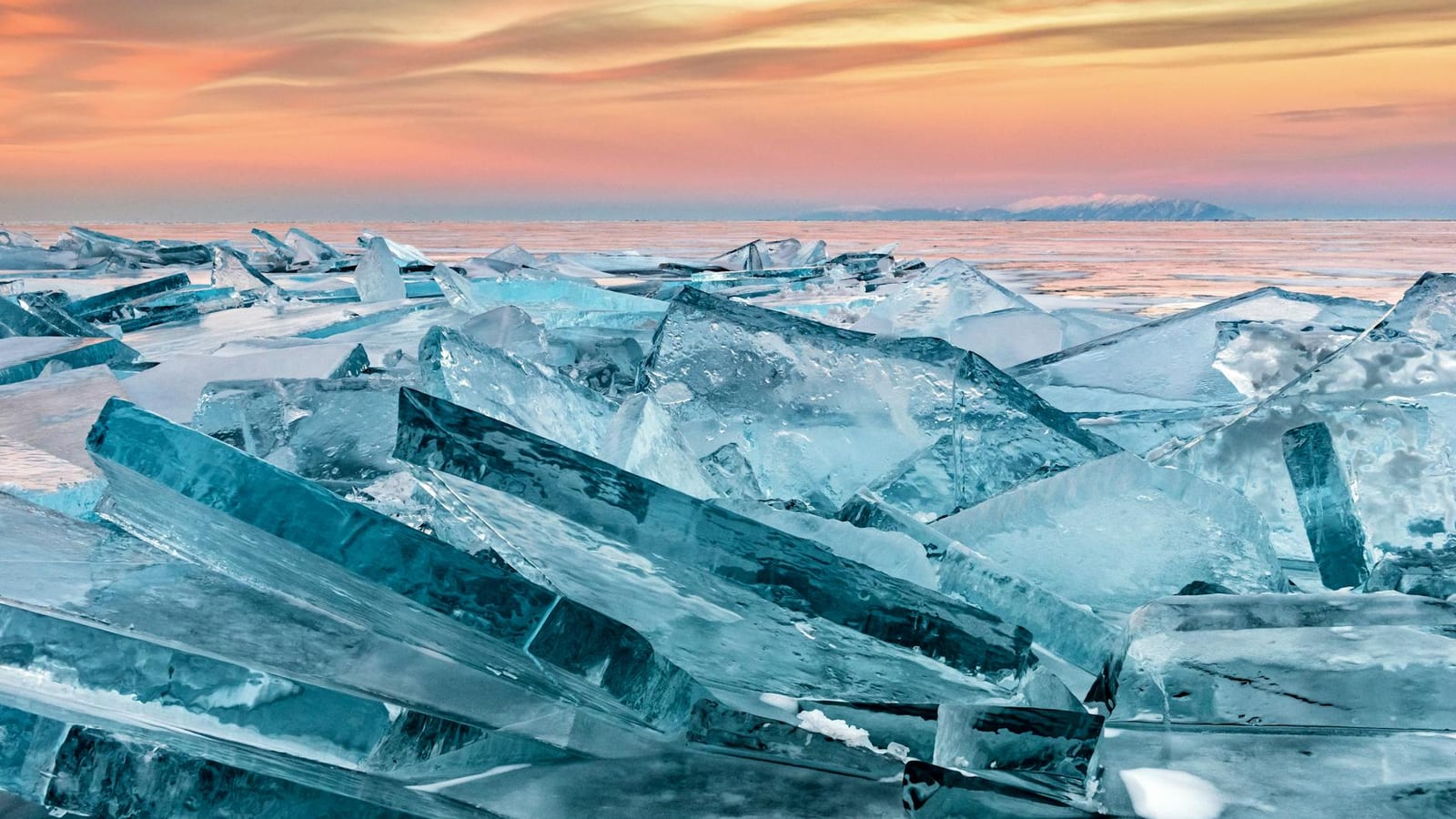
The Arctic is melting. Faster than almost any climate model predicted. Sea ice is declining to record or near-record lows. What was once an impenetrable polar wasteland is turning into a commercially viable shipping corridor, with access to vast reserves of oil, gas, and rare minerals beneath the ice. And the two countries competing hardest to control it, the United States and China, are already carving out positions.
For India, sitting between the Middle East and Southeast Asia with its enormous appetite for imported energy, this is not just a distant geopolitical drama. It is a supply chain story with direct consequences.
The route that could change everything
The Northern Sea Route runs along Russia’s Arctic coastline. On paper, it cuts the shipping distance between Shanghai and Rotterdam by roughly 40 percent compared to the Suez Canal route. A container ship that currently takes 25 days to sail from China to northern Europe could cover the same journey in around 15 days via the Arctic.
Faster transit means cheaper freight. Cheaper freight means lower import prices. India’s trade with Europe already runs into hundreds of billions of dollars annually. If the Arctic route becomes viable at scale, it reshapes trade economics for every country in Asia, India included.
But here is the catch. The route is accessible only because the ice is melting. And the same climate change making it navigable is creating unpredictable weather, disruptive storms, and ecological conditions that make navigation genuinely risky. The opportunity and the hazard come packaged together.
Why the US and China both want the Arctic
China calls itself a “near-Arctic state,” which is geographically creative, given that its northernmost point sits closer to Kunming than to the Arctic Circle. But Beijing’s ambitions are serious. Chinese icebreakers have conducted Arctic research for years. China has invested in infrastructure in Arctic-adjacent nations including Iceland and Russia, and it is building its own fleet of nuclear-powered icebreakers.
For Washington, the Arctic is both a resource play and a military perimeter. The US has expanded its Arctic military infrastructure, particularly in Alaska, and pushed NATO allies in Scandinavia to strengthen their northern defences. With Sweden and Finland now in NATO, the alliance controls a much longer Arctic coastline than it did even three years ago.
The rivalry creates an uncomfortable dynamic. Both countries compete fiercely in the Arctic. But both also know that some practical cooperation is unavoidable, particularly on climate research, search-and-rescue operations, and preventing accidental military incidents in a zone with poor communications infrastructure and no established rules of engagement.
Analysts describe this as the defining tension of the Arctic relationship: too interdependent to treat each other as pure adversaries, too competitive to call each other partners. Former Soviet leader Mikhail Gorbachev once described the Arctic as a “zone of peace.” That framing feels quaint today.
The India angle nobody is talking about
India holds observer status at the Arctic Council, the main intergovernmental forum for Arctic nations. It is a quiet presence, not a loud one. But India’s strategic interest in the Arctic is substantial and systematically underappreciated in Delhi’s foreign policy circles.
India draws roughly 85 percent of its crude oil through sea routes that pass either through the Strait of Hormuz or the Red Sea. Both corridors have faced serious disruptions in recent years. Houthi rebel attacks on Red Sea shipping, tied to the Gaza conflict, forced major shipping lines to reroute around the Cape of Good Hope, adding weeks and millions of dollars per voyage. The Hormuz crisis, inflamed further by the ongoing Iran war, has pushed global energy freight costs higher again.
An Arctic route that bypasses both the Hormuz and the Red Sea would not just be faster. It would be strategically safer. For a country as dependent on imported energy as India, route diversification is not an academic exercise. It is a hard national security calculation.
India also runs two operational research stations in the Arctic. Himadri sits at Svalbard in Norway; IndARC is a moored ocean observatory in the Kongsfjorden region. Indian scientists have gathered climate data from the region for years. But the scientific presence has not translated into a political strategy that matches India’s actual stakes.
If the Arctic becomes a contested zone where the US and China write the rules, India risks becoming a price-taker on one of the most consequential shipping corridors of the next century.
What the Trump-China engagement signals
The timing of US President Donald Trump’s engagement with Beijing matters. His visit comes against the backdrop of the Iran war, which has further disrupted Persian Gulf energy flows and pushed shipping costs higher globally. When energy prices rise, political appetite for alternative routes and supply chains rises with them.
Any thaw in US-China relations, however tactical, creates both opportunities and risks for India. The opportunity: reduced US-China tension lowers the probability of a military incident that could destabilise global trade. The risk: deals struck between Washington and Beijing on Arctic governance, resource rights, or shipping rules will reflect their interests, not India’s.
India has built its foreign policy on the principle of strategic autonomy: the idea that it need not pick sides and can engage all major powers on its own terms. The Arctic is a genuine test of whether that doctrine can hold in a domain where only the US and China have serious infrastructure and military presence on the ground.
The window is still open, barely
The most useful move India could make in the next few years is to shift from observer to active participant in Arctic governance. That means greater investment in polar vessel capacity, deeper diplomatic engagement with Arctic states including Norway, Canada, and Finland, and a clearer national Arctic policy that extends well beyond climate research.
It also means recognising that the melting ice is not only a climate problem. It is a geopolitical opening. The countries that build relationships and infrastructure in the Arctic now will set the terms for who uses those routes and at what price, for decades to come.
For Indian manufacturers waiting on component shipments, for farmers dependent on fertiliser imports, and for households that feel the ripple effects every time global freight costs spike, the Arctic is closer than it looks on a map. The ice is melting. The competition is intensifying. India’s window to shape the outcome is narrowing, but it has not closed.