AfD Loses Berlin Court Bid to Recover 2.35m Euro Donation
Germany's AfD lost a Berlin court fight over a 2.35m euro donation, sharpening scrutiny of party funding and election trust.
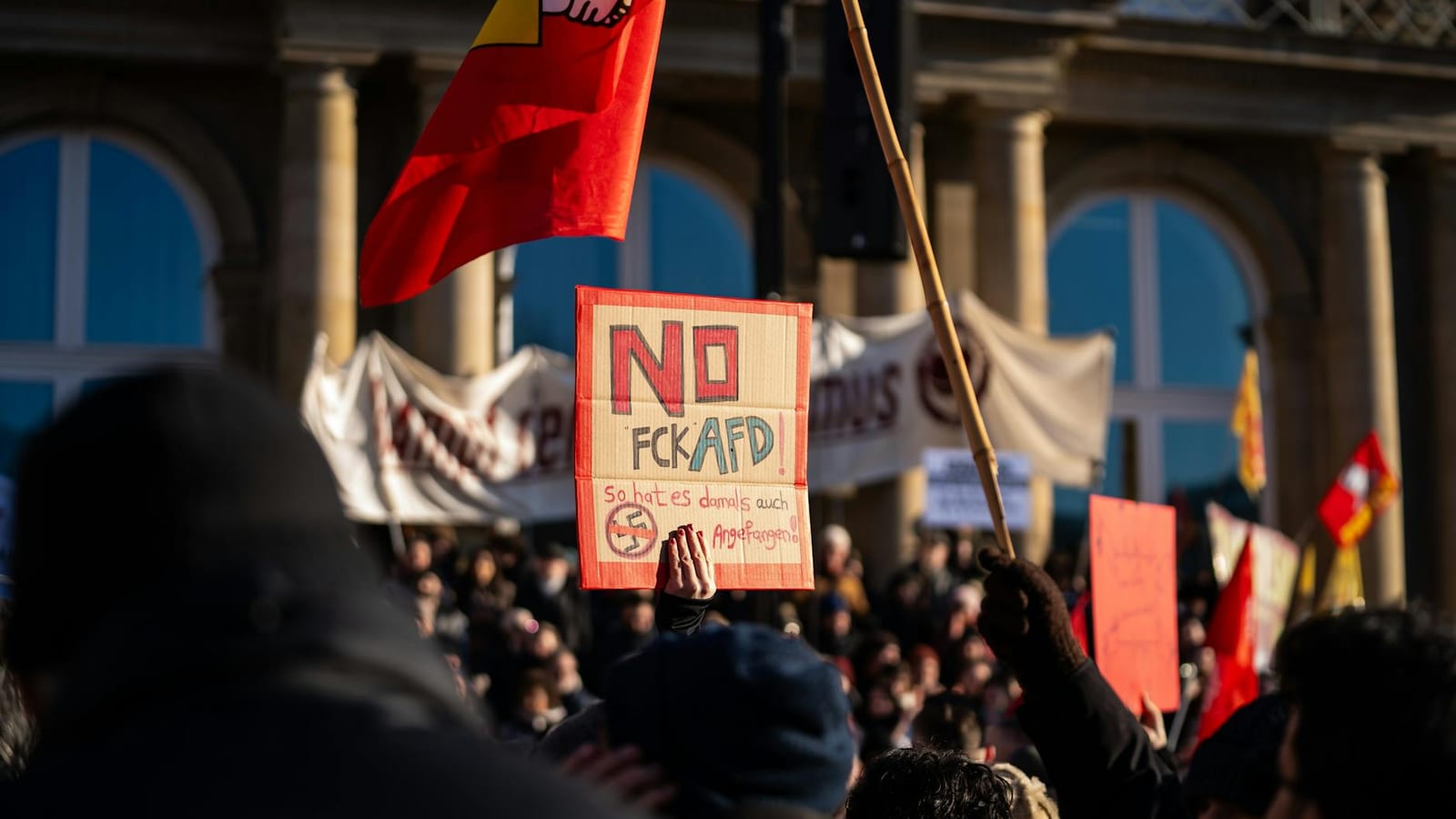
A 2.35 million euro political donation, an Austrian middleman, and a shadowy German billionaire who has kept out of the public eye for decades. Germany’s far-right Alternative for Germany party, known as the AfD, walked into a Berlin courtroom on Thursday hoping to recover millions it had parked with regulators. It walked out empty-handed.
The Berlin Administrative Court ruled that the AfD cannot recover the 2.35 million euros (roughly 215 crore rupees) it had pre-emptively paid to Germany’s parliamentary administration after a controversial donation came under scrutiny. The court found the donation impermissible under German party financing law, not because it conclusively proved wrongdoing, but because the identity of the true donor was never clearly established.
This is the part of European democracy that rarely makes headlines in India: the machinery built to keep dark money out of politics. And this week, that machinery caught one of Europe’s most prominent far-right parties squarely in its gears.
The poster that started it all
On January 7, 2025, Gerhard Dingler, an Austrian with long ties to Austria’s far-right Freedom Party, approached the AfD through his lawyer. His offer was straightforward: he would finance more than 6,000 large campaign billboards across Germany ahead of the Bundestag elections. The value, according to campaign finance filings, came to just over 2.35 million euros.
The AfD accepted. The party reported the donation to Germany’s parliamentary administration with Dingler listed as the donor. Campaign posters went up. The party contested the federal elections and finished a strong second.
Then reporters started asking questions about where Dingler actually got the money.
The 82-year-old ghost
Henning Conle is not a name you will find in the society pages. The 82-year-old German real estate billionaire has made a practice of staying invisible. But his fingerprints had appeared on AfD funding before.
In 2017, records showed Conle had funnelled 132,000 euros to the local branch of the AfD in the district of Alice Weidel, now the party’s federal leader. He did not donate directly. He used multiple intermediaries. The AfD paid a 396,000 euro penalty for that arrangement, three times the original donation, as German law requires.
Then came December 2024. A gift contract signed on December 16, 2024 shows Conle transferred 2.6 million euros to Dingler. Conle wired the money on Christmas Eve. Six weeks later, Dingler offered the AfD its 2.35 million euros in campaign posters.
German courts tend to care about such timelines.
The legal question in an unremarkable courtroom
The courtroom where this played out was not built for drama. Fluorescent lights, a mottled carpet, microphones that occasionally cut out. The president of the Berlin Administrative Court, Erna Viktoria Xalter, was delivering one of her last judgments before retirement.
The core legal question was not whether Conle gave this money. German law does not require proving that. The question was simpler and harder to escape: at the time the AfD accepted the donation, could it reasonably have known who the true donor was?
AfD treasurer Carsten Hütter argued the party had done its due diligence. His team had called Dingler, exchanged messages, contacted the Freedom Party, and even asked around in Dingler’s small hometown of Frastanz in Austria’s Vorarlberg region. People in the town confirmed Dingler came from a wealthy family. That, Hütter told the court, was as much investigation as a political party could reasonably conduct.
“I am not a government agency. I am not a detective agency,” Hütter said.
Judge Xalter was not persuaded. Under Germany’s political parties law, any donation over 500 euros where the donor’s identity cannot be conclusively established is illegal. The penalty is three times the donation amount, which in this case would have crossed seven million euros. The AfD had pre-emptively paid the 2.35 million euros to cap its liability. Now the court confirmed it would not be getting that money back.
The reasoning was straightforward. Both Dingler and Conle were plausible candidates as the true donor. The proximity of dates, the similar amounts (2.6 million from Conle to Dingler, then 2.35 million from Dingler to AfD), and the electoral context created enough uncertainty to make the donation impermissible. Hütter said as he left the courtroom that the AfD had been deceived rather than culpable, and that an appeal was possible.
What this means beyond Germany
For India, this ruling is worth watching for reasons that go beyond curiosity about European affairs.
Germany remains India’s largest trading partner in Europe. The AfD’s strong second-place finish in the 2025 federal elections has already begun to shape domestic policy debates in Berlin around immigration, defence spending, and economic nationalism. A party that is financially weakened and legally embattled is a different interlocutor than one operating from clean books and a clear mandate.
The broader story, though, is about the architecture of political finance itself. Germany built laws that make straw-donor arrangements genuinely dangerous: the burden shifts to the party to explain the money’s origins, not simply accept donations in good faith. The three-times penalty is a real deterrent, not a token fine.
India has been working through almost exactly the same debate. The Supreme Court of India struck down the electoral bonds scheme in early 2024, ruling that anonymous political donations violated the public’s right to information. The question of who is really paying to put whom in power sat at the centre of that case, just as it sat at the centre of Saal 0416 in Berlin on Thursday.
The mechanics differ. The underlying problem is identical. Wealthy individuals want to fund political outcomes without attaching their names to those outcomes. Parties want the money and prefer not to bear responsibility for the source. Courts, regulators, and reporters are left to piece together the trail.
Where this leaves things
The AfD can appeal, and likely will. But Thursday’s ruling cements one principle that no appeal can easily walk back: accepting a donation you cannot trace means accepting the legal risk that comes with it. Ignorance, even sincere ignorance, is not a complete defence when the money arrives in a pattern that has happened before.
For ordinary citizens in any democracy, that point has weight. Their elections are being fought, partly, with money whose origins are contested. The legal system ends up doing the work that party officials chose not to. The countries that build institutions strong enough to ask those questions, and stubborn enough to demand honest answers, tend to have politics that ordinary people can actually trust.
That is not a German lesson. That is everybody’s lesson.