US yield spike drags Wall Street lower on inflation fears
Wall Street fell as the 10-year US Treasury yield hit its highest level since January 2025, pressuring tech shares and global portfolios.
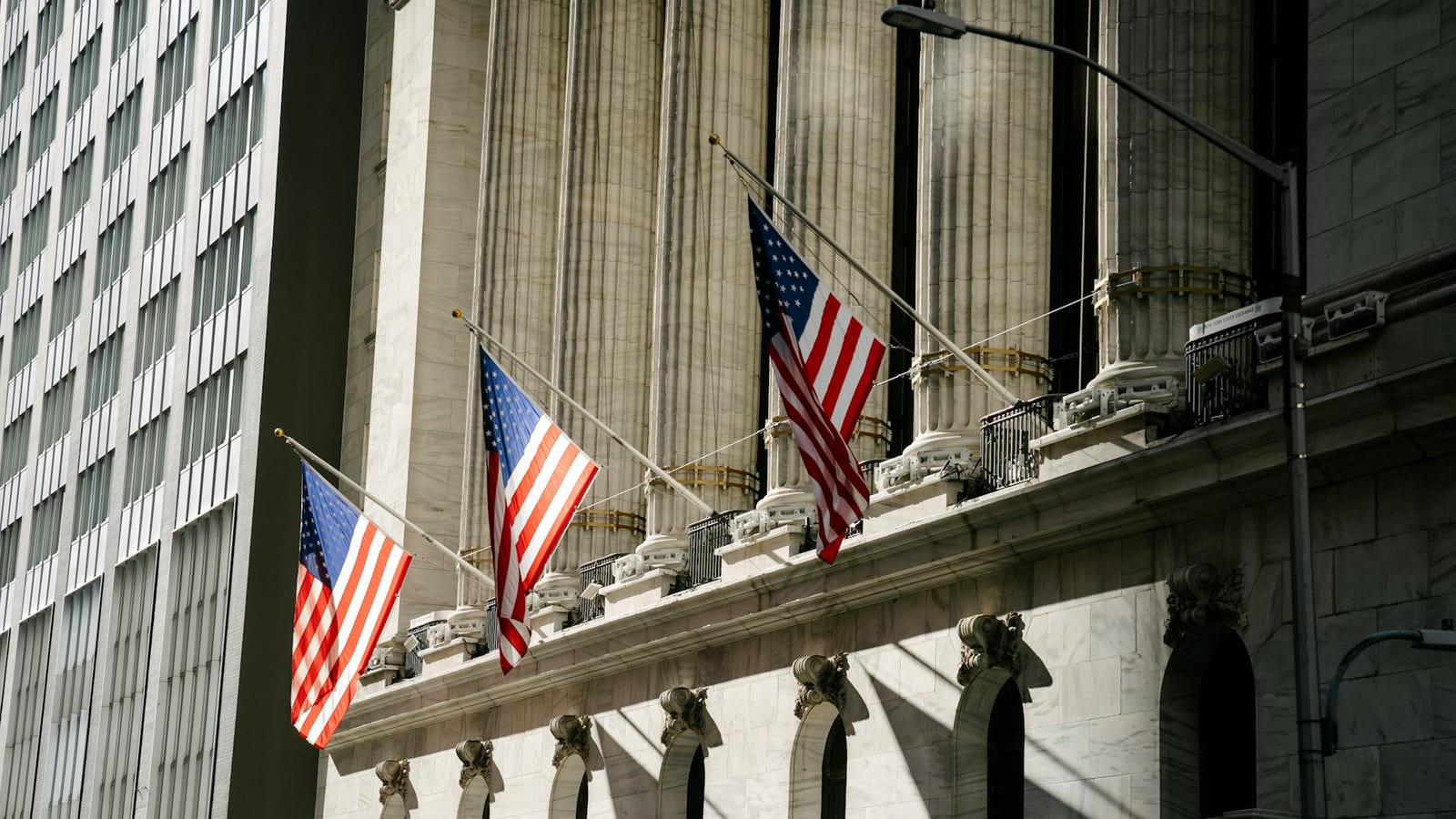
A small rise in US bond yields can travel very far. On Tuesday, it reached Wall Street, oil markets, tech stocks, and even Indian portfolios.
Wall Street ended lower as investors grew nervous about inflation again. The Dow Jones Industrial Average slipped 0.15 percent, the S&P 500 fell 0.19 percent, and the Nasdaq Composite lost 0.30 percent.
For an Indian investor with overseas mutual funds, that sounds small. But on a ₹5 lakh US equity exposure, a 0.30 percent fall means about ₹1,500 gone in a day.
Bond yields drove the selloff
The real action sat in the US bond market. The 10-year US Treasury yield climbed to 4.687 percent, its highest level since January 2025.
Think of this yield as America’s long-term borrowing cost. When it rises, investors demand better returns from risky assets like stocks.
That pressure hits expensive technology shares first. These companies often trade on future earnings, not just current profit.
So when bond yields rise, those future profits look less attractive today. This is why growth stocks often wobble when yields move sharply higher.
Ben Sullivan of AE Wealth Management said yields explained almost the entire market move. He linked the pressure to fears that inflation may stay high for longer.
That phrase, “higher for longer,” matters. It means investors may have to wait longer for cheaper money, lower loan rates, and easier financial conditions.
Oil keeps inflation worries alive
Oil prices stayed at the centre of the anxiety. Brent crude eased 1.4 percent, but remained above $110 a barrel.
For India, this is never a distant story. India imports most of its crude oil. Expensive oil can weaken the rupee, raise fuel costs, and push up transport bills.
That eventually touches daily life. Vegetables travel by truck. Packaged goods need fuel. Airlines burn aviation turbine fuel.
Even when petrol prices do not change immediately, businesses still feel the heat somewhere in the chain.
The pressure came from the Middle East, where the war involving Iran has strained energy flows. The Strait of Hormuz, a vital route for oil shipments, has been nearly shut.
US President Donald Trump said he had paused a planned strike on Iran after Tehran offered a new proposal. He later said the US may still need to strike again.
US Vice President JD Vance struck a softer note. He said Washington and Tehran had made progress and neither side wanted fighting to restart.
Markets hate this kind of uncertainty. They can price bad news. They struggle with unpredictable headlines that may move oil overnight.
Fed rate bets turn sharper
The next worry came from the Federal Reserve. Traders started assigning higher chances to a rate hike later this year.
CME Group’s FedWatch tool showed a 40 percent chance of a 25 basis point hike in December. One basis point is one-hundredth of a percentage point.
So a 25 basis point move means a quarter percentage point increase. That may sound tiny, but markets treat it seriously.
The chance of a larger 50 basis point hike rose to nearly 14 percent. A week earlier, it stood at just 4.7 percent.
That shift tells us something clear. Investors are no longer only debating rate cuts. Some now worry the Fed may need to tighten again.
The Fed’s meeting minutes, due Wednesday, will get close attention. Investors want to know if policymakers still favour easier policy, or prefer a neutral stance.
For Indian households, the Fed may sound far away. But its decisions affect foreign money flows, the dollar, and risk appetite.
When US rates rise, global investors often prefer safer dollar assets. Emerging markets like India then face more pressure.
That can show up in the Bombay Stock Exchange’s Sensex and the National Stock Exchange’s Nifty 50. It can also affect imported inflation through the rupee.
Tech stocks lose easy support
The Nasdaq fell for a third straight session. The S&P 500 also stayed on track for its third daily decline.
This came after a strong rally that began in late March. Some investors used the inflation scare to book profits.
Six of the 11 major S&P 500 sectors traded lower. Communication services and consumer discretionary stocks pulled the benchmark down the most.
Software shares gave up early gains. The S&P 500 software index fell 1 percent after rising nearly 2 percent earlier.
Chip stocks behaved differently. The Philadelphia Semiconductor Index rose about 1.4 percent after falling more than 3 percent earlier.
That intraday swing shows how divided investors remain. They want exposure to artificial intelligence, but fear prices have run too far.
All eyes now turn to Nvidia, which reports earnings on Wednesday. The company has become the market’s AI bellwether.
Investors want proof that demand for AI chips still supports rich valuations. If Nvidia disappoints, the pressure may spread across semiconductor stocks.
Akamai Technologies also drew attention. The cloud company fell 2.8 percent after announcing a $2.6 billion convertible bond offering.
Healthcare stocks gained 1.2 percent and led defensive buying. That makes sense when investors feel nervous.
Defensive sectors often attract money during uncertain phases. People still need medicines and healthcare services, even when markets turn rough.
The market breadth also looked weak. Falling stocks outnumbered rising ones by more than two to one on the New York Stock Exchange.
On Nasdaq, 2,803 stocks fell while 1,883 rose. That tells us the selling was not limited to a few big names.
For Indian investors, the lesson is simple but uncomfortable. Global markets can look calm at the index level while stress spreads underneath.
A 0.19 percent fall in the S&P 500 may not look dramatic. But rising yields, expensive oil, and changing Fed bets make the mix more serious.
The next few days will test whether this is routine profit-booking or the start of a larger reset. For ordinary investors, the sensible move is not panic. It is checking whether portfolios depend too heavily on one story, cheap money and unstoppable tech.