Teamtech SME IPO crosses half subscription, GMP flat
Teamtech Formwork Solutions' Rs 50 crore SME IPO was subscribed 0.53 times on day one, while its grey market premium remained at zero ahead of listing.
A ₹50-crore public issue can look small beside the giant IPOs that dominate market chatter. But for retail investors, small issues often create the loudest buzz.
Teamtech Formwork Solutions opened its SME IPO for bidding on Tuesday, 19 May. By the end of the first day, the issue had crossed the halfway mark in subscription.
That sounds encouraging at first glance. But the quieter detail matters more. The grey market premium stood at zero, which means the unofficial market was not pricing in any listing pop.
Teamtech IPO sees measured demand
The Teamtech Formwork Solutions IPO was subscribed 0.53 times by 4.45 pm on the first day, based on data from Chittorgarh. In plain English, investors had bid for a little over half the shares available.
The company received bids for 27.96 lakh shares against 52.94 lakh shares on offer. That is not a weak start, but it is not the kind of rush that usually makes traders sit up straight.
The qualified institutional buyer portion was subscribed 0.66 times. The non-institutional investor portion saw stronger interest at 0.79 times. Retail investors, usually the most excited crowd in SME IPOs, subscribed 0.34 times.
That split tells its own story. Larger investors appear interested, but retail investors are still watching from the side. Many may wait till the final day before deciding.
The IPO opened on 19 May and closes on 21 May. The company expects to finalise allotment on 22 May. The shares are scheduled to list on 26 May.
What the company actually does
Teamtech Formwork Solutions is based in Hyderabad. It works in a very practical corner of the construction business.
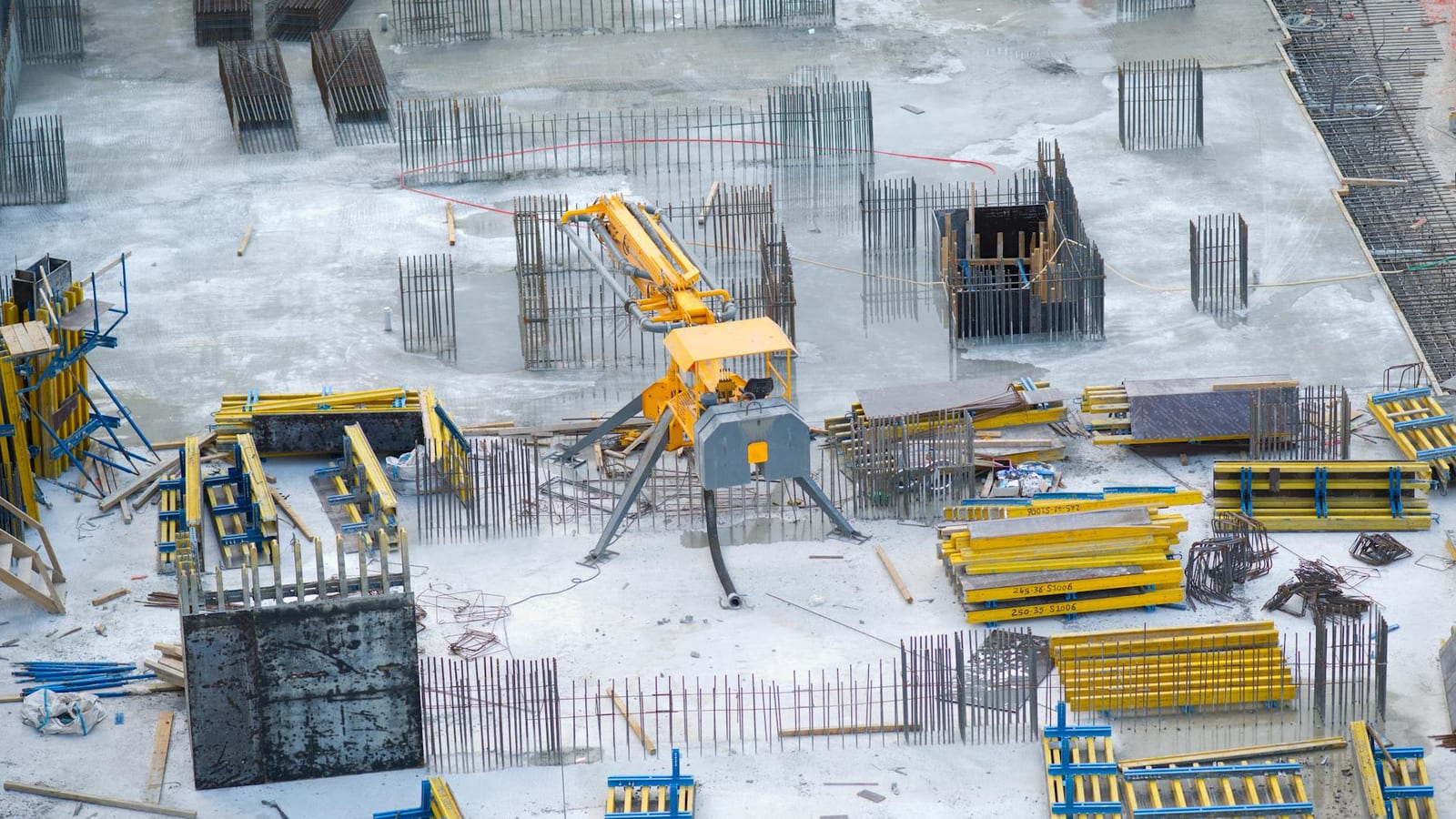
The company makes, refurbishes, and rents formwork systems. Formwork is the mould or support structure that helps shape concrete while it sets. If a builder is constructing walls, bridges, tanks, foundations, or shafts, formwork becomes part of the job.
Teamtech focuses on modular T-formwork and customised systems. That means builders can use standardised parts, but still adapt them for different project needs.
This is not a consumer brand that households will recognise. It is a business-to-business company. Its customers come from construction and infrastructure activity.
That matters for investors. Teamtech’s growth depends on how much construction work continues, how quickly builders pay, and how well the company manages machinery, rentals, and working capital.
For a small company, these details can matter more than a headline number. A delayed payment from a large client can stretch cash flow. A new manufacturing unit can help growth, but it can also raise pressure if orders slow.
Price band and fresh issue
The company plans to raise ₹50.15 crore through the IPO. The price band is ₹61 to ₹63 per share.
The issue is entirely fresh shares. There is no offer for sale. That means existing shareholders are not selling their shares through this IPO.
This is an important distinction. In an offer for sale, money goes to selling shareholders. In a fresh issue, the company receives the funds.
Teamtech has said it will use the money for several purposes. These include buying plant and machinery for a new manufacturing unit, repaying certain borrowings, meeting working capital needs, and general corporate expenses.
For ordinary investors, this is the part to read slowly. A company raising money for expansion can be a good sign. But repayment of debt and working capital also show where the pressure points sit.
Working capital is the money needed to keep daily operations running. It pays for inventory, labour, logistics, and credit cycles. In construction-linked businesses, this can become a constant headache because payments often arrive late.
The IPO reserves at least 50 percent of the issue for qualified institutional buyers. Non-institutional investors get 15 percent. Retail investors get 35 percent.
That structure is fairly standard. But allocation does not guarantee enthusiasm. The final subscription numbers will show whether demand has real depth.
Zero GMP changes the mood
The grey market premium for the Teamtech Formwork Solutions IPO was nil. That means the shares were changing hands, informally, at around the issue price.
Grey market premium, or GMP, is not official. It is not regulated like the stock exchange. But it often shapes market mood, especially among short-term IPO applicants.
A nil GMP suggests traders are not expecting a clear listing gain right now. At the top price of ₹63, the implied listing price would remain near ₹63 if this grey market signal holds.
That does not mean the IPO will fail. It also does not mean the stock cannot rise later. It simply means investors should not treat this as an automatic listing-gain trade.
This is where many retail investors trip. They see an SME IPO, hear some chatter, and apply only for the first-day pop. But SME stocks can move sharply both ways after listing.
Liquidity is another issue. Liquidity means how easily you can buy or sell a stock without moving the price too much. In many SME counters, a small sell order can pull the price down quickly.
So, the right question is not just, “Will it list higher?” The better question is, “Can this company grow steadily after listing?”
What investors should watch
The construction supply chain has seen a better environment in recent years. Government infrastructure spending, housing demand, and private projects have kept many related businesses busy.
But formwork is still a working-capital-heavy business. Equipment must be bought, maintained, rented, refurbished, and moved between sites. That needs money before profits show up.
For investors, the company’s use of IPO funds deserves attention. A new manufacturing unit can increase capacity. Debt repayment can reduce interest cost. Working capital funding can make operations smoother.
Still, none of this removes execution risk. Small companies often struggle when expansion happens too fast. They need orders, collections, trained workers, and disciplined spending to move together.
The subscription pattern also deserves a closer look over the next two days. If institutional and non-institutional demand rises sharply, sentiment may improve. If retail demand stays soft, the listing could remain cautious.
A kirana store owner applying through a trading app, or a salaried professional putting aside savings for IPOs, should treat SME issues differently from large mainboard IPOs. The risk is not just price. It is also exit.
The Teamtech Formwork Solutions IPO is not a story of market frenzy yet. It is a small company trying to raise growth capital from public investors, while the market asks for proof.
For ordinary readers, the lesson is simple. A quiet GMP and half-subscription on day one do not close the case. But they do ask investors to slow down, read the offer details, and decide whether they want a business, not just a listing day bet.