Rupee crashes to record low of 95.23 against US dollar on oil surge
The rupee fell 39 paise to close at an all-time low of 95.23 against the US dollar on Monday, hit by surging crude prices and foreign investor outflows.
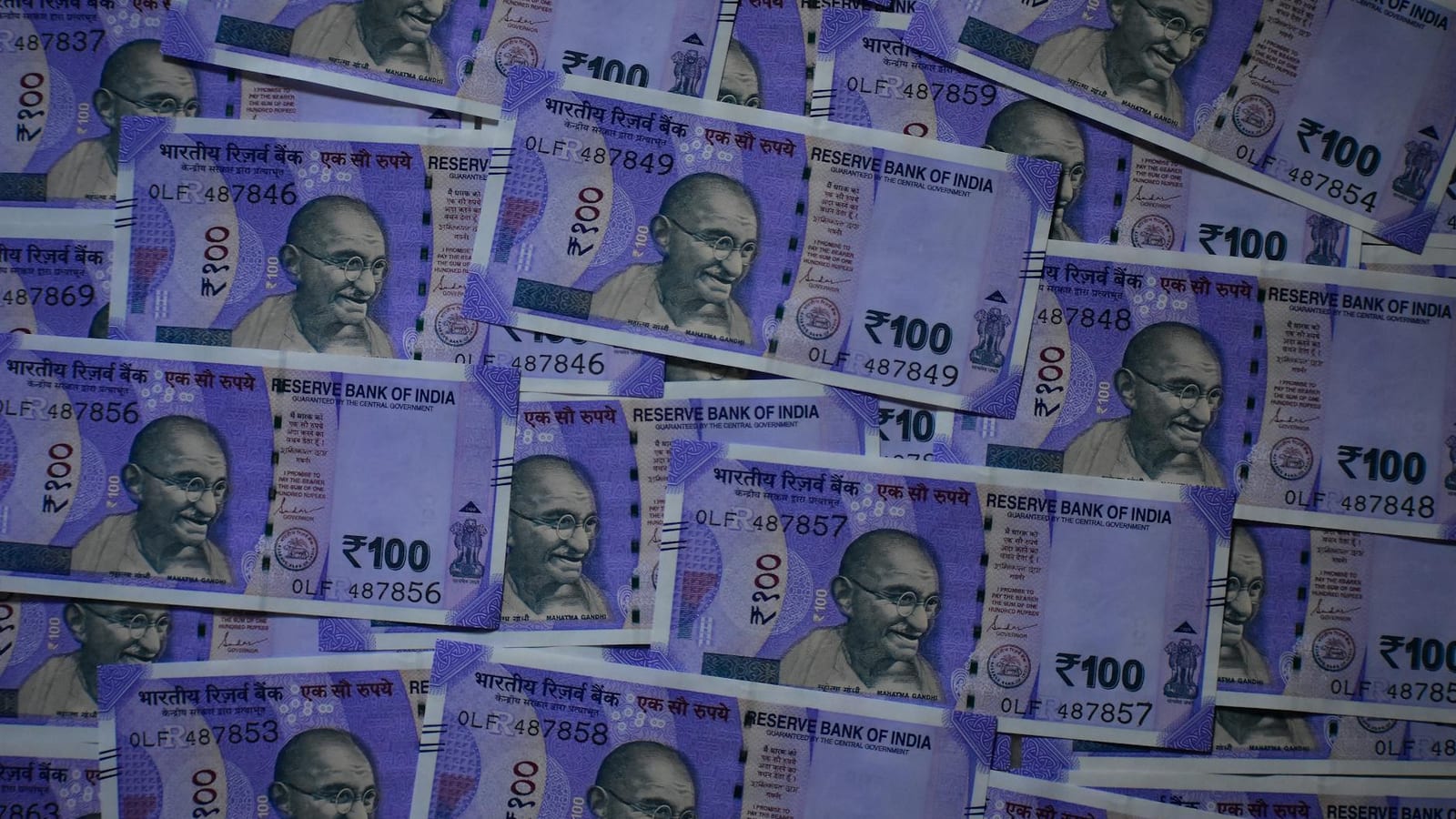
Imagine you are an Indian student in Boston who pays your hostel rent in dollars. Last month, every dollar you needed cost you ₹94.84. This morning, that same dollar costs ₹95.23. Multiply that across a year of fees, and you are quietly poorer by tens of thousands of rupees, even though nothing about your life changed.
That is the human story behind a single line of market news. The rupee fell 39 paise on Monday and closed at 95.23 against the US dollar, an all-time low, according to data reported by Mint. The currency opened the day at 94.95, drifted lower through the session, and finally gave up the fight by the close.
For anyone watching the screen, that may look like a small drop. In a forex market, 39 paise is a sharp move. And it lands on a country that buys most of its oil in dollars and pays for everything from imported phones to college fees in the same currency.
So what is actually pushing the rupee down. Reports point to three forces working together.
The first is oil. Brent crude, the global benchmark for oil prices, is hovering near USD 110 a barrel. By late Monday it was up about 1.37 percent at USD 109.65. India imports more than 85 percent of the oil it burns. Every dollar increase in oil price means more dollars must be sold for rupees by Indian refiners, which weakens our currency.
The second is the dollar itself getting stronger. The dollar index, a measure of the dollar against six major world currencies, sat at 98.26 on Monday, slightly up. When the dollar rises, almost every emerging market currency loses ground, and the rupee is no exception.
The third is Middle East tension. The conflict there has unsettled global markets, and nervous foreign investors are pulling money out of riskier markets like India. On Thursday alone, foreign institutional investors sold Indian shares worth ₹8,047.86 crore, exchange data shows. When that kind of money walks out, the dollars used to buy our stocks earlier are now being converted back, putting fresh pressure on the rupee.
Dilip Parmar, Senior Research Analyst at HDFC Securities, said in remarks reported by Mint that persistent dollar demand is likely to keep the pressure on. He sees the rupee weakening further toward 95.35 and then 95.70 in the short term.
Now, what does all this mean if you are not a forex trader in a glass-walled office in Mumbai.
It hits you in five very ordinary ways.
If you fill petrol every week, the price of crude is the single biggest input. A weaker rupee plus expensive oil is the worst combination for fuel pumps. Government-owned oil companies absorb some of the pain, but eventually retail prices nudge upward. That is also why your auto driver complains and why your local kirana store quietly raises the price of a packet of biscuits, because the truck that delivered it just paid more for diesel.
If you have a family member studying abroad, the math is brutal. A student who needs USD 30,000 a year for tuition and living costs in the United States is now paying close to ₹28.6 lakh annually, about ₹1.2 lakh more than they would have a few weeks ago. Multiply that by four years of college, and a single rupee move quietly eats into a family’s savings.
If you are planning a foreign holiday, the same logic applies. The Bali honeymoon you priced in March now costs noticeably more in May. Travel agents say last-minute Singapore and Dubai bookings are seeing visible drop-offs.
If you are an importer, the squeeze is direct. Small businesses that import phone components, medical equipment, or specialty chemicals work on thin margins. They have a choice: raise prices and lose customers, or absorb the loss and bleed.
If you are a retiree living off a fixed deposit, you may actually see one small upside. To defend the rupee, the Reserve Bank of India sometimes nudges interest rates higher or holds them firm. That can mean better returns on FDs in the months ahead. But that is a thin silver lining on a thick cloud.
There is one number working in the rupee’s favour, and that is the domestic stock market. The Bombay Stock Exchange’s Sensex rallied 355.90 points on Monday to close at 77,269.40, and the National Stock Exchange’s Nifty 50 climbed 121.75 points to 24,119.30. Domestic investors are holding up the market even as foreign money exits. That tells us Indian retail investors are buying the dip, betting on the long-term India story.
But policymakers are clearly bracing for a harder stretch. Expenditure Secretary V Vualnam, speaking at a conference at Ashoka University on Friday, said the next few quarters and the coming year would likely carry “a lot of stress points,” as reported by Mint. He added that fiscal pressure is real, but that the government wants to protect capital expenditure at the budgeted level. In plain English, even when money is tight, the Centre wants to keep building roads, ports, and railways, because that is what creates jobs and keeps growth ticking.
The IFA Global research note flagged something equally important. Domestic political news, including the counting of votes in the West Bengal state elections, will move markets in the short term. But the dominant force will remain global geopolitics. Wars in distant places now decide whether your monthly grocery bill rises by a few hundred rupees.
So where does this leave the ordinary Indian. Probably watching, hoping, and adjusting. Watching because every move in the rupee shows up somewhere in your monthly budget. Hoping that oil cools down and that foreign investors return. Adjusting because, frankly, that is what families always do.
The rupee at 95 to the dollar is not a doomsday number. India has weathered worse, and the economy is growing faster than almost any large country in the world. But it is a clear signal that the calm of the last few months is over. The next few quarters will test households, businesses, and policymakers alike. Watch the oil price and watch the foreign investor flows. Those two numbers, more than any speech, will decide what your next petrol bill looks like.