Crude tops $114 as Hormuz tensions hit Wall Street, gold slides
Brent crude jumped 2.9% past $114 a barrel on Hormuz strait tensions, dragging US stocks lower, lifting Treasury yields and pulling gold down 0.9%.
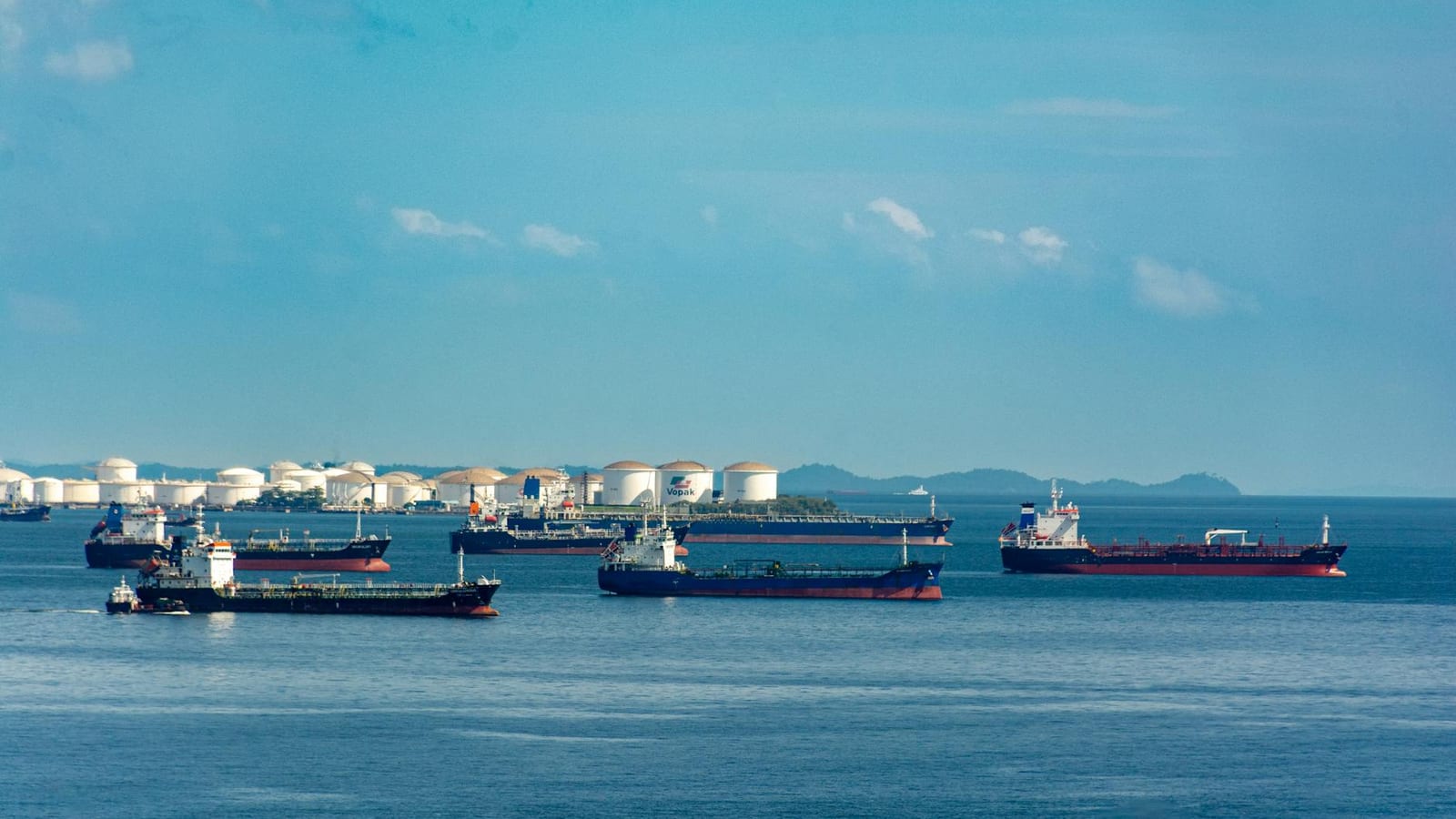
Crude oil briefly punched past $114 a barrel on Monday morning in New York, and that single number tells you why your next petrol-pump fill in Mumbai or Delhi could pinch a little harder this week.
The trigger sits seven thousand kilometres away from India, in a narrow stretch of water called the Strait of Hormuz. Iran’s military has warned that any US naval move into the strait will draw a response. President Donald Trump has pledged safe passage for stranded ships. Between those two positions, global oil traders have stopped pretending things are calm.
Wall Street felt it almost immediately. According to Mint, by late Monday morning in New York the S&P 500 was down 0.3 percent, the Dow Jones Industrial Average was off 0.8 percent, and the technology-heavy Nasdaq Composite had slipped 0.3 percent. The numbers themselves are not dramatic. The story underneath them is.
Brent crude, the global benchmark India tracks most closely for its imports, surged 2.90 percent to settle around $111.31 a barrel. It briefly touched $114 during the morning session before easing. For context, India imports more than 85 percent of the oil it burns. Every dollar the global price moves up adds, over a quarter, several thousand crore rupees to the country’s import bill. That money has to come from somewhere. Usually it comes from the rupee, which weakens. Then imported electronics, edible oil, and fertilisers all start costing a little more.
The mechanics are not abstract. A small business owner running a delivery fleet in tier-2 cities watches diesel prices for a living. A young couple paying off a home loan watches the Reserve Bank of India, which watches inflation, which watches crude. A retired teacher with a fixed deposit watches whether interest rates stay where they are. All those chains start in the Strait of Hormuz this week.
The conflicting signals coming out of the region are not helping. There were reports of an Iranian strike on a US Navy vessel. The American military dismissed those claims and said two American-flagged merchant ships had passed through the strait safely. But until the waterway is reliably open, traders will price in the risk that it might not stay that way. About a fifth of the world’s oil moves through Hormuz on any given day. Even a few days of disruption ripples outwards.
Bond markets reacted in their own quieter way. The yield on the 10-year US Treasury climbed slightly, from 4.39 percent on Friday to 4.41 percent on Monday. A small move, but the direction matters. Higher US yields tend to pull global capital towards American assets, which can put pressure on emerging-market currencies including the rupee. For an Indian household with no exposure to bond markets, the practical effect shows up later, in mortgage rates that refuse to fall and in foreign holiday budgets that suddenly stretch further.
Gold, the asset that usually rallies when the world looks shaky, did the opposite this time. Spot gold dropped 0.9 percent to about $4,572 an ounce. US gold futures fell a sharper 1.3 percent. The reason is technical but worth understanding. When the dollar strengthens (as it did Monday on the back of the Iran standoff), gold priced in dollars becomes more expensive for buyers using other currencies. Demand softens, prices dip.
Bart Melek, who heads commodity strategy at TD Securities, told reporters that the slide came down to nervousness about the strait and renewed worries that inflation could prove sticky. He also flagged what he called “fairly hawkish signals” on interest rates, meaning markets are reading central banks as less willing to cut rates anytime soon. That matters for Indian savers and borrowers, because the Reserve Bank watches the US Federal Reserve carefully when setting its own policy.
The other precious metals followed gold down. Silver fell 1.9 percent. Platinum and palladium, both used heavily in industrial applications, dropped 0.9 percent and 2.4 percent respectively. None of these are headline assets for Indian retail investors, but they are decent indicators of how money is reading the broader picture. When industrial metals weaken alongside oil rising, the message is clear: traders are betting on slower growth and stickier prices at the same time. That combination is uncomfortable for everyone.
Away from geopolitics, individual American companies provided the day’s smaller stories. eBay shares jumped 5.6 percent after GameStop, the video-game retailer that became a meme-stock symbol a few years ago, made an unsolicited $56 billion offer for the e-commerce platform. The bid works out to about $125 per share, paid in a mix of cash and stock. Whether the deal goes anywhere is unclear. Unsolicited bids of that scale rarely close at the first price.
Norwegian Cruise Line Holdings tumbled 4.7 percent even though it beat profit estimates. Tyson Foods, the American meat giant, slipped 2.2 percent despite quarterly earnings and revenue that came in above Wall Street forecasts. Both reactions point to a market that is no longer rewarding good news from companies. When investors are nervous, they look for reasons to sell, not reasons to buy.
The week ahead has its own pressure points. Disney, Pfizer, and McDonald’s all report earnings, and together they cover entertainment, healthcare, and global consumer demand. Indian investors holding international funds or US-focused exchange-traded funds should expect choppier sessions. The American Labor Department releases April jobs data on Friday, and that number will set the tone for whether the Federal Reserve sounds more or less worried about the economy at its next meeting.
For Indian markets, the immediate read-through is straightforward. Keep an eye on the rupee against the dollar, on petrol and diesel prices over the next two weeks, and on what the RBI says when it next meets. Sustained crude above $110 starts to dent the inflation forecasts that everyone has been celebrating. A few days of headlines about ships and straits do not usually change long-term trajectories. But they remind every household that India’s monthly bills are stitched into a much larger global cloth.
The takeaway for ordinary readers is not panic. It is patience. Keep emergency funds in place, do not move money on the basis of one bad Monday, and remember that markets digest geopolitical scares faster than they digest fundamentals. The Strait of Hormuz has rattled traders before. It will probably rattle them again. What matters for a salaried family in Pune or a small exporter in Surat is whether oil stays elevated for weeks, not whether it spiked for an afternoon.