Maharashtra farmers, ex-Maoist open new fault lines
A surrendered Maoist in Gadchiroli returns to education as farmers protest JSW-linked land acquisition and Maharashtra reviews farm credit pressure.
A former Maoist commander picking up a pen after 43 years says something about Maharashtra today.
It is not one story. It is a state full of sharp turns.
In Gadchiroli, a surrendered rebel now wants to study law. In Nagpur rural, gas cylinder vans may soon announce themselves with a song. Farmers are marching against land acquisition. The chief minister is telling banks not to harass farmers over credit scores.
Gadchiroli sees two different battles
Thippari Tirupati, also known as Devji and Ramesh Anna, spent decades with the banned CPI (Maoist). After surrendering, he has returned to education after 43 years.
His new ambition is striking. He wants to become a lawyer.
For a district long associated with guns, forests, police camps and fear, that image carries weight. A man once linked to armed struggle now sees law as the way forward.
But Gadchiroli is not only a story of surrender and reintegration. Farmers near Bhendala are fighting another battle.
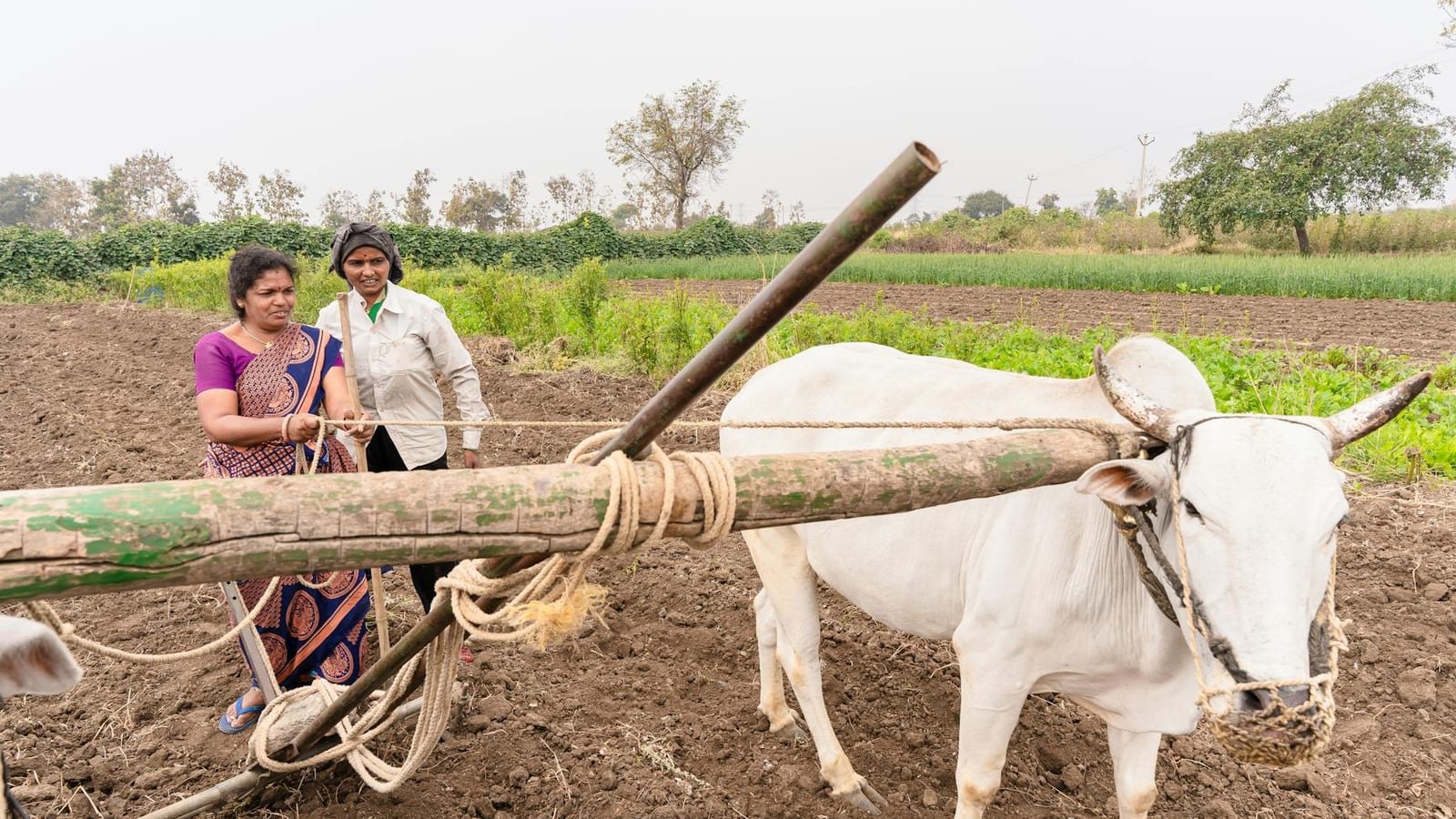
They protested against land acquisition for a JSW project. The Maharashtra Industrial Development Corporation is involved in acquiring land for the project.
The farmers say the land is fertile. They do not want to give it up for industry.
That is the old Indian development argument, playing out again under a hot sun. Jobs matter. Industry matters. But for a farmer, land is not just an asset. It is income, identity and insurance.
Fadnavis pushes banks on farmers
Chief Minister Devendra Fadnavis has told banks not to ask farmers for CIBIL scores while giving crop loans.
That sounds technical, but the issue is simple. A CIBIL score shows a person’s loan repayment record. Banks use it to judge risk.
For salaried borrowers, it may work neatly. For farmers, life is rarely so neat.
A bad monsoon, crop disease, delayed payment or price crash can damage repayment ability. That does not always mean the farmer is dishonest. Often, it means the season went wrong.
Fadnavis also addressed the question of farm loan waivers. He indicated that the government would move on the issue after a detailed review.
Loan waivers have become a familiar political promise in rural Maharashtra. They give quick relief, but they do not fix the deeper problem.
Farmers need fair prices, timely credit, water security and markets that do not punish them after harvest. Without that, every waiver becomes a pause, not a solution.
For a small farmer, the difference between a loan and a trap can be one failed crop. That is why the CIBIL instruction matters on the ground.
It tells banks to treat farming as farming, not as a standard city loan file.
NCP prepares for statewide tour
The NCP is preparing for a statewide tour to strengthen its organisation and expand its base.
Sunil Tatkare said party decisions are taken collectively. He also said the party follows democratic functioning.
That message matters in Maharashtra’s current politics. The state has seen splits, alliances, realignments and uneasy partnerships.
For parties, organisation is no longer a quiet backroom task. It is survival work.
A statewide tour helps leaders test the mood beyond Mumbai and television studios. It also helps identify local anger before rivals do.
In Maharashtra, political loyalty often travels through local networks. Sugar cooperatives, district banks, farmers’ groups and caste associations still matter.
A party may win headlines in Mumbai. But it wins seats in talukas.
Tatkare’s comments suggest the NCP wants to show internal order and field presence. That is useful before any big electoral test.
Nagpur tests a public service jingle
Nagpur rural authorities are trying a simple public communication experiment.
Gas distribution vehicles may play a song announcing their arrival. The idea follows the style of municipal garbage vans that play audio alerts in cities.
At first glance, this sounds small. But small systems often shape daily life.
For households, especially in rural areas, knowing when the cylinder vehicle has arrived can save time. People do not need to keep checking or asking neighbours.
Public announcements through songs have become common in India because they work. They cut through noise, habit and low attention.
The risk, of course, is irritation. If every service vehicle starts playing loud tunes, people will complain.
But as a communication tool, it makes sense. A familiar sound can become part of daily routine.
Crime and protest underline stress
Several incidents from Maharashtra also point to the pressure running through local communities.
In Yavatmal, Sachin alias Yeda Chhagan Rathod was killed on Thursday morning. He had reportedly moved away from criminal circles and worked in vehicle seizure for a private finance company.
That detail is important. Vehicle seizure is a risky job in many towns.
It places workers between lenders and borrowers. When money is tight, a seized vehicle can mean the loss of livelihood.
In Nagpur, a man allegedly attacked his wife, father-in-law and a 74-year-old woman after his wife went to stay at her parents’ home. Police said he was drunk when he went to the house.
Such cases rarely come from nowhere. They sit inside larger questions of alcohol abuse, domestic violence and weak support systems.
In Gondia, a gram panchayat member staged a “bheek mango” protest at the zilla parishad office. The protest used the “Main bhi cockroach” slogan trending on social media.
It may sound odd, even comic. But local protests often borrow viral language because it travels fast.
For small elected representatives, visibility is half the fight. If officials ignore a formal complaint, a dramatic protest may get attention.
Pune district, meanwhile, has announced the school holiday calendar. Schools are expected to reopen from June 15.
For parents, that date is not just a line on a circular. It means fees, uniforms, transport and new routines.
Maharashtra’s day, seen through these reports, feels crowded and restless. A former rebel wants the law. Farmers resist losing land. Banks face pressure on crop loans. Parties prepare for the road. Families and workers carry the cost of crime, debt and daily uncertainty. The next test is whether the state can turn these scattered signals into policy that ordinary people can actually feel.