Virar Narangi Flyover Opens, Saves 30 Minutes Per Journey
The Virar Narangi flyover opened on May 8, cutting 30 minutes from daily commutes and easing freight movement across Vasai-Virar's industrial corridor.
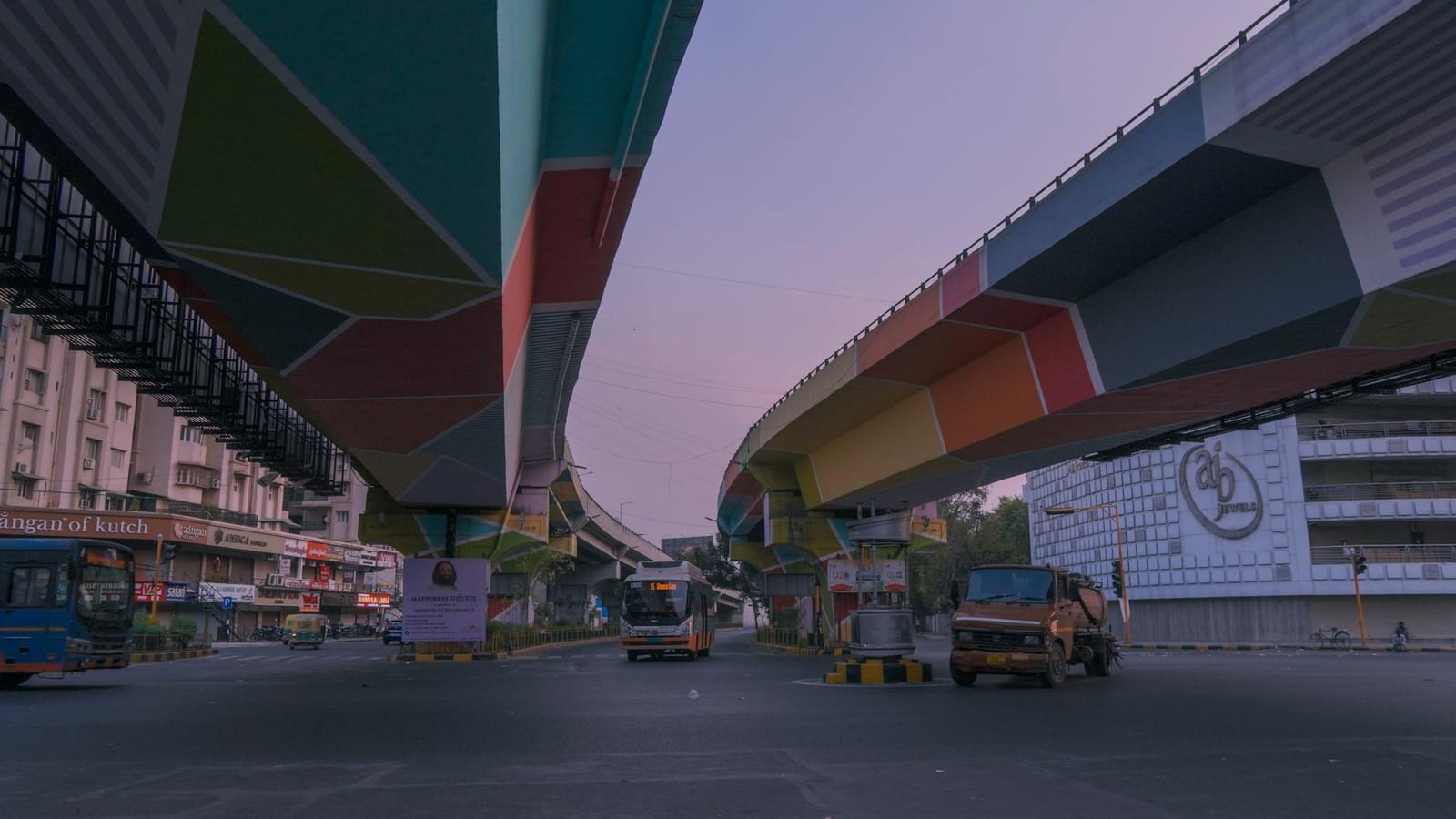
The Narangi railway crossing in Virar has been a daily test of patience for anyone who has lived or worked in the area. Trains pass, gates drop, and traffic stacks up for hundreds of metres on both sides. For the lakhs of Vasai-Virar commuters and small business owners dependent on smooth goods movement, this bottleneck has eaten into time, fuel, and earnings for years.
That changed on May 8 when the long-awaited Virar Narangi flyover finally opened to traffic. Guardian Minister Ganesh Naik inaugurated the bridge, and the promise attached to it is direct: 30 minutes saved per journey for those crossing this stretch.
That number deserves a moment. A person who crosses this point twice daily saves an hour every working day. Over a month, that is roughly 25 hours returned to them. For a truck driver or a goods vehicle moving materials between Vasai’s industrial belt and Mumbai, the savings translate to fewer trips blocked, more loads completed, and lower fuel burned per delivery. For a salaried worker catching the 7 am express from Virar, it means waking up slightly later, arriving slightly less frazzled. Small things, multiplied across tens of thousands of daily commuters, add up to something real.
The infrastructure gap that shaped this region
Vasai-Virar has grown fast and unevenly. What was once semi-rural Palghar district territory has become a densely populated urban extension of the Mumbai Metropolitan Region, home to well over a million people. The area absorbed workers priced out of Mumbai and Thane through the 2000s and 2010s. It developed factories, warehouses, and a sprawling informal economy. But its infrastructure never quite kept pace with its population.
Level crossings like the Narangi gate are a symptom of that mismatch. Designed for an era when this was quieter countryside, they remained in place long after the city outgrew them. Every time the gates closed for a passing train, hundreds of vehicles stacked behind them, engines idling, time and money burning.
Flyovers solve this by eliminating the intersection entirely. Road traffic goes over the tracks and does not stop. Done well, they do more than cut travel time. They make an area more legible to investment. Warehouses and distribution centres think carefully before locating in zones where supply chains hit a daily wall. A functioning road network is a basic prerequisite for commercial activity to scale.
The railway gate question
There is, however, a catch that has put residents on edge. Under the agreement between local authorities and the railway administration, the Narangi level crossing, officially Level Crossing 41, will be permanently closed now that the flyover is operational. No alternative ground-level crossing remains.
For people living immediately adjacent to both sides of the tracks, this is not a distant policy question. It reshapes which routes are viable, how long certain journeys take, and whether small commercial clusters that grew up around the crossing remain easily reachable. Concerns have emerged among villagers who depended on the level crossing for direct, short-distance access, the kind of access a flyover route does not always replicate depending on where you start.
This tension is predictable in any infrastructure transition. The flyover optimises for volume, for the bulk of traffic moving at scale. The level crossing, imperfect and congestion-prone as it was, offered a certain directness for people very close to it. Authorities will need to demonstrate that alternative road access genuinely works before residents feel the net benefit rather than just the disruption.
Credit, politics, and the project’s longer arc
The inauguration arrived with the expected political contest over ownership. Bahujan Vikas Aghadi, the party with deep roots in Vasai-Virar under Hitendra Thakur’s leadership, pointed to years of sustained follow-up by their representatives. The Bharatiya Janata Party countered by arguing that ground-level work accelerated following the recent change in state government.
This kind of credit dispute is standard fare in Indian infrastructure politics. The more relevant question is whether the 30-minute travel savings materialise consistently in practice, and whether the closure of Level Crossing 41 is managed in a way that limits disruption to those most affected.
Infrastructure of this type, a flyover replacing a level crossing, is a permanent change. You build it, the crossing closes, and that arrangement holds for decades. The ribbon-cutting is one day. The experience of living with the decision plays out over years.
Vasai-Virar’s broader infrastructure picture
The Narangi flyover does not stand alone. Elsewhere in the region, the Mumbai Metropolitan Region Development Authority has decided to proceed with beautification work on a bridge in Bhayandar that had drawn criticism over its original design. The decision signals that the authorities are paying attention to aesthetics alongside function, which matters as the region tries to project itself as a serious urban centre rather than simply Mumbai’s overflow zone.
That reframing carries economic weight. Vasai-Virar has significant manufacturing activity in food processing and chemicals, alongside a growing logistics sector serving both the city and the broader region. For this economic base to attract higher-quality investment and generate better-paying jobs, the area needs infrastructure that works and a civic environment that signals competence.
What the next years look like
The Narangi flyover’s opening is a concrete win. Thirty minutes is not a symbolic improvement; it is time that belongs to the people who cross that stretch every day.
The sharper question is whether Vasai-Virar gets the rest of the infrastructure investment it needs at a pace that matches its pace of growth. The region has consistently grown faster than its roads, bridges, and public systems. One flyover, welcome as it is, does not close that gap.
But for an area that has waited long for basic infrastructure to catch up with its scale, momentum matters. The challenge now is to keep it.