Shivaji Statue Row Puts Vasai Virar Mall Project Under Scrutiny
A plan to shift a 30-year-old Shivaji statue for mall construction has sparked anger in Vasai Virar and sharpened debate over urban growth.
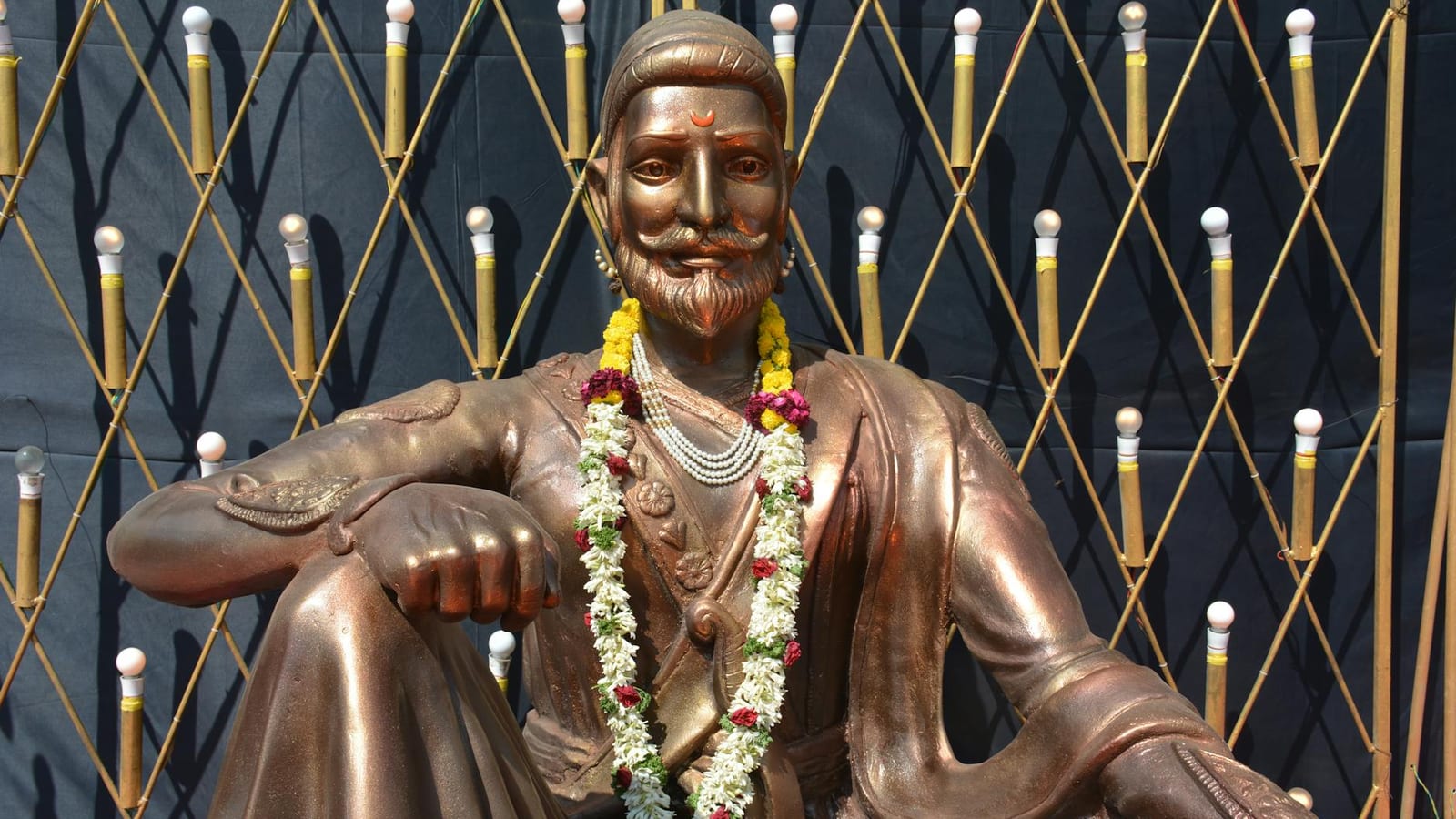
A 30-year-old statue can hold more public emotion than a new mall can ever buy.
That is the simple tension now playing out across Vasai Virar and Mira Bhayandar. A decision to remove a three-decade-old Chhatrapati Shivaji Maharaj statue for mall construction has stirred anger in the area. Transport Minister Pratap Sarnaik has now found himself at the centre of more than one local flashpoint.
On paper, these look like separate civic stories. A statue row here, a land dispute there, a flyover opening elsewhere. But together, they tell a bigger business story.
This is about how fast-growing urban belts near Mumbai are being reshaped. Land is getting pricier. Roads are being pushed wider. Malls and private projects are moving in. At the same time, residents are asking a basic question: who is this growth really serving?
The proposed removal of the Shivaji Maharaj statue has become the most emotional issue. In Maharashtra, such a move is never just about shifting concrete and metal. It touches pride, memory, politics, and identity.
The stated reason is mall construction. That brings the business angle into sharp focus. A mall means private investment, shops, jobs, rentals, and higher land value. But when a public symbol stands in the way, the cost is no longer only financial.
Local politics has already heated up. The row over the statue has seen the Maharashtra Navnirman Sena and Bajrang Dal face off in Mira Bhayandar. Work linked to metro and flyover projects has also added pressure around the statue issue.
This is the pattern many cities near Mumbai know well. First comes transport work. Then land use changes. Then commercial projects follow. Residents are told the city is becoming modern. But they often see familiar landmarks moved before they see better footpaths.
Virar’s newly opened Narangi flyover offers a good example. Motorists have received some relief after the flyover opened for traffic. Anyone who has spent time in this belt knows how badly such relief is needed.
But local residents have raised another concern. They still want a proper pedestrian bridge or subway for daily movement. A flyover helps vehicles move faster. It does not automatically help a child cross the road safely.
That is the missing piece in much urban planning. Big infrastructure gets the ribbon cutting. Smaller access points decide everyday quality of life. A shopkeeper, a school student, or an elderly resident cannot live inside a traffic map.
The land dispute in Mira Bhayandar is even more serious. A row has emerged over 294.66 acres of government land in Mira Road west. The Maharashtra government is expected to move the Supreme Court.
BJP leader Chandrashekhar Bawankule has said the land belongs to the government. He has also said the state will place its case strongly before the Supreme Court. His comment shows the political weight of the issue.
Shiv Sena (UBT) MP Sanjay Raut has alleged that the land has gone into the hands of private companies. Congress leader Vijay Wadettiwar has also attacked the state government over land ownership in Bhayandar. One figure cited in the dispute is about 254.88 acres in mouje Bhayandar.
The numbers may sound dry. They are not.
In a place like Mira Bhayandar, hundreds of acres can change the future of a city. Such land can become housing, public facilities, roads, schools, parks, or private townships. Once control changes, the public rarely gets a second chance.
For ordinary buyers, land disputes also matter in another way. They affect trust. A family buying a flat wants clear titles and stable rules. A small contractor wants payments on time. A local supplier wants projects that do not stop midway because ownership is contested.
When government land enters private hands, the public deserves clear answers. Who approved what? When did ownership shift? What benefit does the taxpayer get? These questions should not vanish behind legal language.
The civic stories also reach classrooms. District council school students are set to receive educational material worth ₹2 crore. Some voices have suggested giving money directly into student accounts, due to fears of irregularities in procurement.
That debate is familiar across India. Buying material centrally can bring scale. It can also create room for overpricing or poor quality. Direct transfers reduce one kind of leakage, but they assume families can buy the right items at the right time.
For a student in a government school, this is not an accounting theory. A notebook, school bag, uniform, or basic kit can decide whether the year begins smoothly. The system must protect that child first, not the contractor.
Another education story from the same belt gives the region a gentler headline. Sapnakumari Shambhu Sah, a non-Marathi student in a Mira Bhayandar municipal school, scored 90 percent in Class 10 through the Marathi medium. She topped among students in that category.
Pratap Sarnaik visited her home. He also made a pointed remark that learning Marathi is not difficult. His comment came after a dispute involving autorickshaw drivers.
In a city built by migration, this matters. Language politics can become sharp very quickly. But a student scoring 90 percent in Marathi medium offers a better answer than any slogan. It shows that integration can happen through classrooms, not only street arguments.
The local economy runs on such integration. Autorickshaw drivers, small traders, school staff, builders, labourers, and municipal workers all keep this belt moving. When identity politics rises, business also feels the strain.
There are smaller civic warnings too. In Sativali, residents have asked authorities to clean a well near the main road and install a safe iron cover. In Mira Road west, broken garbage bins have pushed people to dump waste on roads. Missing bins have also caused losses worth lakhs for the administration.
These may look like minor local complaints. They are not. Unsafe wells, broken bins, poor crossings, and disputed land all point to the same problem. Cities often chase big projects while basic civic management falls behind.
For business, that is a warning. Investors like malls, metro lines, and flyovers. Customers, workers, and residents judge a city by safer roads, cleaner streets, good schools, and fair land rules.
Vasai Virar and Mira Bhayandar are no longer distant suburbs. They are working cities in their own right. Their residents pay through long commutes, rising property prices, and crowded public systems. They deserve growth that does not treat them as an afterthought.
The next few months will show what kind of development model wins here. One path favours faster construction and private value. The other asks for public memory, legal clarity, and basic civic dignity to sit at the same table.
For ordinary people, that is the real issue. A new mall may bring bright lights. A flyover may save minutes. But a city becomes liveable only when people can cross the road, trust land records, send children to school, and feel their shared symbols are respected.