Navi Mumbai Farmers Face ₹44 Lakh Shortfall in Corridor Land Deal
Farmers in Panvel taluka face ₹2.20 lakh per guntha cuts under the Virar-Alibag Corridor project, triggering protests and a May 17 public agitation.
The numbers looked wrong the moment farmers in Morbe village sat down with the land acquisition papers. Per guntha, the offered rate had been slashed by ₹2.20 lakh compared to what the Virar-Alibag Multi-Purpose Corridor project had previously indicated. For a farming family holding even a modest 15 to 20 guntha of land, that calculation translates into a compensation shortfall of ₹33 lakh to ₹44 lakh.
In Panvel taluka, where land values have climbed steadily on the back of Navi Mumbai’s urbanisation wave, the cut has ignited fury. Local political groups have taken up the cause, and a peaceful public agitation has been called for May 17 over a broader set of civic grievances, including chronic water shortages that residents say have been ignored for too long.
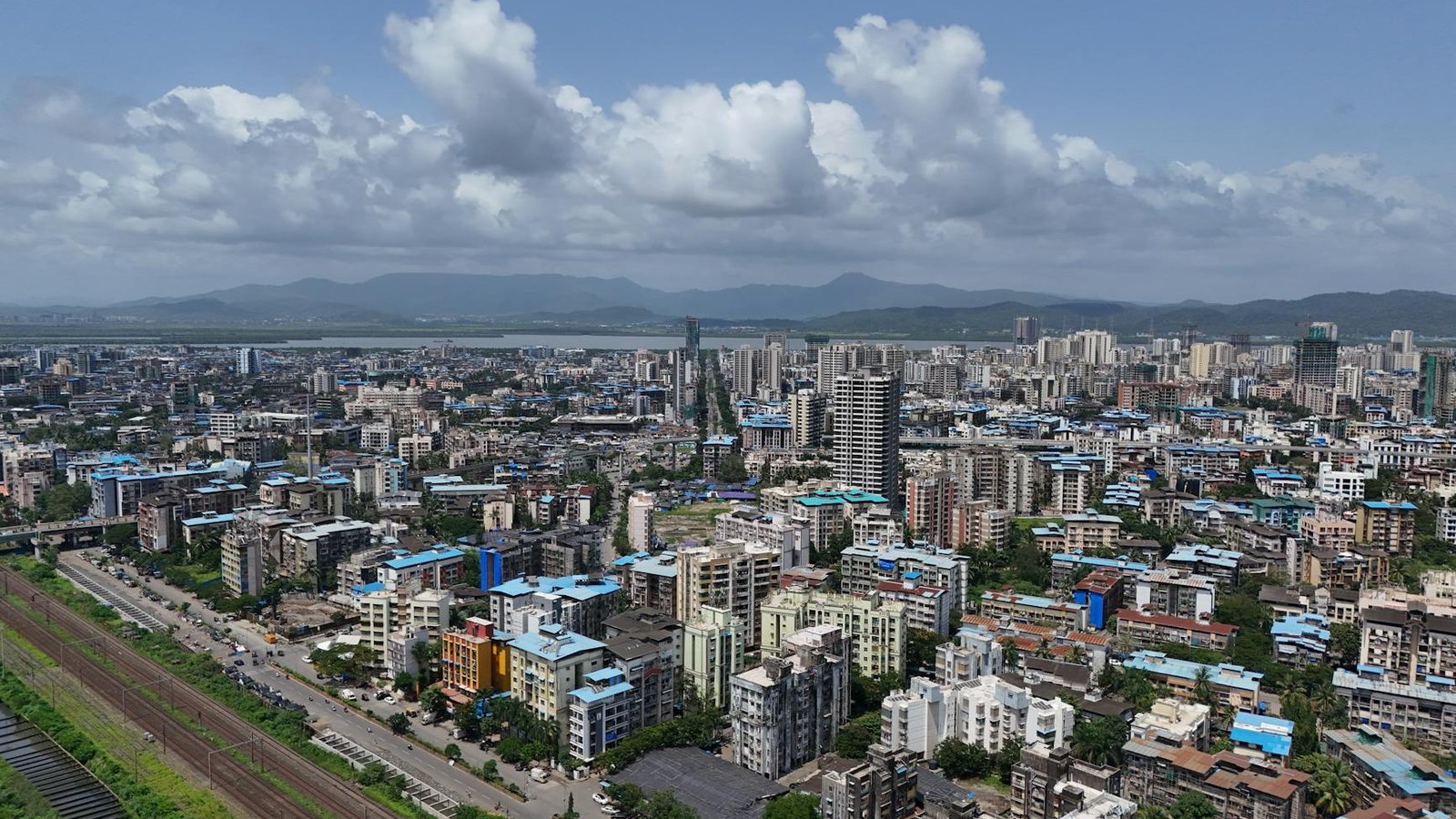
The land acquisition dispute sits at the centre of a wider story unfolding in Navi Mumbai right now. The city, planned in the 1970s as a pressure valve for an overcrowded Mumbai, has entered a phase of intense infrastructure expansion. Multiple projects that existed on paper for years are now moving into active execution, but the transition from blueprint to bulldozer is proving rougher than planners anticipated.
The Virar-Alibag corridor, once complete, will create a multimodal link connecting the northern Mumbai suburb of Virar with Alibag on the Konkan coast. The project runs through large stretches of Panvel taluka, cutting across agricultural land that families have worked for generations. The demand for better cross-harbour connectivity in the Mumbai Metropolitan Region is real. But the pace and terms of land acquisition are where the conflict is happening.
Panvel Municipal Corporation and CIDCO, the City and Industrial Development Corporation of Maharashtra that built Navi Mumbai from scratch, have been moving aggressively to clear obstacles. This week, bulldozers arrived near MGM Hospital in Kamothe to remove encroachments blocking the Kalamboli Junction improvement project. The joint operation was swift and efficient. But farmers in Morbe watching the same agencies arrive with reduced compensation offers are drawing their own conclusions about whose interests move fastest.
This contrast between infrastructure push and civic cost is not unique to Navi Mumbai, but it is playing out with particular clarity here. The city is, in many ways, a test case for how India’s planned urban developments age. Built for a different scale of population and economy, it is now undergoing the kind of upgrade cycle that tests both institutions and patience.
The Palm Beach road corridor illustrates the challenge. The bridge project connecting Ghansoli to Airoli across the creek has been stalled for months. A review visit this week signalled renewed attention and a push for planned execution. Residents and commuters who use that stretch daily have, however, heard similar assurances before. The morning gridlock on the approach roads is its own daily audit of progress.
Across the harbour, the Mora-Mumbai Ro-Ro ferry service missed its latest deadline, this time the end of April 2026. A roll-on, roll-off ferry means vehicles and passengers drive onto a vessel at one shore and drive off at the other, cutting out long road detours entirely. The concept of such a link connecting Uran to Mumbai has been discussed since the pre-independence era, when waterways were the natural arteries of the Konkan coastline. Each missed deadline adds to the cost of delay, not just in construction terms but in the fuel bills, hours, and vehicle wear that commuters absorb instead.
Water is where citizen anger concentrates most directly. Kharghar, one of the fastest-growing residential nodes in Navi Mumbai, faces a daily shortfall of 10 MLD. MLD stands for million litres per day. A shortfall of that size leaves tens of thousands of homes with less water than they need, every single day. Residents manage with reduced supply, storage tankers, and the particular stress of planning around water as a scarce resource rather than a utility that simply works.
In Panvel, the water situation has pushed local political groups to a breaking point. Women, senior citizens, and students are among those expected at the May 17 protest. The demand is basic: a reliable water supply. The frustration behind it has been building for years.
The broader civic infrastructure faces a seasonal deadline of its own. The monsoon arrives in June, and Navi Mumbai’s retention lakes, designed to hold excess rainwater and reduce urban flooding, have not been desilted this year. Desilting removes accumulated mud and debris that reduces a lake’s storage capacity. Without it, these lakes can hold roughly 80 percent less water than designed. That gap does not stay on paper when the rains arrive in July. It shows up as flooded streets, waterlogged ground floors, and damaged property.
One area showing genuine forward movement is primary healthcare. Fifty-nine urban health centres are being added across Navi Mumbai, with 19 already operational, bringing routine medical services closer to residential clusters. In a dense urban environment where the nearest public clinic can require a cross-town commute, decentralised access matters. The wetland at DPS lake in Nerul is also in its final phase of expansion, supporting flamingos and migratory birds while maintaining the ecological buffer that Navi Mumbai has preserved better than most Indian cities of similar size.
What ties these stories together is a tension that every maturing planned city eventually confronts. The infrastructure that enables growth also costs the people in its path. Land acquisition at below-market rates is a slow-motion transfer of wealth away from existing landholders. When the state reduces rates mid-process, as it has in Morbe, it tests the social contract that makes large-scale development politically sustainable in the first place.
For residents, the question is more immediate. Will the tap have water before the monsoon? Will the road be fixed before the rains? Will the compensation reflect what the land is actually worth? In Navi Mumbai right now, the answers to all three remain unsettled, and a city that was designed to show India how planned urbanisation should work is providing a harder lesson instead.