Nanded farmer's daughter clears Class 10 with exact 35s
Shruti Patil from Nanded's Kandhar taluka passed Class 10 with exactly 35 marks in every subject while helping her farmer parents after school.
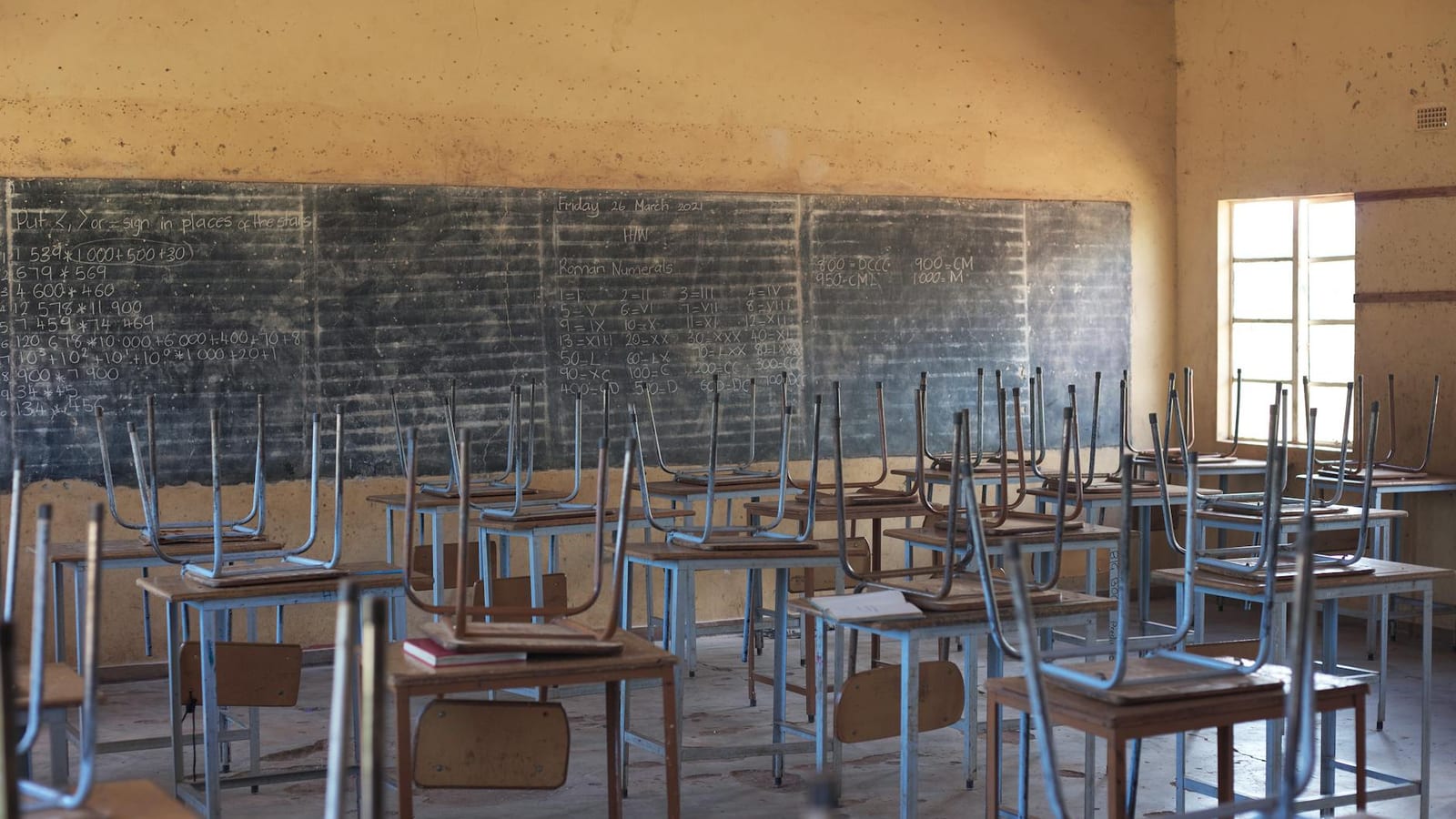
In most result seasons, the cameras chase the 95 percent club. In Nanded, one farmer’s daughter has become the talking point for another reason.
Shruti Digambar Patil Bhanangare scored exactly 35 marks in every subject. Marathi, English, Maths, Hindi, Science, Social Science, all six ended at the same line. Not one mark more, not one less.
For many urban families, 35 percent sounds like a close shave. For a student who returns from school and helps her parents in the field, it can mean something else. It can mean staying in the race.
Shruti Patil’s narrow win
Shruti Patil lives in Nandanvan village in Kandhar taluka of Nanded. Her father, Digambar Patil, is a farmer. She studies at Shivaji High School in Barul.
Her routine was not built around coaching classes and quiet study rooms. After school, she helped her parents with farm work. That detail matters.
In rural Maharashtra, education often competes with labour, transport, money, weather, and family duties. A child may attend school, but life after school rarely looks equal.
Shruti passed the Class 10 board exam with 35 marks out of 100 in each subject. That is the minimum passing score. Yet the symmetry of the result has turned her into a local story.
The easy reaction is to smile at the coincidence. The harder question is more useful. How many children are sitting at the edge of the system, where passing itself is a fight?
Why 35 percent matters
The Maharashtra State Board Class 10 exam carries huge emotional weight. Families treat it as the first serious checkpoint in a child’s life.
That pressure cuts across income groups. But it lands differently on different homes.
A student in a city may treat Class 10 as a launchpad for science, commerce, or competitive coaching. A farmer’s child may see it as proof that school has not slipped away.
That is why Shruti’s result has struck a chord. It is not a topper story in the usual sense. It is a reminder that education data hides very different lives.
When headlines celebrate perfect scores, they often miss students who fight just to cross the line. Their success does not shine on rank lists. But it still changes family conversations.
For a rural household, a Class 10 pass can keep options open. Junior college, vocational courses, nursing, ITI, clerical exams, or simply more confidence, all start from that certificate.
Nanded’s wider result picture
Nanded district recorded an 83.62 percent pass rate in the Class 10 exam. Out of 48,069 registered students, 47,333 actually appeared.
Among them, 39,580 students passed. The district stood third in its division, based on the reported result figures.
The gender split tells a familiar story. Girls again did better than boys.
A total of 20,162 girls passed, compared with 19,419 boys. The pass rate for girls stood at 88.76 percent. For boys, it was 78.87 percent.
These numbers are more than exam trivia. They show how steadily girls in many parts of Maharashtra are using school as a ladder.
But the numbers also hide drop-offs. More than 700 registered students did not sit for the exam. Others appeared but did not pass. Each case has its own story.
Some may struggle with money. Some may lose study time to work. Some may face transport problems, family illness, or weak schooling in earlier classes.
That is where policy must look beyond the pass percentage. A district can celebrate an 83.62 percent result and still ask why so many children remain vulnerable.
The cost of rural education
The business of education in India often gets discussed through coaching centres, edtech apps, and private schools. Rural students live in a different market.
Their costs are quieter. Bus fare. Uniforms. Books. Mobile data. Exam forms. Lost work hours during peak farm seasons.
A kirana store owner in a tier-2 town may pay for tuition by trimming household spending. A farming family may make that choice after a weak crop.
When a student like Shruti helps in the field and still passes, it says something about effort. It also says something about the load the system places on children.
The public school network carries the weight of that reality. It is not just about classrooms. It is about whether students get enough time, support, and stability to learn.
Private coaching can widen the gap. Families with money buy extra teaching. Families without it depend almost entirely on school quality and home discipline.
That is why minimum-pass stories should not be treated as cute oddities. They show us where the safety net is thin.
Beyond the topper economy
India has built a strange result-season culture. We celebrate 100 percent scores as if childhood were a balance sheet.
There is nothing wrong with honouring high achievers. Hard work deserves applause. But a society also reveals itself by whom it notices at the margins.
Shruti’s 35 marks in every subject have become news because they are unusual. But her larger story is not unusual at all.
Across small towns and villages, children study between chores, travel long distances, and manage homes that do not run on predictable schedules. Many do it without complaint.
For them, a pass certificate is not a small thing. It can delay early withdrawal from education. It can help a girl argue for more schooling. It can give parents a reason to invest again.
The next question is what happens after Class 10. Passing is a doorway, not a destination. The real test will come in whether students like Shruti can continue without being priced out.
That is where families, schools, local officials, and the board all matter. The result sheet has done its job. Now the system must make sure the next step is not harder than the exam itself.