Missing van found in Bhakra Canal after 26 years
A Maruti Omni that vanished after a 2000 wedding was recovered from Bhakra Canal, bringing painful closure to three Punjab families after 26 years.
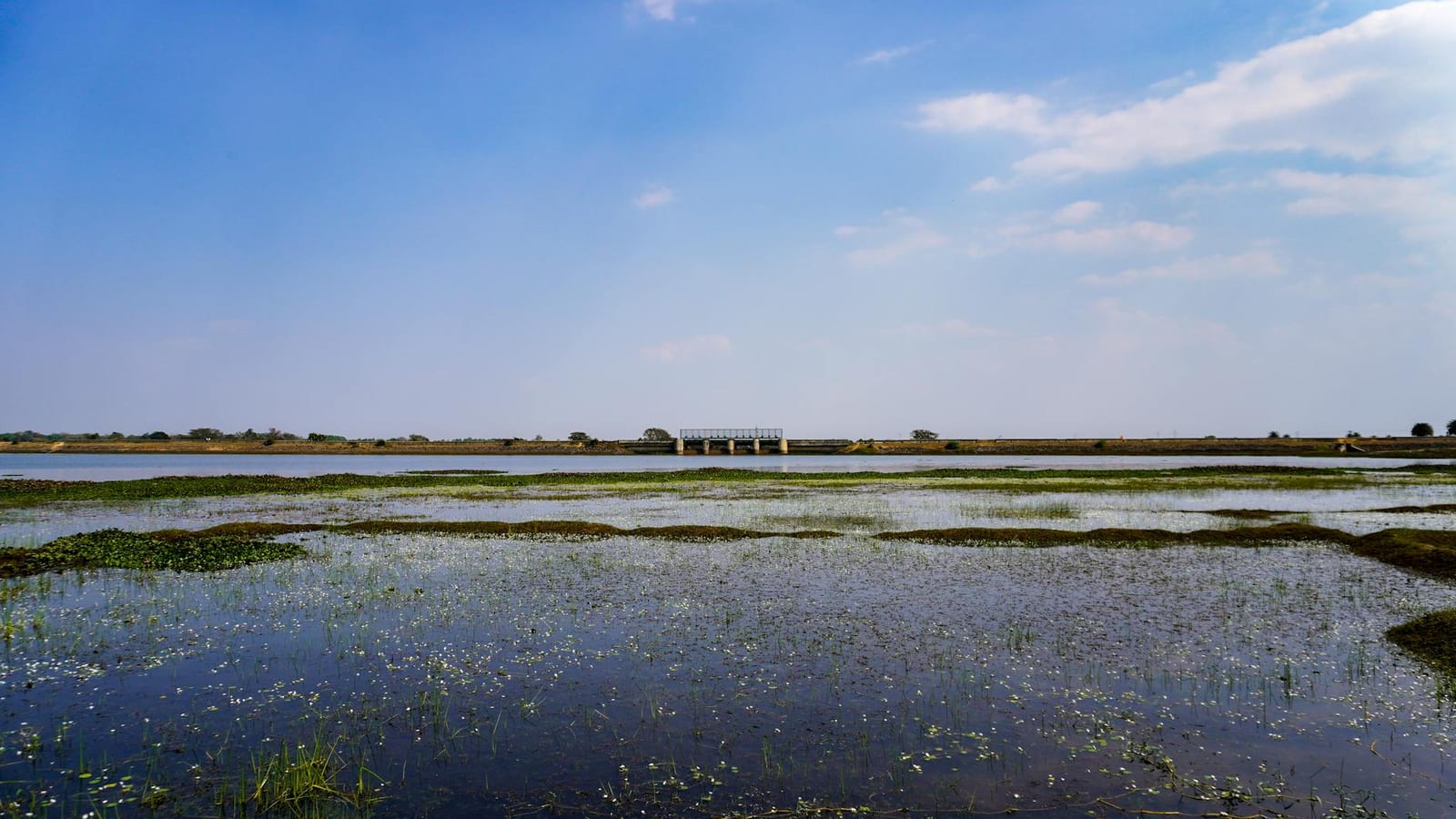
For 26 monsoons, three families in Punjab lived with a bill no household should pay. They sold land, took loans, hired divers, and still had no body to mourn.
On Sunday, that long wait ended inside the Bhakra Canal. A rusted Maruti Omni, missing since October 17, 2000, came up from 32 feet of water.
Inside were human bones, clothes, shoes, personal items, and a child’s school uniform. For the families, that uniform said what official files could not.
A van that never came home
Four people had left a wedding in the Omni that night. They were Munni Lal, Tej Ram, Surjit Singh, and Surjit’s eight-year-old son, Kalu.
They were headed back towards their village near Rupnagar, around 80 km from Chandigarh. They never reached home.
Tej Ram had bought the Omni only a month earlier. His family says he had sold three kanals of land for it. That is about 16,335 square feet, a serious asset for any rural household.
A vehicle, in such families, is not just transport. It is work, status, mobility, and sometimes the first step into a slightly better life.
That dream vanished with the four men and the child. What followed was not just grief. It was a slow financial bleed.
Families paid for the search
The families did not stop looking after the first few searches failed. They hired private divers to comb the canal bed. They borrowed money to keep going.
Tej Ram’s son, Bhupinder, was five years old when his father disappeared. He later said the family sold another five kanals of land to fund the search.
That is about 27,225 square feet more. Add that to the land sold for the van, and the cost becomes brutal.
This is how tragedy behaves in many Indian homes. First it takes a person. Then it takes savings. Then land. Then education, business, and dignity.
Munni Lal’s wife, Sita Devi, said the family eventually had to sell its dairy shop. The debt had become too heavy.
She also said Munni Lal’s parents died while still waiting for their son. The family could not obtain a death certificate earlier because there was no proof.
That detail matters. Without a death certificate, families often struggle with insurance, property transfer, pensions, compensation, and basic closure.
For a city reader, it sounds like paperwork. For a rural family, it can decide who keeps land, who studies, and who eats well.
Thirty-two feet below water
The breakthrough came when local diver Kamalpreet Saini entered the canal while searching for another missing person.
At the bottom, around 32 feet down, he found the badly corroded van. Its rear section and roof had suffered heavy damage.
Saini said the damage may have come from the impact, the strong current, and years of water pressure. The canal had effectively turned the vehicle into a metal shell.
Recovering it was not simple. The team had to attach chains and cables to the remains. That itself was risky because the vehicle could break apart.
After nearly three hours, the Omni came out of the water. What emerged was not just a wreck. It was evidence of a night families had replayed for 26 years.
Police entered the picture after the families and local divers pulled out the van. Kiratpur Sahib SHO Inspector Rahul Sharma said the families informed police after the recovery.
That sequence says something uncomfortable. For decades, the case had gone cold. In the end, the families and local divers helped bring up the strongest proof.
A child’s uniform and final rites
The smallest detail cut the deepest. Among the recovered items was Kalu’s school uniform.
Every Indian family understands the force of that image. A uniform is not just cloth. It carries morning rush, school bags, homework, and a parent’s hope.
For years, four framed photographs stayed on family walls without finality. Now, relatives could place garlands on them with a painful certainty.
Some bone fragments found with the clothing were immersed according to religious rites. The families also held a joint ardas at Gurdwara Patalpuri Sahib in Rupnagar.
Sita Devi said she garlanded her husband’s photograph after giving him a final farewell. That is a small sentence, but it contains 26 years.
The families are not celebrating a discovery. They are absorbing proof. There is a difference.
The hidden cost of uncertainty
This story is not a business story in the usual sense. There is no merger, stock price, or quarterly result.
Yet it is about money in the most human way. It shows how uncertainty can bankrupt families long after the actual event has passed.
In India, many households hold wealth in land, small shops, animals, vehicles, or gold. When crisis comes, these assets get sold one by one.
A failed search is not free. A private diver costs money. Travel costs money. Legal follow-up costs money. Even waiting costs money.
Children feel it too. Bhupinder said he and his brother somehow completed Class 12 despite the hardship.
That “somehow” tells its own story. A missing earning member can change the entire route of a child’s life.
There is also a public systems question here. Dangerous water bodies, weak barriers, slow recoveries, and poor missing-person closure all have real costs.
When the state cannot find answers, families often create their own investigation. They spend what they have, then what they can borrow.
The recovery of the Omni cannot return Munni Lal, Tej Ram, Surjit Singh, or Kalu. But it does restore one thing the families were denied for 26 years: the right to stop searching.
For ordinary readers, that is the real lesson. Grief becomes heavier when systems leave families in limbo. Closure should not depend on selling land, hiring divers, and waiting half a lifetime.