Maharashtra Sugar Mills Owe Farmers ₹12,000 Crore in Dues
Maharashtra sugar mills owe farmers ₹12,000 crore in dues, raising fresh questions on cane pricing, rural cash flow and state policy.
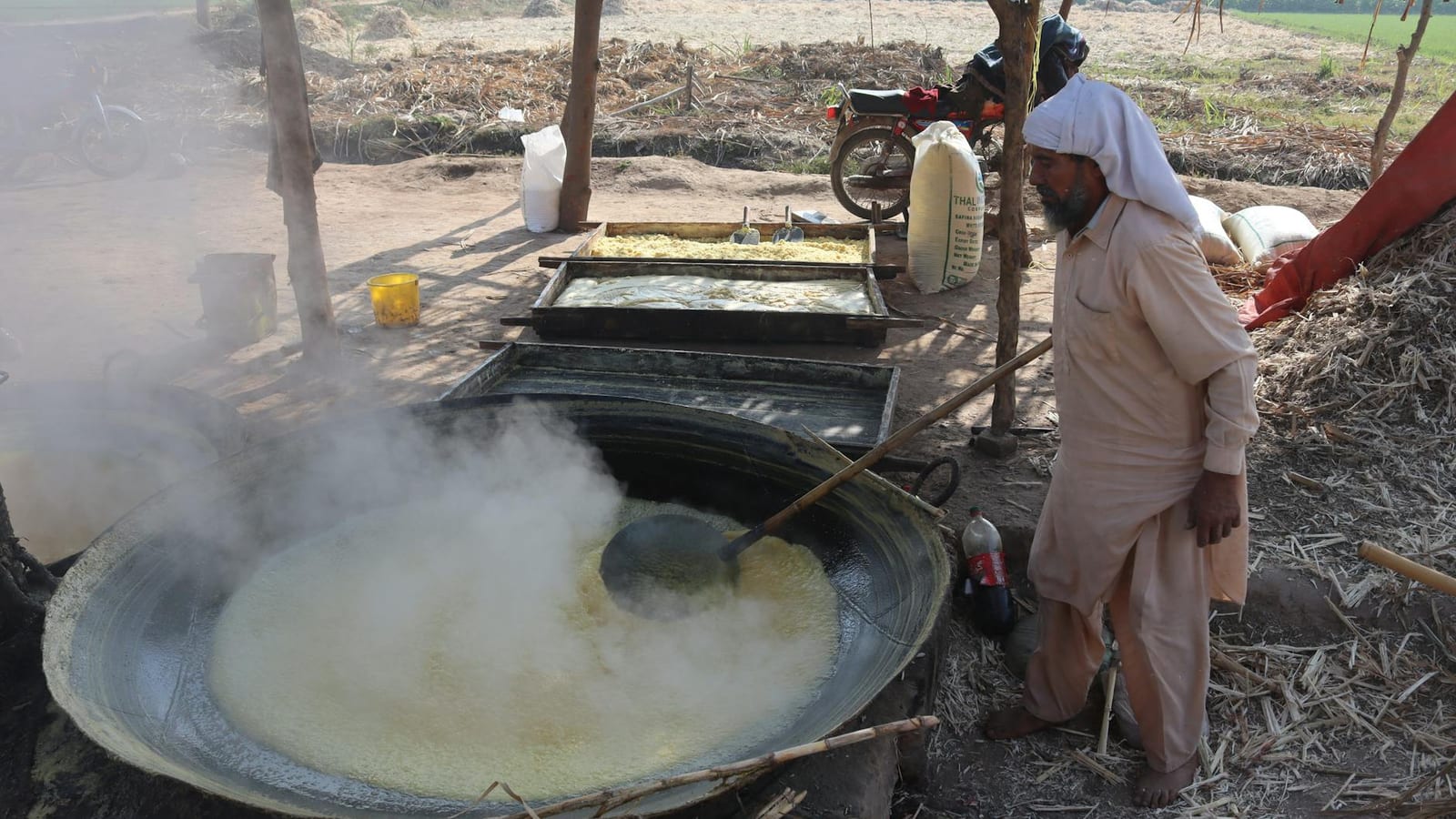
The sugarcane farmer in Sangli has already planted the next crop. He hasn’t been paid for the last one.
This is the quiet crisis running through Maharashtra’s sugar belt, where mills collectively owe farmers over ₹12,000 crore in unpaid dues. The number has been building for years, one harvesting season stacked on top of another, as the economics of running a sugar factory slowly broke down.
The core problem is simple enough to explain over chai: the government sets two different prices for sugar, and they have been moving in opposite directions.
The Fair and Remunerative Price, or FRP, is the minimum amount a sugar mill must pay farmers for every tonne of sugarcane it crushes. The government raises this price regularly, because politically, keeping farmers happy is non-negotiable. In the current season, the FRP stands at ₹340 per quintal (100 kg) of sugarcane, up sharply from levels a few years ago.
The Minimum Support Price, or MSP, is the floor price at which mills must sell sugar in the domestic market. The government sets this to keep sugar affordable for consumers. The problem is that the MSP for sugar has not moved in seven years. It remains fixed at ₹31 per kg.
So mills pay farmers more every year, but they cannot sell sugar at a correspondingly higher price. The gap between what they spend and what they earn keeps widening. At some point, the math simply stops working. That point has arrived.
Maharashtra has roughly 200 operational sugar mills, concentrated in the western districts of Kolhapur, Sangli, Satara, Solapur, and Nashik. These factories crush millions of tonnes of sugarcane every season. They anchor the rural economy of a region that grows most of the country’s cooperatively-run sugar.
When mills cannot pay farmers on time, the damage fans outward fast. Farmers delay or skip the next planting. Labour contractors in the fields see work dry up. Local lenders who advanced money against the expected FRP payment start chasing repayment. The weekly market towns that depend on farm spending get quieter.
The ₹12,000 crore in arrears is not an abstract headline number. It represents income that lakhs of farming families were counting on and have not received. In a state where most sugarcane farmers hold small plots, this is the money that pays school fees, buys fertiliser for the next season, settles the local moneylender’s tab.
The sugar industry has been making this argument to the central government for years: raise the MSP or the whole structure collapses. The counterargument from Delhi has been that raising sugar’s floor price will push up food inflation and squeeze urban consumers who are already stretched. It is a genuine dilemma without an easy resolution.
There is a third lever the industry points to: export policy. India has periodically restricted sugar exports to control domestic prices. When export doors close, mills cannot move excess inventory abroad and must sell domestically at the suppressed MSP rate. Open the export window consistently, the argument goes, and mills can earn more per tonne on international markets, which narrows the gap with their costs. Global sugar prices have generally traded above India’s domestic MSP in recent years, which makes this case more compelling.
But export policy changes slowly and unpredictably, and the ₹12,000 crore bill keeps growing in the meantime.
There is also the ethanol question. The central government has pushed sugar mills to divert sugarcane toward ethanol production for blending with petrol. Ethanol prices are set separately and have been more favourable than the sugar MSP in many cases. Several larger, better-capitalised mills have leaned hard into this shift, converting more of their cane into ethanol and using the better margins there to partially offset losses from sugar.
But retooling requires capital investment in distillation capacity, and not every mill can afford to make that move. The smaller cooperatives, which form the backbone of western Maharashtra’s rural economy, are the ones most exposed. They are sitting on the largest share of unpaid FRP.
The Maharashtra government has historically stepped in when arrears become severe, either pressuring mills to pay up or routing soft loans through cooperative banks. But those are stop-gaps. They do not fix the structural mismatch between a rising FRP and a frozen MSP.
The political economy of sugar here is complicated by the fact that sugar cooperatives have long been controlled by powerful farmer-politician families. The state’s cooperative sector is tightly woven into its legislature. This has historically meant the industry has strong political representation, but it has also made it resistant to the structural reforms that might improve long-run financial health.
Industry representatives are pressing the central government to raise the MSP by at least ₹5 to ₹6 per kg. They say that would restore basic viability without requiring the kind of large-scale overhaul nobody seems willing to attempt. Whether the government acts before the next crushing season, which typically begins in October, will determine how much deeper the arrears hole gets.
For the farmer waiting in Sangli, the policy debate in Delhi is a distant noise. What is immediate is that the money he was promised for his last crop has not arrived. He will plant again regardless, because the land is there and the habit of growing sugarcane runs three generations deep in these districts.
But the confidence that the system will eventually pay him what it owes has been eroding, quietly and steadily, for seven years now.
The MSP freeze began as a policy choice to protect consumers. It has slowly transformed into a cost that farmers at one end of the chain, and mill workers at the other, are bearing invisibly. The government’s eventual decision on whether to raise the floor price will say a great deal about whose pain it weighs more heavily.