Hezbollah Haifa attack draws heavy Israel strikes
Hezbollah fired missiles near Haifa as Israel hit 120 targets in Lebanon, raising risks for ports, factories and supply chains in the region.
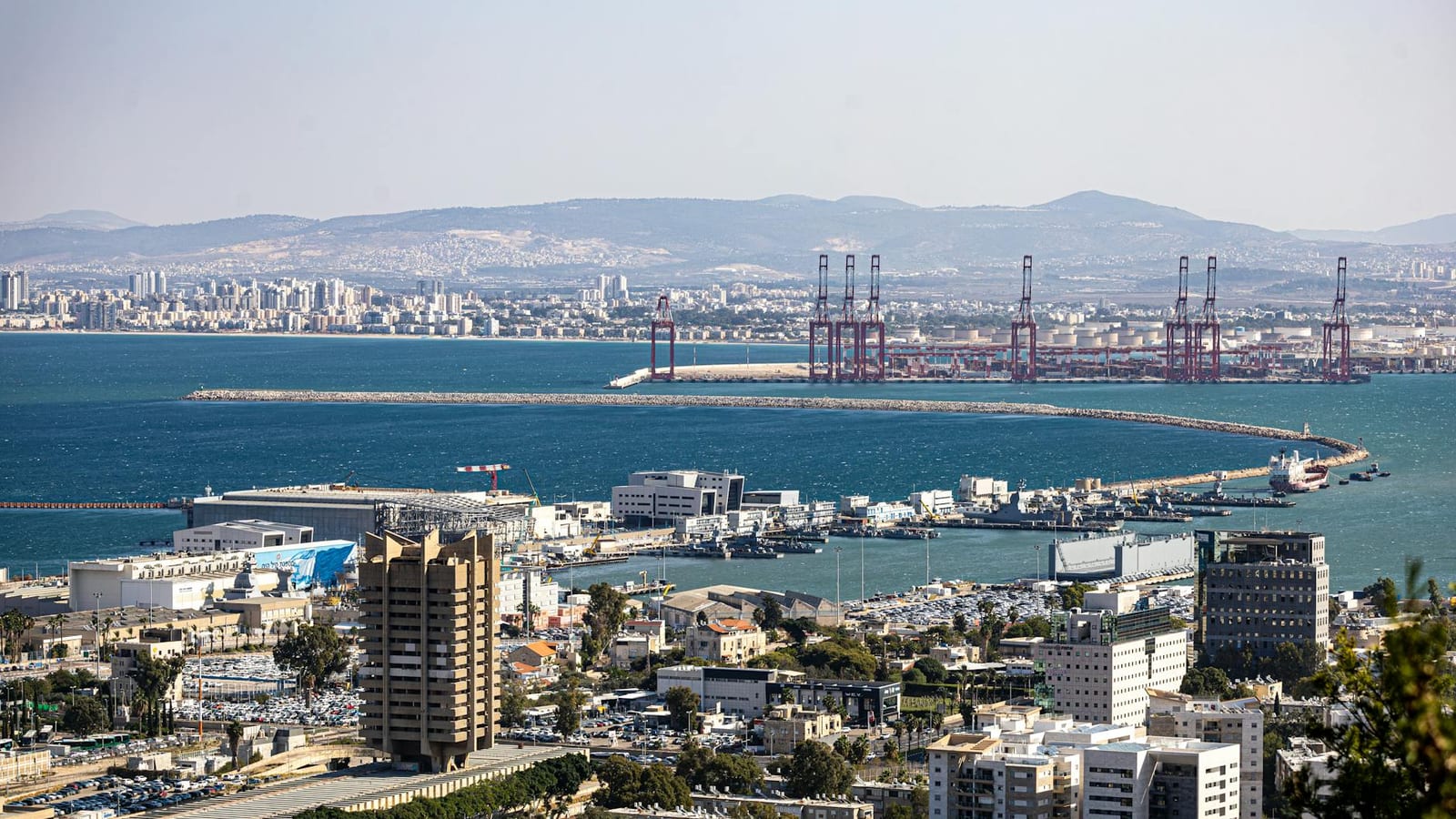
A factory siren in Haifa now means something heavier than a shift change. For many families in northern Israel, it means running again, waiting again, and hoping the next blast lands somewhere else.
Hezbollah said it fired 135 Fadi 1 missiles at a military base south of Haifa on Monday. Israel answered with a sharp air campaign in Lebanon, hitting more than 120 Hezbollah targets within an hour, according to the Israeli military.
This is no longer a border flare-up with occasional rockets. It is a widening conflict with homes, businesses, ports, workers, and supply chains trapped inside it.
Haifa attack raises the stakes
Haifa matters because it is not just another city on the map. It is Israel’s third-largest city, a major port, and an industrial centre. When rockets head there, the signal travels far beyond the battlefield.
Hezbollah said it targeted a military base south of the city. The Israeli military said rocket fire continued into Israeli areas until Monday evening. Reports from Israeli authorities said ten people were injured in the Haifa region, while two others were hurt in the south.
For ordinary residents, the numbers hide the daily strain. Schools close without much warning. Shops pull down shutters early. Workers who depend on daily wages lose income first, and recover last.
For businesses, Haifa is especially sensitive. Ports do not like uncertainty. Shipping firms, exporters, fuel handlers, and logistics companies plan around predictability. Rockets create the opposite.
This is where conflict becomes an economic story. A missile does not have to hit a warehouse to hurt trade. It only has to make insurers nervous, delay cargo, or force workers to stay home.
Israel hits back in Lebanon
The Israeli military said its air force struck more than 120 Hezbollah targets in southern Lebanon within 60 minutes. It described the operation as a wide air campaign against positions linked to the group.
Israel has already been carrying out operations in both Gaza and Lebanon. In recent days, its military said it hit around 1,600 targets in Lebanon in a separate wave of attacks.
That scale shows how quickly the front has expanded. The war that began with the Hamas attack on southern Israel on October 7, 2023, has now pulled Lebanon deeper into the fire.
Hezbollah has long presented itself as Hamas’s ally. It also receives backing from Iran, which makes every exchange more dangerous. A rocket barrage from Lebanon is never viewed in isolation by Israel.
The Israeli response also shows a clear message. It wants to weaken Hezbollah’s launch capacity before the group can sustain deeper attacks. That is the military logic.
But the human cost sits beside it. Lebanese official and military sources said Israeli air strikes killed 11 people and injured 17 others. Lebanon’s health ministry said six people died and 13 were hurt when a residential building was hit in Kayfoun village, in Mount Lebanon’s Aley district.
Another Israeli strike killed five people and injured four others, Lebanese sources said. These are not abstract figures for families who now face funerals, hospital bills, and destroyed homes.
Iran keeps the rhetoric hot
Iran’s Supreme Leader Ayatollah Ali Khamenei used the first anniversary of the October 7 attack to praise Hamas’s operation. He said on social media that the attack had pushed Israel back by decades.
That statement matters because words from Tehran rarely stay as words in this conflict. Iran backs both Hamas and Hezbollah. Its political support gives these groups confidence, while its military links worry Israel and its partners.
The October 7 attack remains the core wound in this war. Hamas fired thousands of rockets into southern Israel and sent armed fighters across the border. Around 1,200 people were killed, and more than 250 were taken hostage.
Israel’s response in Gaza then set off a wider regional chain. Hezbollah increased pressure from Lebanon. Israel expanded strikes there. Iran sharpened its public line. Each side now says it is acting in defence, while civilians keep paying the bill.
For India’s readers, this may feel geographically distant. But West Asia rarely stays distant from Indian life. Oil prices, shipping costs, airline routes, migrant workers, and inflation all connect us to the region.
When conflict spreads near ports, sea lanes, and energy corridors, Indian importers watch carefully. A small rise in freight or insurance can move through the system quietly. It can show up later in fuel, fertiliser, electronics, or food prices.
The business cost of fear
Wars do not only destroy buildings. They also destroy confidence. That is the part markets notice first, and families feel later.
In northern Israel, businesses face the risk of shutdowns, absentee workers, damaged infrastructure, and higher security costs. In Lebanon, the pressure is harsher because the economy was already weak before this escalation.
Lebanon has struggled with currency collapse, banking stress, and a long political crisis. For a small business owner there, one air strike nearby can end years of work. Stock can vanish. Customers can flee. Credit can dry up.
Tourism also suffers quickly. Airlines avoid risky airspace. Travellers cancel. Hotels, taxi drivers, restaurants, and guides lose income. In conflict zones, the first economic shock often hits people who never held a weapon.
The same holds for shipping. Haifa’s role as a port city means repeated attacks could make firms rethink schedules. Even if operations continue, the risk premium rises. That means someone pays more.
Usually, that someone is the end customer.
India has seen this before in different forms. Whenever West Asia burns, crude traders react first. Then refiners, transporters, airlines, and consumers adjust. A conflict that starts with missiles can end up inside a household budget.
India will watch the spillover
India has three big reasons to watch this closely. Energy comes first. The country imports most of its crude oil, and West Asia remains vital to that supply.
Second, millions of Indians work across the Gulf and nearby regions. Their safety, jobs, and remittances matter deeply to families back home. Even when fighting stays outside Gulf economies, anxiety travels fast.
Third, trade routes matter. Indian exporters already deal with freight swings, currency moves, and weak global demand. Fresh tension near key routes adds one more headache.
For policymakers in New Delhi, the challenge is familiar but difficult. India has ties with Israel, deep energy links in West Asia, and a large diaspora to protect. It must speak carefully while preparing practically.
The present escalation also shows why modern conflicts hit ordinary people in indirect ways. A rocket in Haifa can affect a dock worker. An air strike in Lebanon can close a shop. A speech in Tehran can unsettle oil markets.
The danger now is not only what happened on Monday. It is what each side feels forced to do next. If the cycle of rocket fire and air strikes keeps widening, the cost will move beyond battle maps. It will reach ports, workplaces, hospitals, and kitchen budgets, including far from West Asia.