Dussehra 2024 puja timings announced for October 12
Dussehra 2024 falls on October 12, with Vijay muhurat from 2:02 pm to 2:48 pm for Shastra, Aparajita and Shami Puja across homes and community events.
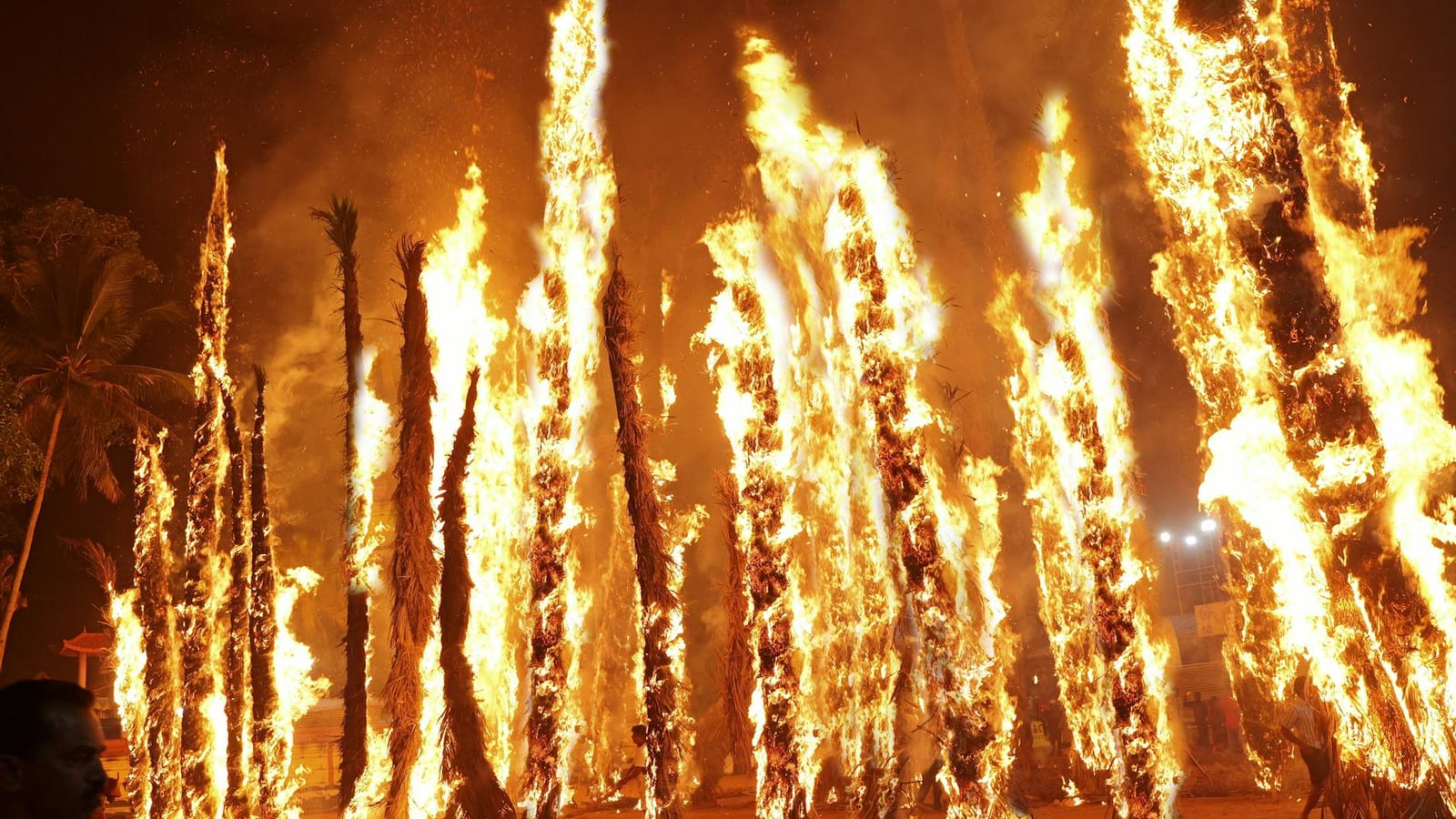
For many Indian households, Dussehra is not just a date on the calendar. It is the day when families check the clock, plan the evening outing, buy sweets, and wait for that familiar moment when Ravana’s effigy goes up in flames.
Dussehra 2024 falls on Saturday, October 12. The festival, also called Vijayadashami, marks the victory of good over evil in the most familiar Indian way, through prayer, community gatherings, food, shopping, and spectacle.
This year, the timing matters for both families and small businesses. From flower sellers to sweet shops, from local pandals to event organisers, the day brings a short but sharp burst of activity.
The key timings families need
The Dashami tithi begins at 10:58 am on October 12, 2024. It ends at 9:08 am on October 13, 2024.
The Shravan nakshatra starts at 5:25 am on October 12. It ends at 4:27 am on October 13.
Drik Panchang lists the Vijay muhurat from 2:02 pm to 2:48 pm. This 46-minute window is considered suitable for Shastra Puja, Aparajita Puja, and Shami Puja.
The wider afternoon puja period runs from 1:16 pm to 3:35 pm. That gives households a longer window of 2 hours and 19 minutes.
For Ravana Dahan, the preferred time falls in the evening. The listed muhurat runs from 5:53 pm to 7:27 pm.
Why Ravana Dahan draws crowds
The public face of Dussehra is Ravana Dahan. Children remember the fireworks. Parents remember the crowd. Local vendors remember the sales.
The tradition comes from the Ramayana story. Lord Ram defeated Ravana on this day and rescued Sita. That is why the burning of Ravana’s effigy carries such strong public emotion.
But the event is also a local economy in motion. Temporary stalls sell snacks, toys, balloons, flowers, and small festive items. For many vendors, a good Dussehra evening can mean several days of normal sales packed into a few hours.
This is why the timing of Ravana Dahan is not a small detail. If the event happens during a comfortable evening slot, families come out in larger numbers. When crowds come, small sellers benefit.
Puja rituals remain deeply personal
Dussehra is not only about public celebrations. Many households mark the day quietly at home before stepping out in the evening.
The usual puja begins by placing a clean red cloth on a small platform. Families then place images or idols of Lord Ram and Mother Durga.
Rice is often coloured yellow with turmeric. It is then used while invoking Shri Ganesh through a swastik symbol.
Some families also worship the navgrahas, or the nine planetary forces in Hindu belief. Fruits, flowers, and sweets are offered during the puja.
The ritual often ends with charity. Families give food, clothes, or money according to their means. That part matters because Indian festivals rarely stay only inside the home. They spill into the street, the market, and the lives of people around us.
Shastra and Shami Puja matter
Dussehra also carries an old association with tools, weapons, and work. That is where Shastra Puja comes in.
For soldiers, police personnel, artisans, factory workers, traders, and even office-goers, the idea is simple. You honour the instrument that helps you earn, protect, or serve.
In many parts of India, people worship vehicles, tools, machines, books, laptops, and business ledgers. The object changes with the times. The sentiment does not.
Shami Puja also has a special place. The Shami tree is linked with victory and prosperity in Hindu tradition. Families in several regions exchange its leaves as a sign of goodwill.
This is where the festival meets everyday business life. A shopkeeper may decorate the cash counter. A mechanic may garland his tools. A startup founder may not perform a full ritual, but the old instinct survives, respect the work that feeds you.
The stories behind the festival
Dussehra carries two major strands of belief.
The first comes from the Ramayana. Lord Ram killed Ravana on the Dashami tithi of the Ashwin Shukla Paksha. Diwali follows 20 days later, marking Ram’s return to Ayodhya.
The second comes from the Devi tradition. Mother Durga defeated Mahishasura on this day. That is why Vijayadashami also marks the end of Durga Puja in many parts of India.
Together, these stories explain the festival’s wide reach. North India may focus more on Ram and Ravana. Bengal and eastern India may place Durga at the centre. Maharashtra, Karnataka, Tamil Nadu, and other regions bring their own rituals.
For businesses, this diversity matters. Festive demand does not move in one straight line. It shifts by region, custom, income group, and local calendar.
A sweets shop may see strong demand in one city. A garment store may do better in another. Event organisers, decorators, transport operators, and food vendors all plug into different parts of the same festival economy.
Dussehra 2024, then, is both a sacred day and a working day for India’s vast informal economy. Families will look for the right muhurat. Children will look for the tallest Ravana. Small sellers will hope the evening crowd turns up. And behind all of it sits a familiar Indian truth: festivals are faith, but they are also livelihoods.