BJP Backs Ganesh Idol Makers as POP Ban Hits Trade
BJP is backing a new platform for Maharashtra Ganesh idol makers as the POP idol ban raises worries over jobs, orders and seasonal workshop income.
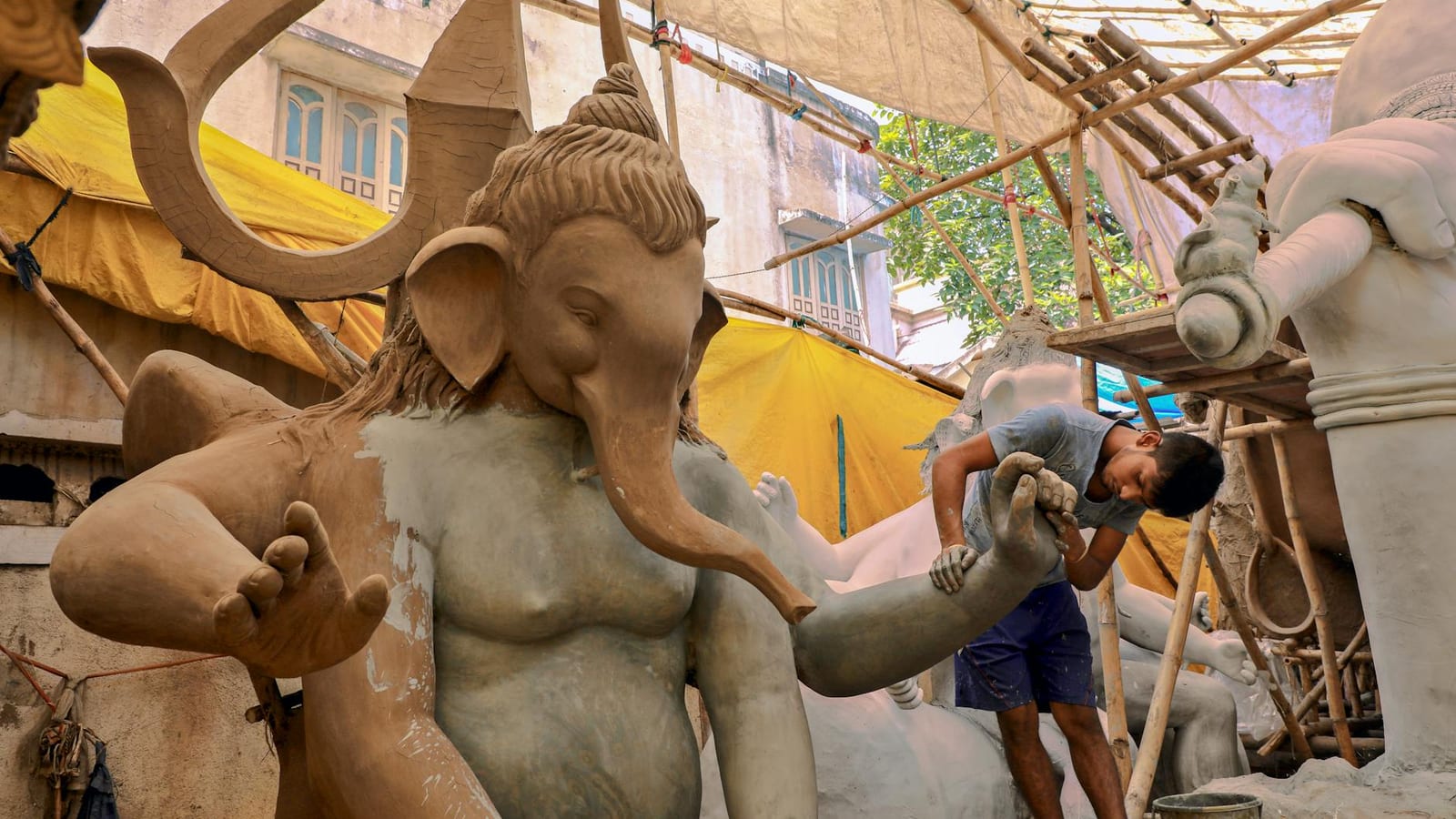
A Ganesh idol workshop does not run on sentiment alone. It runs on moulds, paint, credit, seasonal orders, and nervous workers.
That is why the fight over Plaster of Paris idols has become more than an environmental debate. For idol makers across Maharashtra, it now feels like a question of survival.
The BJP has moved into this space by backing efforts to bring idol makers under one platform called Ghadani. The plan is to connect artisans from Mumbai, Pen, Amravati and Nashik, at a time when a ban on POP idols has raised fears of job losses.
Idol makers seek one voice
Ganesh idol making is a serious seasonal business in Maharashtra. For many families, the few months before Ganesh Chaturthi decide the year’s earnings.
Workshops take orders early. Labourers shape idols, painters finish details, transporters move stock, and small suppliers sell colours and decorative material. One rule change can disturb this entire chain.
The concern now comes from the ban on Plaster of Paris idols. POP became popular because it is light, cheap, easy to mould, and quick to dry. That matters for small workshops handling bulk orders.
Clay idols are better for water bodies. But they also need different skills, storage, drying time, and handling. For a small artisan, that shift is not just about changing material. It means changing the business model.
That is where Ghadani enters the picture. The organisation aims to bring idol makers from major centres together. Mumbai brings scale, Pen brings tradition, and Nashik and Amravati add regional reach.
The politics behind the platform
The BJP’s active role in this effort is politically sharp. Ganeshotsav has deep cultural and public life roots in Maharashtra. Any issue around idols quickly touches faith, livelihood, and local pride.
For the party, supporting idol makers offers a direct connection with small entrepreneurs. These are not large corporate voices. They are workshop owners, family artisans, helpers, painters, and transport workers.
This is also a familiar pattern in Maharashtra politics. When regulation affects a community’s income, political parties step in as organisers. They turn scattered anxiety into a collective demand.
The party appears to be reading the mood carefully. Idol makers are not rejecting environmental concerns outright. Their worry is simpler. They want time, support, and a workable path.
A sudden ban can hit the smallest players hardest. Bigger workshops may absorb new costs. Smaller ones may struggle to shift material, retrain workers, or take losses on existing stock.
POP ban tests green policy
The environmental case against POP is clear. POP does not dissolve easily in water. Painted idols can also add chemical load to lakes, ponds, and the sea.
Cities like Mumbai already face pressure during immersion season. Civic bodies must manage crowds, traffic, artificial ponds, and waste. Cleaner idols make that job easier.
But green policy often fails when it ignores the person at the workbench. A rule may look clean on paper, while pushing costs onto people with thin margins.
For an idol maker, clay is not just a moral choice. It can mean higher breakage risk, longer drying time, more space, and slower production. Customers may still demand large, bright, lightweight idols at low prices.
That gap creates the real problem. People want greener festivals, but many do not want to pay more. The artisan then gets squeezed from both sides.
This is why transition support matters. Training, material access, design help, and assured demand can make the shift realistic. Without that, a ban becomes punishment before preparation.
Small workshops face big risks
The source of anxiety is employment. The report says idol makers fear the POP ban could hit livelihoods. That fear is not abstract.
A workshop may employ extra hands for moulding, sanding, painting, packing, and loading. Many workers depend on festival season work before moving to other jobs.
If orders fall, owners reduce hiring first. If material costs rise, they cut margins next. If customers shift elsewhere, entire workshops may shut for the season.
Pen is especially important in this story. The town has long been known for Ganesh idols. Many families there carry skills across generations.
Mumbai’s workshops face another problem. Space is costly. Clay storage and drying need room, and room is exactly what small urban businesses lack.
In Amravati and Nashik, the issue may play out differently. Smaller markets can be price-sensitive. If clay idols cost more, customers may delay or reduce orders.
That is why a common platform may help. It can push for clearer rules, financial support, and practical deadlines. It can also help artisans speak beyond their local markets.
What officials must answer
The government now faces a familiar balancing act. It must protect water bodies without crushing small livelihoods.
The first question is timing. Idol makers need clarity well before production begins. Last-minute rules create panic, not compliance.
The second question is cost. If the state wants faster adoption of eco-friendly idols, it must ask who pays for the change. Training and material support cannot remain slogans.
The third question is enforcement. A ban that applies unevenly will punish honest workshops. Those who follow rules may lose business to cheaper illegal stock.
The fourth question is consumer behaviour. Buyers also need to change. If families and mandals demand eco-friendly idols, the market will move faster.
Political support can give idol makers visibility. But visibility alone will not solve the problem. The real test lies in policy detail.
Maharashtra needs a transition that respects both faith and rivers. It also needs to remember the artisan who sits between the two.
For ordinary readers, this story is not only about Ganesh idols. It is about how India handles change. Cleaner festivals are necessary. But the journey must not make small workers carry the whole burden alone.